

Blog
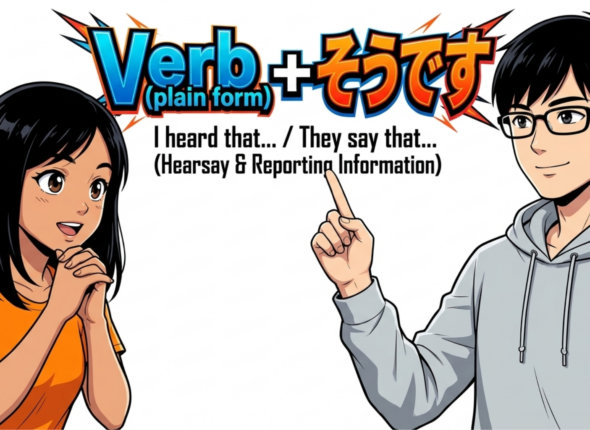
GrammarBook: Verb (plain form) + そうです (I heard that [Verb])
N4-G-064 Verb (plain form) + そうです (I heard that [Verb]) Core / Hearsay & Reporting Information 👀 Layer A: Visual Guide 📝 Quick Summary This grammar pattern connects to the Plain Form...
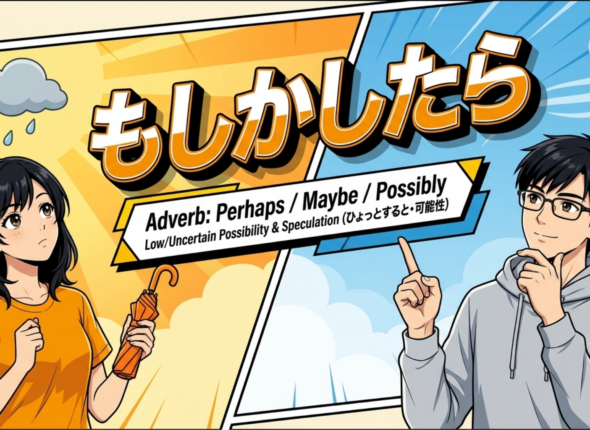
GrammarBook: もしかしたら (Adverb: Perhaps / Possibly / Maybe)
N4-G-063 もしかしたら (Adverb: Perhaps / Possibly / Maybe) Supporting / Low Probability & Speculation 👀 Layer A: Visual Guide 📝 Quick Summary もしかしたら (moshikashitara) is an adverb used to express a slight...
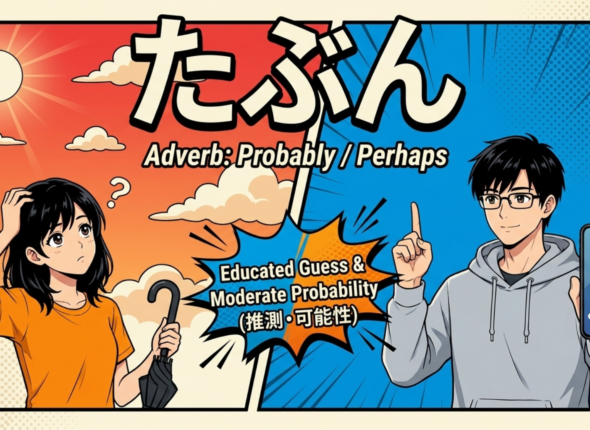
GrammarBook: たぶん (Adverb: Probably / Perhaps)
N4-G-062 たぶん (Adverb: Probably / Perhaps) Core / Moderate Probability & Guesses 👀 Layer A: Visual Guide 📝 Quick Summary たぶん (tabun) is an adverb used to express moderate probability or an...
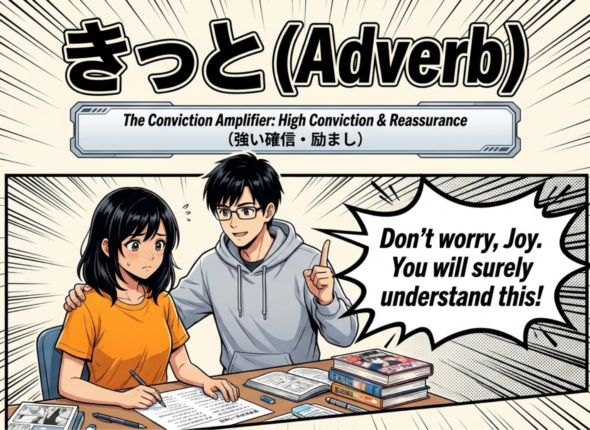
GrammarBook: きっと (Adverb: Surely / I’m sure that)
N4-G-061 きっと (Adverb: Surely / I’m sure that) Supporting / High Certainty & Encouragement 👀 Layer A: Visual Guide 📝 Quick Summary きっと (kitto) is an adverb used to express high certainty,...
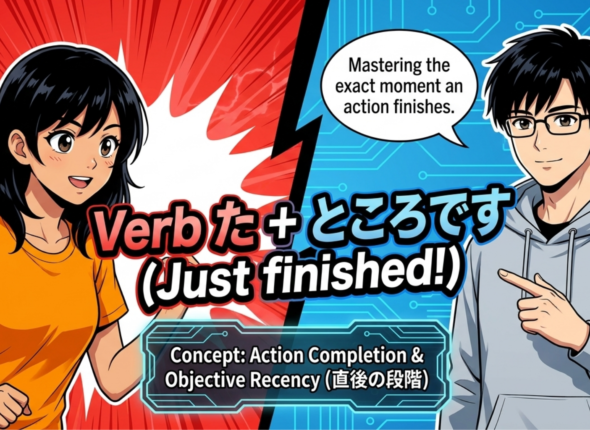
GrammarBook: Verb た + ところです (Just finished doing [Verb])
N4-G-060 Verb た + ところです (Just finished doing [Verb]) Core / Completion of Action & Fresh Occurrence 👀 Layer A: Visual Guide 📝 Quick Summary This grammar pattern connects to the Verb...
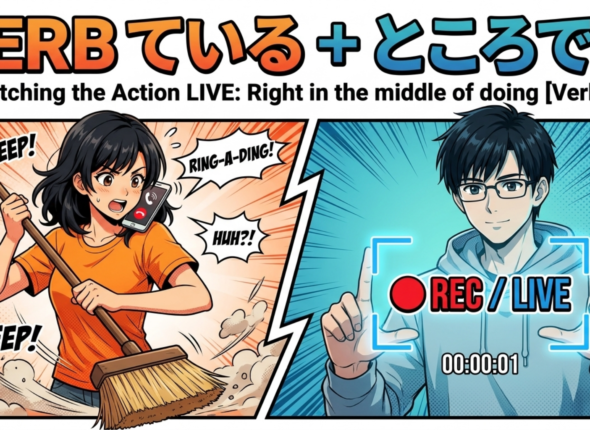
GrammarBook: Verb ている + ところです (In the middle of doing [Verb])
N4-G-059 Verb ている + ところです (In the middle of doing [Verb]) Core / Action in Progress & Ongoing Stage 👀 Layer A: Visual Guide 📝 Quick Summary This grammar pattern connects to...
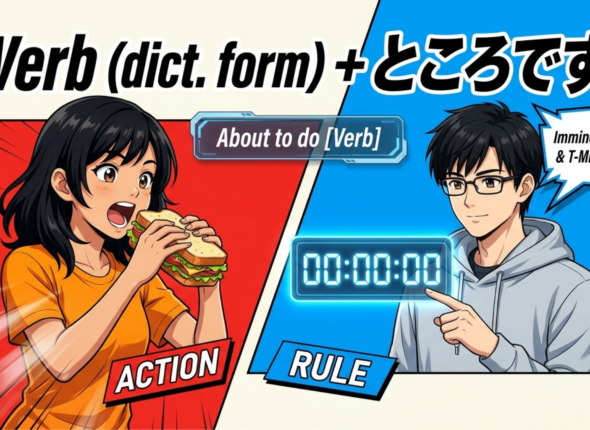
GrammarBook: Verb (dict. form) + ところです (About to do [Verb])
N4-G-058 Verb (dict. form) + ところです (About to do [Verb]) Core / Imminent Action & Point of Start 👀 Layer A: Visual Guide 📝 Quick Summary This grammar pattern connects to the...
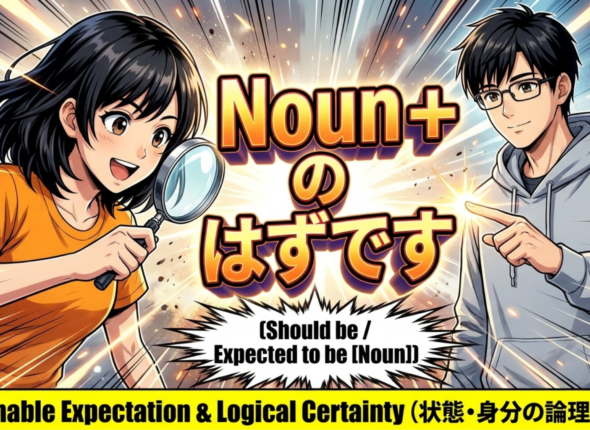
GrammarBook: Noun + の はずです (Should be / Expected to be [Noun])
N4-G-057 Noun + の はずです (Should be / Expected to be [Noun]) Core / Reasonable Expectation & Logical Certainty 👀 Layer A: Visual Guide 📝 Quick Summary This grammar pattern connects a...
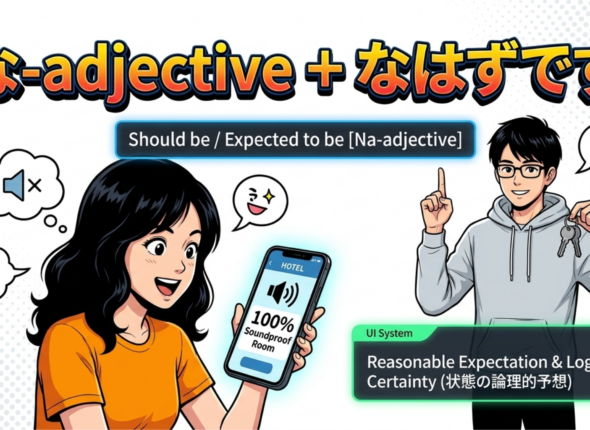
GrammarBook: な-adjective + な はずです (Should be / Expected to be [Na-adj])
N4-G-056 な-adjective + な はずです (Should be / Expected to be [Na-adj]) Core / Reasonable Expectation & Logical Certainty 👀 Layer A: Visual Guide 📝 Quick Summary This grammar pattern connects a...
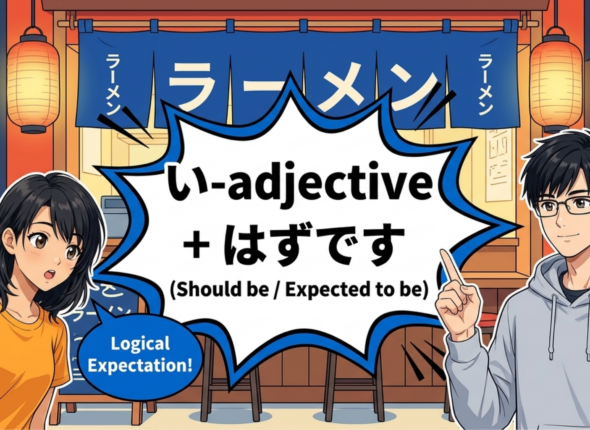
GrammarBook: い-adjective + はずです (Should be / Expected to be [I-adj])
N4-G-055 い-adjective + はずです (Should be / Expected to be [I-adj]) Core / Reasonable Expectation & Logical Certainty 👀 Layer A: Visual Guide 📝 Quick Summary This grammar pattern connects an い-adjective...
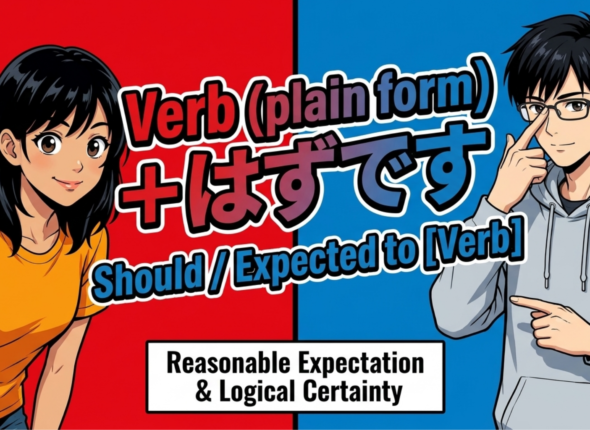
GrammarBook: Verb (plain form) + はずです (Should / Expected to [Verb])
N4-G-054 Verb (plain form) + はずです (Should / Expected to [Verb]) Core / Reasonable Expectation & Logical Certainty 👀 Layer A: Visual Guide 📝 Quick Summary This grammar pattern connects to the...
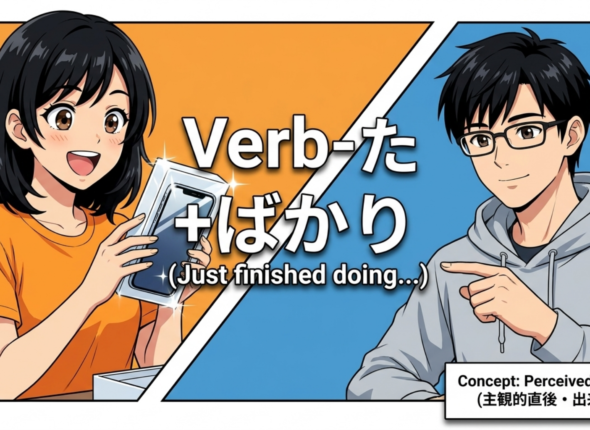
GrammarBook: Verbた + ばかり (Just finished doing [Verb])
N4-G-053 Verbた + ばかり (Just finished doing [Verb]) Supporting / Perceived Recency 👀 Layer A: Visual Guide 📝 Quick Summary This grammar pattern attaches to the Verb た-form to express that an...

The Difference Between 沈黙の意味が違う?日本語と英語の会話文化の違い |Japanese Grammar (N5–N3)
(oy panicking to fill the silence [Awkward / English] vs. Ken sitting calmly with closed eyes [Ma / Japanese]) “Nobody is talking… I have to say something!” -> Awkward Silence (Western Culture)...
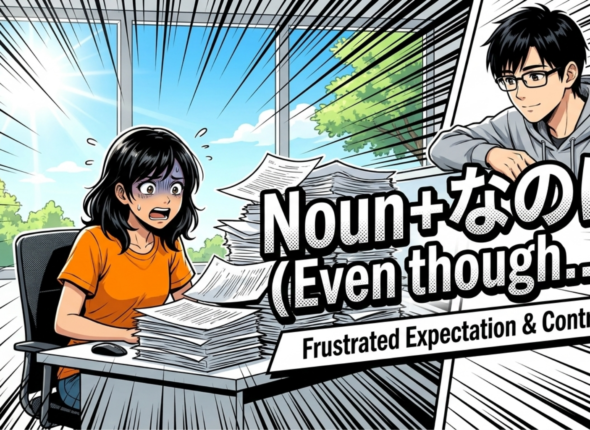
GrammarBook: Noun + な のに (Even though [Noun])
N4-G-052 Noun + な のに (Even though [Noun]) Core / Frustrated Expectation & Contrast 👀 Layer A: Visual Guide 📝 Quick Summary This grammar pattern connects a Noun to のに by attaching...
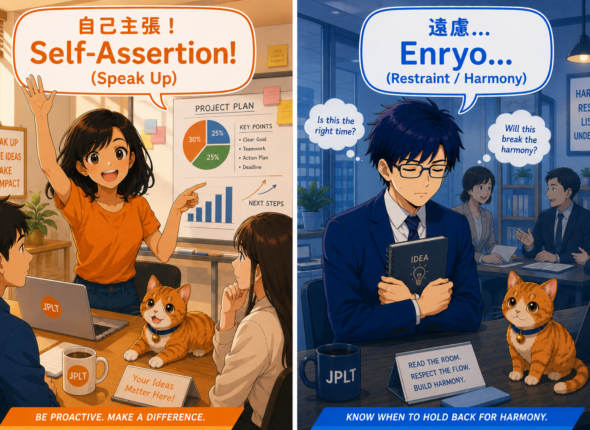
【使い分け】自己主張の文化と遠慮の文化の違い の違い [日本語学習]
(自信満々に手を挙げて発言するJoy [自己主張/英語圏] vs. 部屋の空気を読んで発言を控えめにするKen [遠慮/日本]) 「私はこうすべきだと思います!」→ 自己主張(欧米のスタイル) 「グループの和を乱さないよう、一歩引きます。」→ 遠慮(日本のスタイル) 西洋の企業文化では、「きしむ車輪は油を差される(The squeaky wheel gets the grease / 主張する者が報われる)」と言われます。良いアイデアがあれば、声を上げて自己主張することが期待されます。しかし日本では「出る杭は打たれる(The nail that sticks out gets hammered down)」と言われます。日本の遠慮(Enryo)の美徳とは、チームの調和を守るために自分のエゴを抑えることです。自己主張が強すぎると、「自分勝手な人」というレッテルを貼られてしまいます。Joyが田中ディレクターにクラスルームの運用変更を提案した時、何が起こるか見てみましょう。 🗣 会話シーン (Conversation Scene) Joyは、オンラインのアッパービギナークラスの生徒数が減少していることに気づき、運用面での解決策を思いつきました。 Joy ディレクター!アッパービギナーの生徒数が減っているので、Room BをRoom...
The Difference Between 自己主張の文化と遠慮の文化の違い の違い |Japanese Grammar (N5–N3)
(Joy confidently raising her hand to speak [Self-Assertion] vs. Ken hesitating and holding back to read the room [Enryo]) “I think we should do this!” -> 自己主張 (Jiko-shuchou / Self-Assertion) “I’ll hold...
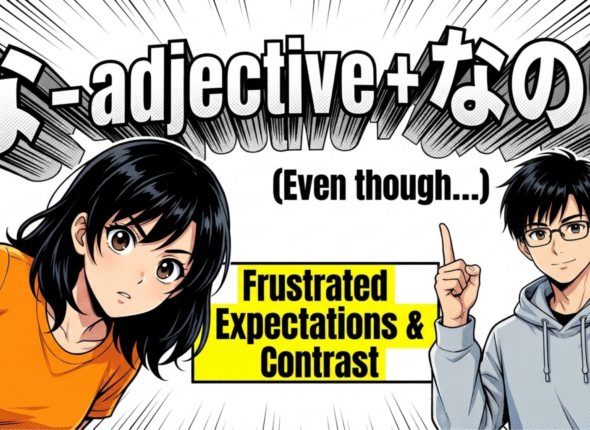
GrammarBook: な-adjective + な のに (Even though [Na-adjective])
N4-G-051 な-adjective + な のに (Even though [Na-adjective]) Core / Frustrated Expectation & Contrast 👀 Layer A: Visual Guide 📝 Quick Summary This grammar pattern connects a な-adjective to のに by attaching...
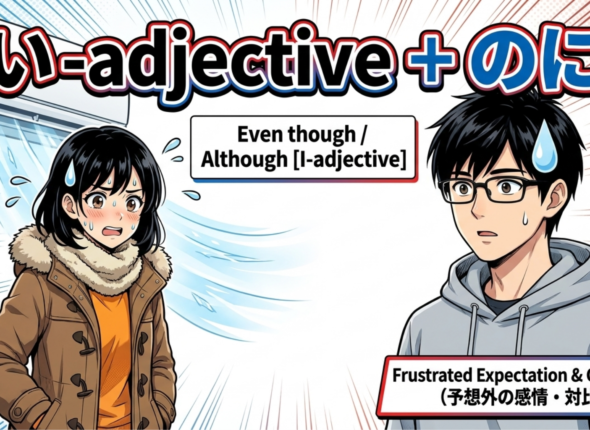
GrammarBook: い-adjective + のに (Even though [I-adjective])
N4-G-050 い-adjective + のに (Even though [I-adjective]) Core / Frustrated Expectation & Contrast 👀 Layer A: Visual Guide 📝 Quick Summary This grammar pattern connects an い-adjective in its Plain Form directly...
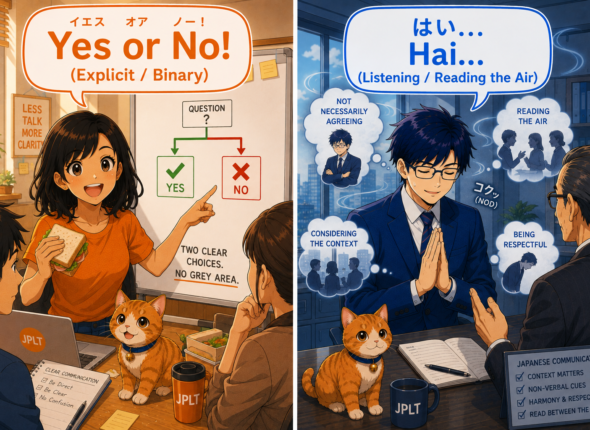
【使い分け】YES/NO重視の英語と空気重視の日本語の違い の違い [日本語学習]
(明確なYES/NOのフローチャートを自信満々に指差すJoy [英語の明確さ] vs. 腕を組み、ためらいの汗をかきながら「はい…」と頷くKen [日本語の相槌・空気を読む]) 「Yes, 私は同意します。」→ YES(明確で絶対的な同意) 「はい、あなたの声は聞こえていますよ。」→ はい(相槌・リスニングの合図) 英語圏では、言葉が意味の90%を伝えます。誰かが「Yes」と言えば、それは「進めて良い」という明確な青信号(グリーンライト)です。しかし日本では、言葉は意味の30%しか伝えません。残りの70%は空気(Kuuki – 雰囲気や文脈)に隠されています。外国人が犯す最大のミスは、日本語の「はい (Hai)」が英語の「Yes (同意)」と同じだと勘違いすることです。Joyがオンライン語学学校の請求システムについて提案をした時、何が起こるか見てみましょう。 🗣 会話シーン (Conversation Scene) Joyは田中ディレクターに、語学学校のサブスクリプションに関する運用変更を提案しています。 Joy ディレクター、生徒のサブスクリプションですが、Shopifyの自動請求(Auto-billing)を月額から週額に変更するのはどうでしょうか? (Director, regarding the student subscriptions, what if we change the...
The Difference Between YES/NO重視の英語と空気重視の日本語の違い の違い |Japanese Grammar (N5–N3)
(Joy pointing to a clear Yes/No flowchart [Explicit] vs. Ken nodding while looking hesitant [Reading the Air / Aizuchi]) “Yes, I agree.” -> YES (Binary & Explicit) “Yes, I hear the words...