

Blog
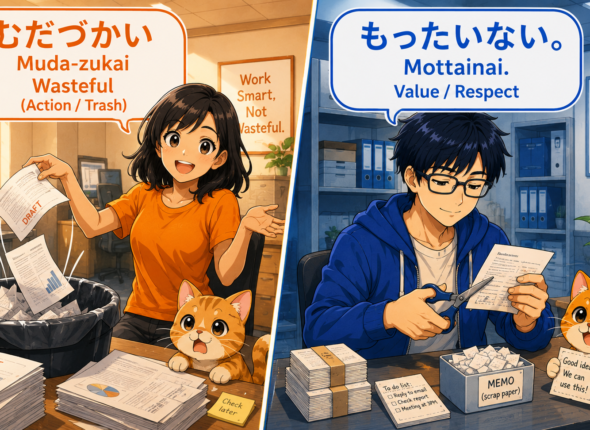
The Difference Between 「もったいない」と “Wasteful” の違い の違い |Japanese Grammar (N5–N3)
(Joy throwing away paper [Wasteful Action] vs. Ken making scrap memo pads out of misprints [Mottainai Respect]) “Throwing this away is bad.” -> Wasteful (Focus on the negative action) “This object still...
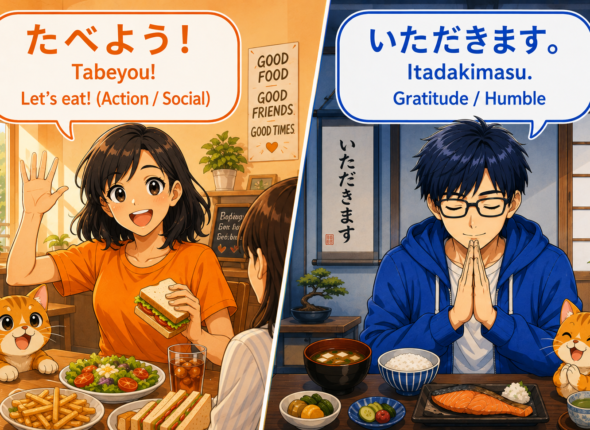
【使い分け】 「いただきます」と “Let’s eat” の本当の意味 の違い [日本語学習]
( 笑顔で「食べましょう!」と声をかけるJoy [社会的アクション] vs. 手を合わせて目を閉じ「いただきます」と言うKen [謙虚な感謝]) 「さあ、みんなで食べよう!」→ Let’s eat / 食べましょう(行動の合図) 「この食事に感謝します。」→ いただきます(謙虚な感謝) アニメや日本のドラマを見ていると、誰もが食べる前に「いただきます (Itadakimasu)」と言うのを知っているでしょう。英語の字幕では、ほとんどの場合「Let’s eat!」や「Thanks for the food.」と翻訳されます。しかし、この言葉の本当の意味は、単なる「食事の開始の合図」よりもずっと深いものです。田中ディレクターがJoyとKenを美味しいお寿司ランチに連れて行った時、何が起こるか見てみましょう。 🗣 会話シーン (Conversation Scene) 田中ディレクターは、プロジェクトの成功を祝ってチームを寿司屋に連れてきました。 田中 お疲れ様。さあ、新鮮なうちに食べましょう。 (Good work, everyone. Well then, let’s...
The Difference Between 「いただきます」と “Let’s eat” の本当の意味 の違い |Japanese Grammar (N5–N3)
(Joy cheerfully saying Let’s eat [Social Action] vs. Ken pressing his hands together saying Itadakimasu [Humble Gratitude]) “Okay everyone, time to eat!” -> Let’s eat / 食べましょう (Tabemashou) (Social Action) “Thank you...

【使い分け】「頑張って」と “Good luck” のニュアンスの違いの違い [日本語学習]
( 指をクロスさせて「Good Luck (運)」を祈るJoy vs. ガッツポーズをして「頑張って (努力)」を示すKen) 「幸運があなたに味方しますように!」→ Good luck(運や偶然に頼る) 「限界まで努力して、全力を尽くせ!」→ 頑張って(汗と努力に頼る) 英語の「Good luck」を辞書で引くと、通常は「頑張って」と出てきます。しかし、この2つのフレーズの背後にある「文化的なマインドセット」は全く異なります。西洋文化では、成功を「宇宙のめぐり合わせ(運)」に帰することがよくあります。一方、日本文化では、成功を「忍耐と努力」に帰します。さらに、職場で「頑張って」を使うことには、危険な罠(トラップ)が潜んでいます!Joyが田中ディレクターに「Good luck」のつもりで声をかけた時、何が起こるか見てみましょう。 🗣 会話シーン (Conversation Scene) 田中ディレクターがジャケットを羽織り、VIPクライアントとの重要なプレゼンのために外出する準備をしています。 田中 それでは、A社へのプレゼンに行ってきます。 (Well then, I am heading out for the presentation to...
The Difference Between 「頑張って」と “Good luck” のニュアンスの違いの違い |Japanese Grammar (N5–N3)
(Joy crossing fingers for Good Luck [Chance] vs. Ken making a determined fist pump for Ganbatte [Effort]) “I hope things go well for you!” -> Good luck (Relies on chance/fortune) “Push yourself...

The Difference Betweenの違い |Japanese Grammar (N5–N3)
(Joy causing confusion with Daijoubu [Ambiguous] vs. Ken being clear with Kekkou desu [Professional]) “Are you hurt?” -> 大丈夫です (I’m fine) “Do you need a bag?” -> 大丈夫です (No thank you) “Can...
【使い分け】「大丈夫」と “It’s okay” の意味は本当に同じ?の違い [日本語学習]
(「大丈夫です」と言って相手を混乱させるJoy [曖昧] vs. 「結構です」と明確に断るKen [プロフェッショナル]) 「怪我はない?」→ 大丈夫です(I’m fine) 「レジ袋はいりますか?」→ 大丈夫です(No thank you) 「金曜日までに終わる?」→ 大丈夫です(No problem) 「大丈夫 (Daijoubu)」は、英語の「It’s okay」が持つ多くの意味をカバーできるため、初心者が最初に覚える便利な言葉です。しかし、この便利さは罠(トラップ)です!日本のビジネスの世界で、「YES(問題ない)」と「NO(不要だ)」の両方を意味する言葉を使うと、マネージャーは混乱してしまいます。Joyが田中ディレクターにこの「魔法の言葉」を使った時に何が起こるか見てみましょう。 🗣 会話シーン (Conversation Scene) 田中ディレクターが、Joyの現在の仕事量が多すぎないか(手伝いが必要か)を確認しています。 田中 Joyさん、今の仕事の量、少し減らしましょうか? (Joy, should I reduce your current workload...
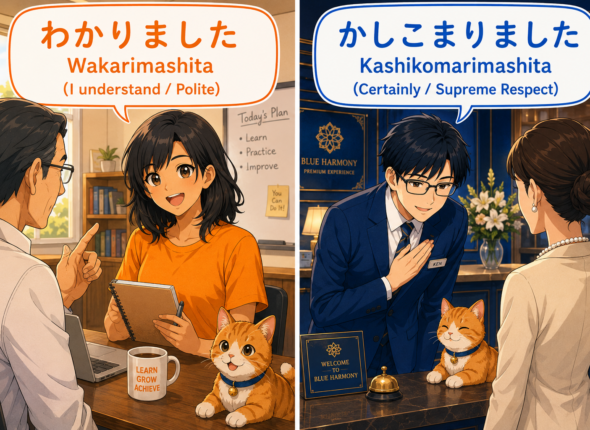
【使い分け】「分かりました」と「かしこまりました」の使い分け の違い [日本語学習]
(笑顔でうなずきながら「分かりました」と言うJoy [標準的な丁寧さ] vs. 深くお辞儀をして「かしこまりました」と言うKen [最高レベルの敬意]) 「その文法、理解しました。」→ 分かりました(標準的な丁寧語) 「ご注文の品をお持ちいたします。」→ かしこまりました(究極のおもてなし・謙譲語) 日本で働くなら、顧客やVIPに対応する際、「分かりました」だけでは不十分であることにすぐに気づくでしょう。真の「おもてなし(Omotenashi)」を示すには、言葉をアップグレードしなければなりません。Joyが上司から重要な指示を受けた時に何が起こるか見てみましょう。 🗣 会話シーン (Conversation Scene) 田中ディレクターがJoyに、会社を訪問する非常に重要なVIPの顧客に関する指示を出しています。 田中 Joyさん、明日VIPのお客様がいらっしゃるので、第一会議室を準備しておいてください。 (Joy, a VIP client is coming tomorrow, so please prepare Meeting Room 1.) Joy はい、分かりました!...
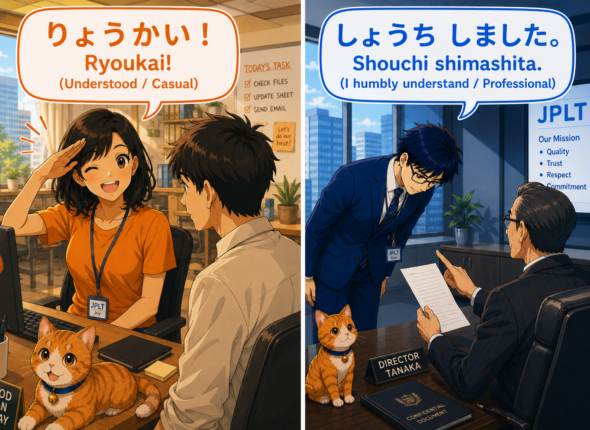
【使い分け】「了解」と「承知しました」の敬語の違い の違い [日本語学習]
(同僚に明るく敬礼して「了解!」と言うJoy [カジュアル] vs. 上司に深くお辞儀をして「承知しました」と言うKen [謙譲語]) 「わかったよ!」(同僚に対して)→ 了解!(カジュアル・上から目線) 「かしこまりました。」(上司に対して)→ 承知しました。(謙譲語・下から上へ) 日本のオフィスで指示を受けた時、「わかりました」と伝える必要があります。多くの初心者が、プロっぽく聞こえる「了解 (Ryoukai)」を使いがちです。しかし、「了解」には隠された「上から目線」のニュアンスがあります!目上の人にこれを使うのは重大なマナー違反です。ビジネスで生き残るためには、謙譲語(Kenjougo)である「承知しました (Shouchi shimashita)」をマスターしなければなりません。田中ディレクターがJoyにビジュアル素材の作成を頼んだ時に何が起こるか見てみましょう。 🗣 会話シーン (Conversation Scene) 田中ディレクターがJoyに、会社のSNSコミュニケーションデザインに関するタスクを指示しています。 田中 Joyさん、来週のキャンペーン用に、新しいSNSのバナー画像を3つ作成しておいてください。 (Joy, please create three new SNS banner images for next week’s campaign.)...
The Difference Between 「了解」と「承知しました」の敬語の違い の違い |Japanese Grammar (N5–N3)
(Joy saluting and saying Ryoukai to a coworker [Casual] vs. Ken humbly bowing and saying Shouchi shimashita to a boss [Humble]) “Got it!” (To a coworker) -> 了解!(Ryoukai!) (Casual / Top-Down) “I...
Upper Beginner Japanese Course
Your Next Stage in Japanese Upper-Beginner Japanese Course Move beyond basic sentences and communicate with greater detail. Build on your beginner foundation through Studio Season 2 and Studio Season 3. Learn more...
JLPT N5 Prep Course
Structured JLPT Preparation JLPT N5 Prep CourseBuild complete N5 skills step by step. Learn JLPT N5 through a practical cycle of understanding, discovering, processing, using, and recalling Japanese—not by memorizing grammar rules...
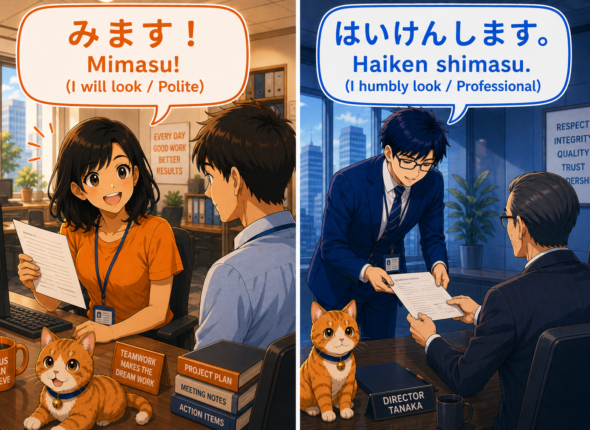
The Difference Between「見ます」と「拝見します」の正しい使い分けの違い |Japanese Grammar (N5–N3)
(Joy looking at a document saying Mimasu [Polite] vs. Ken humbly looking at a client document saying Haiken shimasu [Humble]) “I will look at the document.” (To a coworker) -> 資料を見ます。...
【使い分け】「見ます」と「拝見します」の正しい使い分けの違い [日本語学習]
(同僚に明るく「見ます!」と言うJoy [丁寧語] vs. 顧客の資料を敬意を持って「拝見します」と見るKen [謙譲語]) 「その資料、見ます。」(同僚に対して)→ 丁寧語(Polite) 「メールを拝見します。」(顧客に対して)→ 謙譲語(Humble) Studio Season 1のレッスンで、皆さんは「to see」や「to look」を意味する「見ます (Mimasu)」を日常的に使っていると思います。しかし、日本のビジネスでは「誰の」資料やメールを見ているのかが重要です。上司やクライアントが作成したもの、あるいは彼らの所有物を見る時は、謙譲語(Kenjougo)である「拝見します (Haiken shimasu)」を使わなければなりません。田中ディレクターがJoyに顧客のデザインを確認するよう頼んだ時に何が起こるか見てみましょう。 🗣 会話シーン (Conversation Scene) 田中ディレクターが、VIPクライアントから送られてきたデザイン資料のメールをJoyに転送しました。 田中 Joyさん、クライアントから送られてきた新しいデザイン資料を見ておいてください。 (Joy, please take a look at the new...
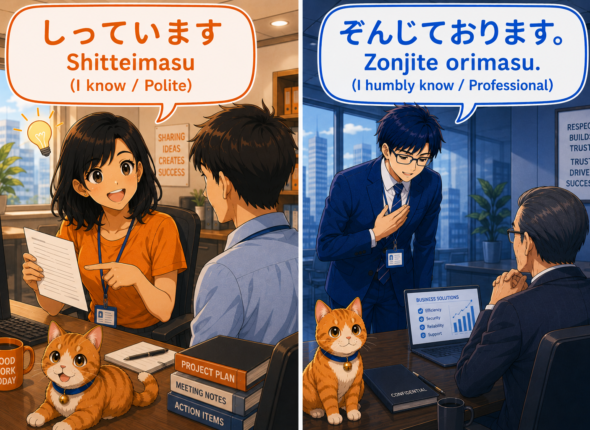
【使い分け】 「知っています」と「存じております 」の敬語の違い の違い [日本語学習]
(同僚に自信を持って「知っています」と言うJoy [丁寧語] vs. 上司に胸に手を当てて謙虚に「存じております」と言うKen [謙譲語]) 「会議の時間は知っています。」(同僚に対して)→ 丁寧語(Polite) 「クライアントの背景は存じております。」(上司に対して)→ 謙譲語(Humble) 日本のビジネスにおいて、自分の知識や状況の把握を伝える場面は毎日あります。Studio Season 1のレッスンでは、まず「知っています (Shitteimasu)」を学んできました。しかし、厳しい上司や重要な顧客を相手にする場合、標準的な丁寧さだけでは不十分です。ここでは「謙譲語(Kenjougo)」を使って意図的に自分の立場を下げ、さらにフォーマルな「存じております (Zonjite orimasu)」を使わなければなりません。Joyが田中ディレクターの質問に答える時に何が起こるか見てみましょう。 🗣 会話シーン (Conversation Scene) 田中ディレクターがJoyに、明日訪問するVIPクライアントについて知っているか尋ねています。 田中 Joyさん、明日いらっしゃるA社の鈴木社長のことは知っていますか? (Joy, do you know about President Suzuki of Company A...
The Difference Between 「知っています」と「存じております 」の敬語の違いの違い |Japanese Grammar (N5–N3)
(Joy confidently saying Shitteimasu to a coworker [Polite] vs. Ken humbly saying Zonjite orimasu to a boss [Humble]) “I know the meeting time.” (To a coworker) -> 知っています。 (Polite) “I know the...
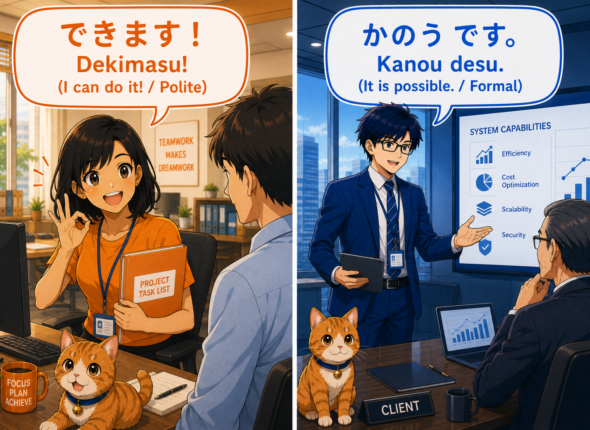
【使い分け】「できます」と「可能です」のフォーマル度の違い の違い [日本語学習]
(同僚に「できます!」とOKサインを出すJoy [標準的な丁寧さ] vs. 顧客に「可能です」とプロフェッショナルにプレゼンするKen [フォーマルなビジネス]) 「スケジュール変更できます。」(会話的)→ 標準的な丁寧語 「スケジュール変更可能です。」(プロフェッショナル)→ フォーマル・客観的 「I can do it」や「It is possible」と言いたい時、最初に習う言葉は「できます (Dekimasu)」です。オフィスで使うには十分に丁寧ですが、日本のビジネスコミュニケーションでは、個人的な言葉よりも客観的で論理的に聞こえる言葉が好まれます。特に書き言葉(メールなど)で真のプロフェッショナルとして見られるためには、「可能です (Kanou desu)」にアップグレードするべきです。Joyが顧客にメールを書く時に何が起こるか見てみましょう。 🗣 会話シーン (Conversation Scene) 田中ディレクターがJoyに、ウェブサイトの更新について重要なクライアントに返信するよう頼みます。 田中 Joyさん、クライアントに「金曜日までにデザインの変更ができる」とメールで伝えてください。 (Joy, please email the client and...
The Difference Between 「できます」と「可能です」のフォーマル度の違い の違い |Japanese Grammar (N5–N3)
(Joy making an OK sign saying Dekimasu [Standard Polite] vs. Ken presenting professionally saying Kanou desu [Formal Business]) “I can change the schedule.” (Conversational) -> スケジュール変更できます。 (Standard Polite) “It is possible to...
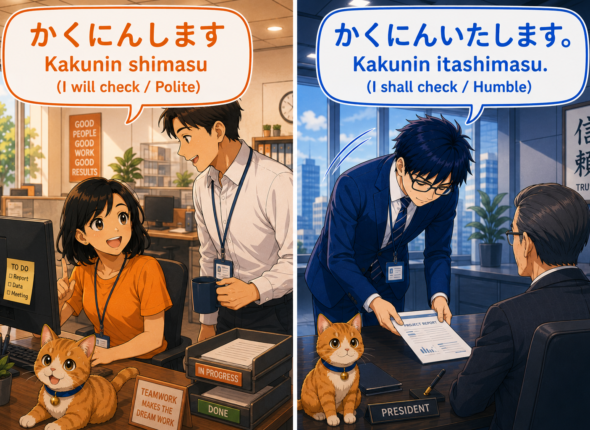
【使い分け】「確認します」と「確認いたします」の敬語の違い の違い [日本語学習]
(同僚に笑顔で「確認します」と言うJoy [丁寧語] vs. 顧客に深くお辞儀をして「確認いたします」と言うKen [謙譲語]) 「スケジュールを確認します。」(同僚に対して)→ 丁寧語(Polite) 「契約書を確認いたします。」(顧客に対して)→ 謙譲語(Humble) 日本のビジネスにおいて、「確認(Kakunin)」という言葉は1日に何十回も使われます。初心者は、動詞に「します (shimasu)」をつけて丁寧にする方法を学びます。しかし、VIPや顧客、厳しい上司を相手にする場合、標準的な丁寧さだけでは不十分です。ここでは「謙譲語(Kenjougo)」を使わなければなりません。Joyが重要な書類について田中ディレクターと話す時に何が起こるか見てみましょう。 🗣 会話シーン (Conversation Scene) 田中ディレクターがJoyに、提携企業からの重要な契約書をチェックするように頼みます。 田中 Joyさん、この契約書に間違いがないか見ておいてください。 (Joy, please take a look at this contract to see if there are...
The Difference Between 「確認します」と「確認いたします」の敬語の違い の違い |Japanese Grammar (N5–N3)
(Joy checking a file for a coworker saying Kakunin shimasu [Polite] vs. Ken humbly checking for a client saying Kakunin itashimasu [Humble]) “I’ll check the schedule.” (To a coworker) -> スケジュールを確認します。...