
Blog
【使い分け】自己主張の文化と遠慮の文化の違い の違い [日本語学習]
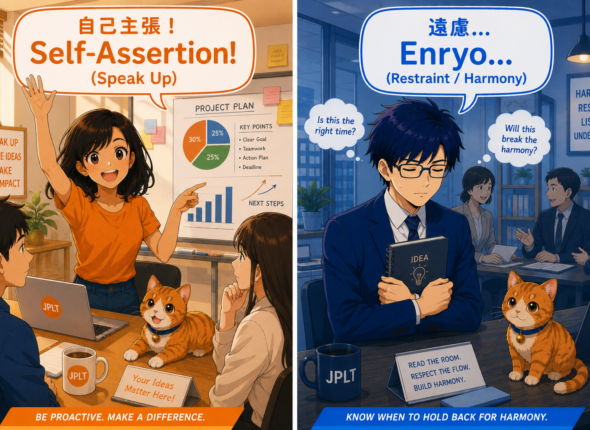
(自信満々に手を挙げて発言するJoy [自己主張/英語圏] vs. 部屋の空気を読んで発言を控えめにするKen [遠慮/日本]) 「私はこうすべきだと思います!」→ 自己主張(欧米のスタイル) 「グループの和を乱さないよう、一歩引きます。」→ 遠慮(日本のスタイル) 西洋の企業文化では、「きしむ車輪は油を差される(The squeaky wheel gets the grease / 主張する者が報われる)」と言われます。良いアイデアがあれば、声を上げて自己主張することが期待されます。しかし日本では「出る杭は打たれる(The nail that sticks out gets hammered down)」と言われます。日本の遠慮(Enryo)の美徳とは、チームの調和を守るために自分のエゴを抑えることです。自己主張が強すぎると、「自分勝手な人」というレッテルを貼られてしまいます。Joyが田中ディレクターにクラスルームの運用変更を提案した時、何が起こるか見てみましょう。 🗣 会話シーン (Conversation Scene) Joyは、オンラインのアッパービギナークラスの生徒数が減少していることに気づき、運用面での解決策を思いつきました。 Joy ディレクター!アッパービギナーの生徒数が減っているので、Room BをRoom...
The Difference Between 自己主張の文化と遠慮の文化の違い の違い |Japanese Grammar (N5–N3)
(Joy confidently raising her hand to speak [Self-Assertion] vs. Ken hesitating and holding back to read the room [Enryo]) “I think we should do this!” -> 自己主張 (Jiko-shuchou / Self-Assertion) “I’ll hold...
GrammarBook: な-adjective + な のに (Even though [Na-adjective])
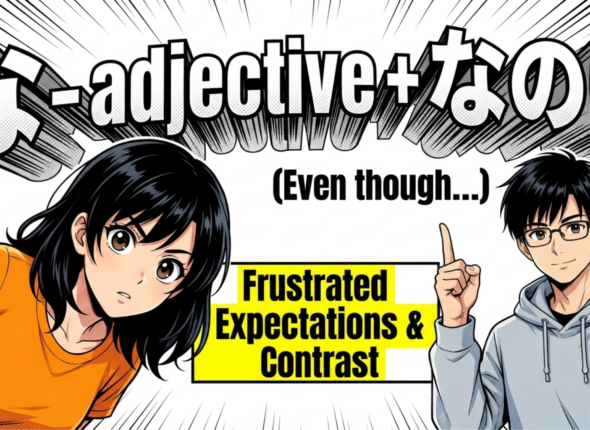
N4-G-051 な-adjective + な のに (Even though [Na-adjective]) Core / Frustrated Expectation & Contrast 👀 Layer A: Visual Guide 📝 Quick Summary This grammar pattern connects a な-adjective to のに by attaching...
GrammarBook: い-adjective + のに (Even though [I-adjective])
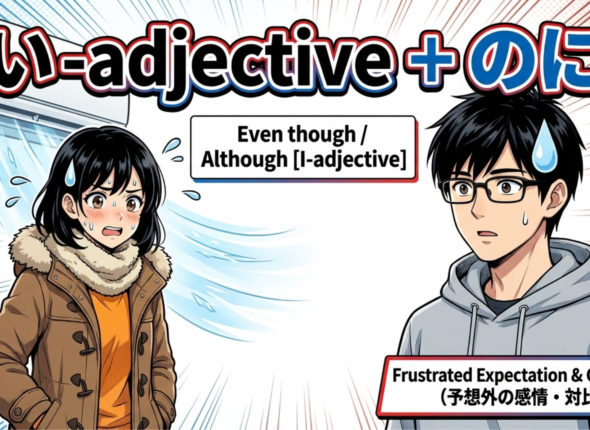
N4-G-050 い-adjective + のに (Even though [I-adjective]) Core / Frustrated Expectation & Contrast 👀 Layer A: Visual Guide 📝 Quick Summary This grammar pattern connects an い-adjective in its Plain Form directly...
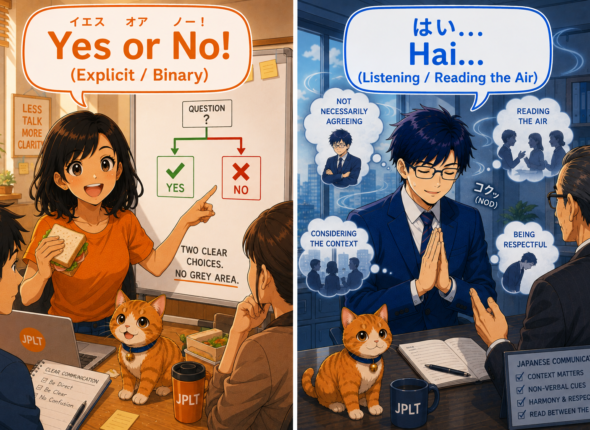
【使い分け】YES/NO重視の英語と空気重視の日本語の違い の違い [日本語学習]
(明確なYES/NOのフローチャートを自信満々に指差すJoy [英語の明確さ] vs. 腕を組み、ためらいの汗をかきながら「はい…」と頷くKen [日本語の相槌・空気を読む]) 「Yes, 私は同意します。」→ YES(明確で絶対的な同意) 「はい、あなたの声は聞こえていますよ。」→ はい(相槌・リスニングの合図) 英語圏では、言葉が意味の90%を伝えます。誰かが「Yes」と言えば、それは「進めて良い」という明確な青信号(グリーンライト)です。しかし日本では、言葉は意味の30%しか伝えません。残りの70%は空気(Kuuki – 雰囲気や文脈)に隠されています。外国人が犯す最大のミスは、日本語の「はい (Hai)」が英語の「Yes (同意)」と同じだと勘違いすることです。Joyがオンライン語学学校の請求システムについて提案をした時、何が起こるか見てみましょう。 🗣 会話シーン (Conversation Scene) Joyは田中ディレクターに、語学学校のサブスクリプションに関する運用変更を提案しています。 Joy ディレクター、生徒のサブスクリプションですが、Shopifyの自動請求(Auto-billing)を月額から週額に変更するのはどうでしょうか? (Director, regarding the student subscriptions, what if we change the...
The Difference Between YES/NO重視の英語と空気重視の日本語の違い の違い |Japanese Grammar (N5–N3)
(Joy pointing to a clear Yes/No flowchart [Explicit] vs. Ken nodding while looking hesitant [Reading the Air / Aizuchi]) “Yes, I agree.” -> YES (Binary & Explicit) “Yes, I hear the words...
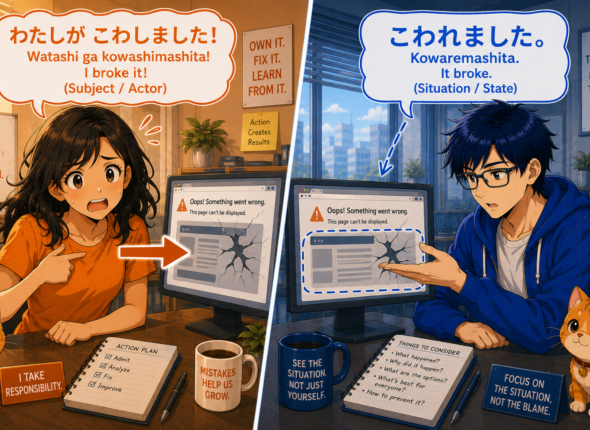
【使い分け】主語中心の英語と状況中心の日本語の違いの違い [日本語学習]
(Alt Text: パニックになって「私が壊した!」と自分を指差すJoy [主語中心/英語] vs. 画面を指し示し「壊れました」と状況を伝えるKen [状況中心/日本語]) 「私がスマホを落としました。」→ 主語中心(英語のスタイル) 「スマホが落ちてしまいました。」→ 状況中心(日本語のスタイル) 英語は「誰がそれをしたか?(Who did it?)」にこだわる言語です。すべての文に主語(私、あなた、彼)が必要です。しかし日本語は、「何が起きたか?(What happened?)」にこだわる言語です。環境、状況、モノの状態に焦点が当てられます。英語をそのまま日本語に直訳すると、攻撃的すぎたり、言い訳がましかったり、妙にドラマチックに聞こえたりします!Joyが語学学校のウェブページを管理中に技術的なミスを起こした時、何が起こるか見てみましょう。 🗣 会話シーン (Conversation Scene) JoyはElementor(エレメンター)を使って生徒用の予約ページを更新しています。コードの連携でミスをしてしまい、レイアウトがめちゃくちゃになってしまいました。彼女はすぐに田中ディレクターに報告します。 Joy ディレクター、すみません!私がエレメンターのレイアウトを壊しました! (Director, I’m sorry! *I* broke the Elementor layout!) 田中 えっ!?壊した!?わざとですか!?...
The Difference Between 主語中心の英語と状況中心の日本語の違い の違い |Japanese Grammar (N5–N3)
(Alt Text: Joy pointing to herself saying ‘I broke it’ [Subject-Centric] vs. Ken pointing to the screen saying ‘It broke’ [Situation-Centric]) “I dropped my phone.” -> 私が落としました (Subject-centric / English style) “My...
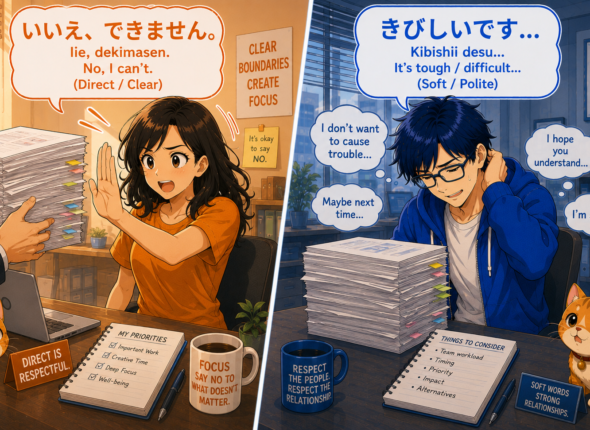
【使い分け】はっきり断る英語とやわらかく断る日本語の違いの違い [日本語学習]
(手をストップの形にしてはっきり「できません」と断るJoy [直接的/英語] vs. 申し訳なさそうに首の後ろをかいて「厳しいです」と断るKen [やわらかい/日本語]) 「いいえ、それはできません。」→ できません(攻撃的すぎる!) 「それは少し難しい状況です。」→ ちょっと厳しいです(プロフェッショナル&やわらかい) 英語圏では、明確な境界線を設定し「できません(I can’t)」とはっきり言うことは、誠実で効率的なコミュニケーションとして尊重されます。しかし日本のビジネス文化では、「いいえ(No)」や「できません(Dekimasen)」とフラットに要求を切り捨てることは、相手の顔の前でドアをピシャリと閉めるような冷たさを感じさせます。和を保つために、日本のプロフェッショナルは「やんわり断る (Yawanri kotowaru – Soft Refusal)」という技術を使います。田中ディレクターがJoyに急な仕事の更新を頼んだ時に、何が起こるか見てみましょう。 🗣 会話シーン (Conversation Scene) 午後4時30分。田中ディレクターが、アッパービギナーコースに関する急な依頼を持ってJoyのところにやってきました。 田中 Joyさん、アッパービギナーコースの生徒用予約ページですが、明日の朝までにデザインを更新できますか? (Joy, regarding the student booking page for the...
The Difference Betweenはっきり断る英語とやわらかく断る日本語の違いの違い |Japanese Grammar (N5–N3)
(Joy putting her hand up saying No, I can’t [Direct/English] vs. Ken rubbing his neck saying Kibishii desu [Soft/Japanese]) “No, I cannot do that.” -> できません (Dekimasen) (Too aggressive!) “That is a...
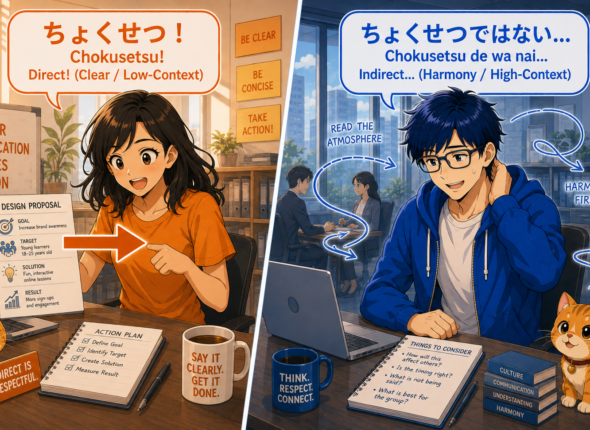
【使い分け】直接言う英語と遠回しに言う日本語の違い の違い [日本語学習]
( まっすぐな矢印で直接的に話すJoy [明確さ/英語] vs. 波線の矢印で遠回しに気遣いながら話すKen [調和/日本語]) 「この色を変えてください。好きではありません。」→ 直接的(ローコンテクスト / 英語) 「とても良いですね、ただ、色がちょっと……」→ 間接的(ハイコンテクスト / 日本語) 外国人が日本で経験する最大のカルチャーショックの一つが、コミュニケーション・スタイルの違いです。英語圏では、時間を節約し混乱を避けるため、「直接的であること」が礼儀正しいとされます。しかし日本では、直接的な表現は攻撃的、あるいは失礼だと見なされることがよくあります。日本人は調和を守るために「遠回し (Toomawashi)」を使います。Joyが田中ディレクターに新しいビジュアルデザインを提出した時に、何が起こるか見てみましょう。 🗣 会話シーン (Conversation Scene) Joyは明日のSNSキャンペーン用のビジュアルデザインを作成し終え、田中ディレクターに見せています。 Joy ディレクター、明日のSNS用のビジュアルデザインが完成しました!いかがですか? (Director, the visual design for tomorrow’s SNS is...
The Difference Between 直接言う英語と遠回しに言う日本語の違い の違い |Japanese Grammar (N5–N3)
(Joy speaking directly with a straight arrow [Clear/English] vs. Ken smiling politely with a wavy arrow [Harmony/Japanese]) “Please change this color, I don’t like it.” -> Direct (Low-Context / English) “This is...
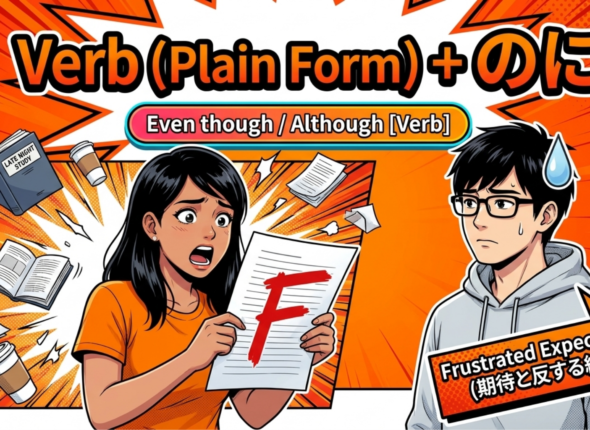
GrammarBook: Verb (plain form) + のに (Even though / Although [Verb])
N4-G-049 Verb (plain form) + のに (Even though / Although [Verb]) Core / Frustrated Expectation & Contrast 👀 Layer A: Visual Guide 📝 Quick Summary This grammar pattern connects to the Plain...
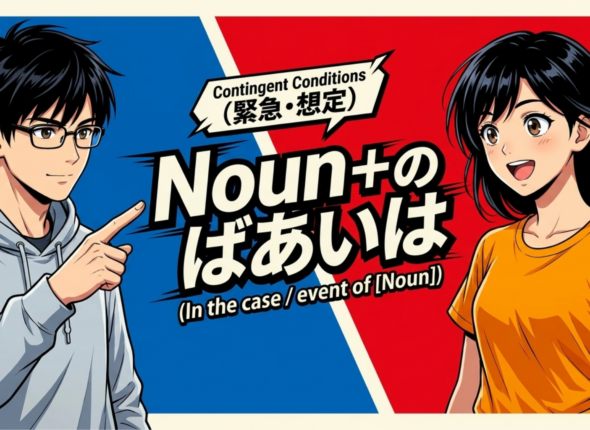
GrammarBook: Noun + の ばあいは (In the case of [Noun])
N4-G-048 Noun + の ばあいは (In the case of [Noun]) Supporting / Expressing Contingency & Conditions 👀 Layer A: Visual Guide 📝 Quick Summary This grammar pattern connects a Noun to ばあいは...
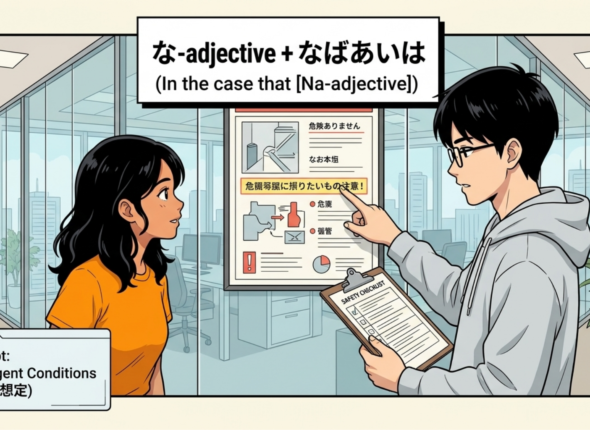
GrammarBook: な-adjective + な ばあいは (In the case of [Na-adjective])
N4-G-047 な-adjective + な ばあいは (In the case of [Na-adjective]) Supporting / Expressing Contingency & Conditions 👀 Layer A: Visual Guide 📝 Quick Summary This grammar pattern connects a な-adjective to ばあいは...
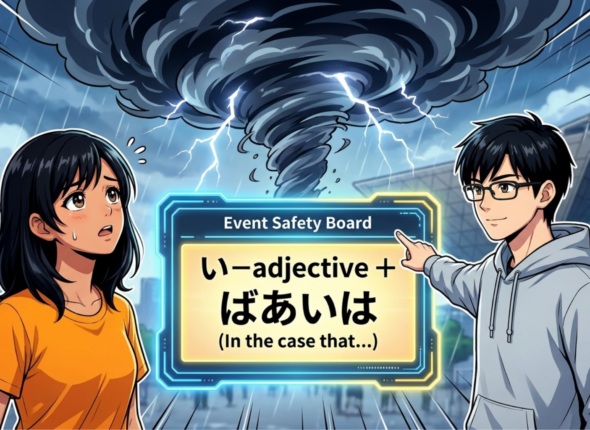
GrammarBook: い-adjective + ばあいは (In the case of [I-adjective])
N4-G-046 い-adjective + ばあいは (In the case of [I-adjective]) Supporting / Expressing Contingency & Conditions 👀 Layer A: Visual Guide 📝 Quick Summary This grammar pattern connects an い-adjective in its Plain...
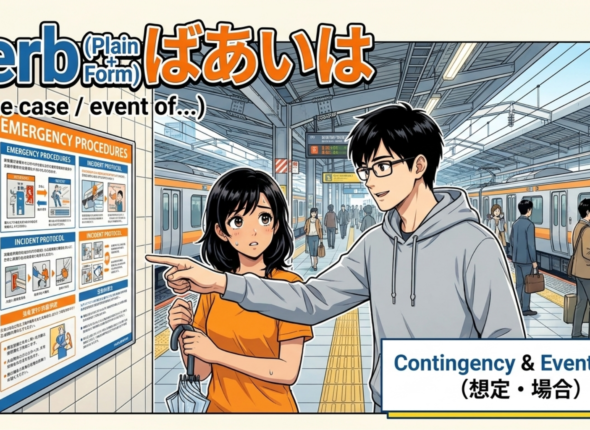
GrammarBook: Verb (plain form) + ばあいは (In the case of [Verb])
N4-G-045 Verb (plain form) + ばあいは (In the case of [Verb]) Core / Expressing Contingency & Conditions 👀 Layer A: Visual Guide 📝 Quick Summary This grammar pattern connects to the Plain...
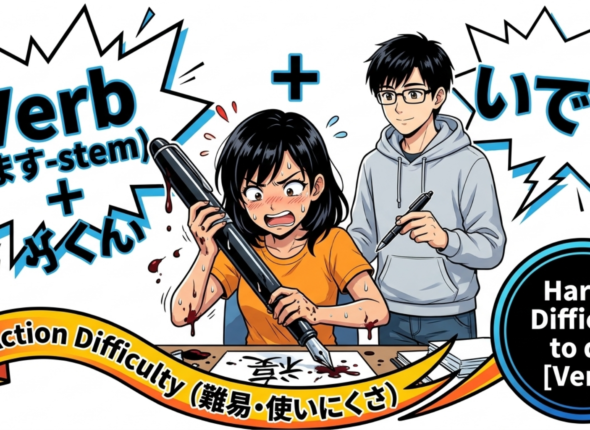
GrammarBook: Verb ます-stem + にくいです (Hard to do [Verb])
N4-G-044 Verb ます-stem + にくいです (Hard to do [Verb]) Core / Expressing Difficulty of Action 👀 Layer A: Visual Guide 📝 Quick Summary This grammar pattern attaches to the verb stem (Masu-stem)...
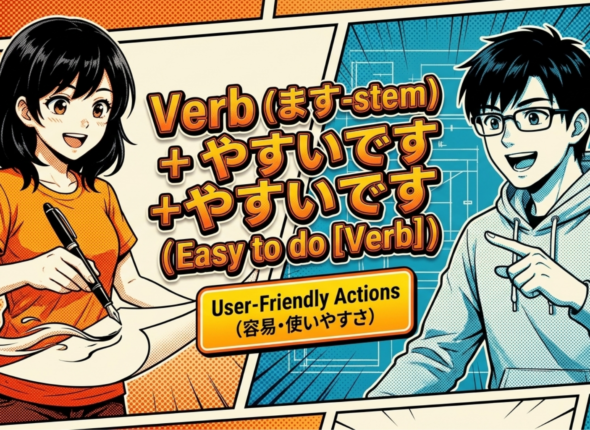
GrammarBook: Verb ます-stem + やすいです (Easy to do [Verb])
N4-G-043 Verb ます-stem + やすいです (Easy to do [Verb]) Core / Expressing Ease of Action 👀 Layer A: Visual Guide 📝 Quick Summary This grammar pattern attaches to the verb stem (Masu-stem)...
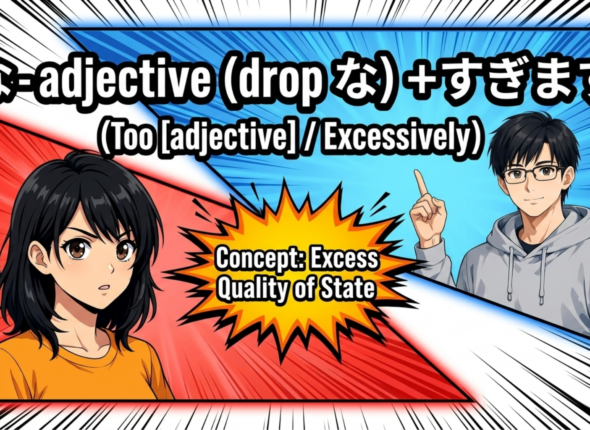
GrammarBook: な-adjective + すぎます (Too [adjective] / Excessively)
N4-G-042 な-adjective + すぎます (Too [adjective] / Excessively) Supporting / Expressing Excess Quality 👀 Layer A: Visual Guide 📝 Quick Summary This grammar pattern connects to the base stem of a な-adjective...