


Japanese You Keep Seeing: メニューの「おすすめ」は何をおすすめしている? |Japanese Grammar (N5–N3)
(Joy pointing at a handwritten Izakaya menu asking about “Honjitsu no Osusume”, with Ken gesturing excitedly, Raya pouring tea, and an orange cat in a headband looking at sashimi) Welcome to...

Japanese You Keep Seeing: 食べた後の「ごちそうさま」にはどんな意味がある? |Japanese Grammar (N5–N3)
(Joy pressing her hands together saying “Gochisousama!” after finishing ramen, with Ken, Raya, and a full-bellied orange cat cleaning its paw) Welcome to “Japanese You Keep Seeing”! In our last lesson,...

Japanese You Keep Seeing: 食事の前に言う「いただきます」って本当は何? |Japanese Grammar (N5–N3)
(Joy, Ken, and Raya pressing their hands together saying “Itadakimasu!” before a traditional Ryokan dinner, while an orange cat puts its paws together) Welcome to “Japanese You Keep Seeing”! Before a...

Japanese You Keep Seeing: 「こちらになります」と店員さんがよく言うのはなぜ? |Japanese Grammar (N5–N3)
( A cafe clerk serving a fluffy pancake to Joy and saying “Kochira ni narimasu”, with Ken and Raya smiling, and an orange cat peeking from behind a menu) Welcome to...

Japanese You Keep Seeing: 店員さんの「少々お待ちください」はどのくらい待つ? |Japanese Grammar (N5–N3)
(A boutique clerk politely asking Joy “Shoushou omachi kudasai”, while Ken smiles, Raya browses, and an orange cat plays with a ribbon) Welcome to “Japanese You Keep Seeing”! Whether you are...

Japanese You Keep Seeing: 「ポイントカードはお持ちですか?」と聞かれたらどう答える? |Japanese Grammar (N5–N3)
( A drugstore cashier asking Joy “Pointo kādo wa omochi desu ka?”, as Joy searches her purse, Raya holds up a smartphone barcode, Ken points, and an orange cat bats a...

Japanese You Keep Seeing:レジで聞く「袋はどうしますか?」って何を聞かれている |Japanese Grammar (N5–N3)
( A convenience store clerk asking Joy “Fukuro wa dou shimasu ka?”, with Raya pulling out an eco-bag, Ken pointing at it, and an orange cat playing on the ATM) Welcome...

Japanese You Keep Seeing: 「半額」が読めると日本の買い物が楽しくなる |Japanese Grammar (N5–N3)
(Joy holding a sushi bento and saying “Hangaku!” in a Japanese supermarket, with Ken giving a thumbs up, Raya holding a basket, and a cat in an eco-bag) Welcome to “Japanese...

Japanese You Keep Seeing: 「売り切れ」と書いてあったらもう買えない?|Japanese Grammar (N5–N3)
( Joy looking sad at an empty cake tray asking “Urikire?”, with Ken shrugging, Raya holding a different cake box, and an orange cat pawing sadly at the glass) Welcome to...

Japanese You Keep Seeing: 日本の店でよく見る「新商品」ってどう読む?|Japanese Grammar (N5–N3)
(Joy pointing at a promotional sign asking “Shin-shōhin?” in a Japanese stationery store, with Ken giving a thumbs up and an orange cat sleeping in a basket) Welcome to “Japanese You...

Japanese You Keep Seeing: 商品に書いてある「人気」って何 |Japanese Grammar (N5–N3)
( Joy holding a skincare bottle asking “Ninki?” in a brightly lit Japanese drugstore, while Ken points at a sign and an orange cat plays with a receipt) Welcome to “Japanese...

Japanese You Keep Seeing: お店で見る「おすすめ」ってどういう意味 |Japanese Grammar (N5–N3)
(Joy holding a tray in a Japanese bakery asking Ken “Osusume wa?”, with Raya buying bread and an orange cat in a baker’s hat hiding behind baguettes) Welcome to “Japanese You...

Japanese You Keep Seeing: 「またね」はいつ会うか決まっていなくても使える?|Japanese Grammar (N5–N3)
(Joy waving goodbye at a sunset train station gate saying “Mata ne!” to Ken and Raya, while an orange cat bats at her IC card) Welcome to “Japanese You Keep Seeing”!...

Japanese You Keep Seeing: 「元気?」と日本人は本当に毎回聞く?|Japanese Grammar (N5–N3)
(Joy waving and asking Ken “Genki?” on a Shinkansen platform, making Ken look confused. Raya smiles while an orange cat sniffs a bento box.) Welcome to “Japanese You Keep Seeing”! In...

Japanese You Keep Seeing: 「お久しぶりです」はどのくらい会っていない時に使う? |Japanese Grammar (N5–N3)
(Joy saying “Ohisashiburi desu!” to Ken as he returns to the photography studio with his suitcase, while Raya smiles and an orange cat sleeps in an umbrella) Welcome to “Japanese You Keep...
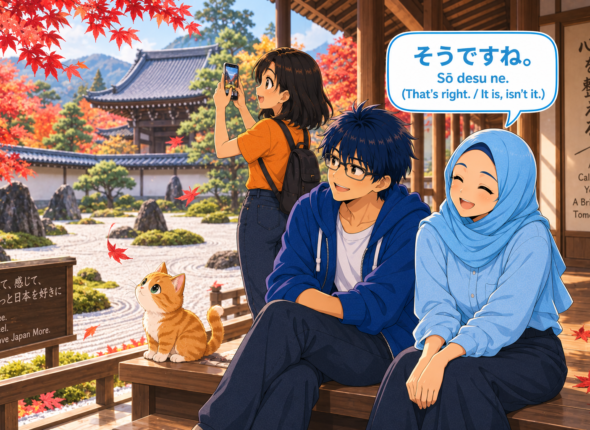
Japanese You Keep Seeing: 「そうですね」が会話でこんなによく出てくるのはなぜ?|Japanese Grammar (N5–N3)
(Raya nodding and saying “Sou desu ne” to Ken at a peaceful Zen temple garden in autumn, with Joy taking a photo and an orange cat watching a falling leaf) Welcome...

Japanese You Keep Seeing: 日本人が「へえ!」と言う時はどんな気持ち?|Japanese Grammar (N5–N3)
(Joy looking amazed saying “Hee!” at a digital art museum with Ken and Raya, while an orange cat chases a digital butterfly) Welcome to “Japanese You Keep Seeing”! To an English...

Japanese You Keep Seeing:「どこから来ましたか?」日本ではどう聞こえる?|Japanese Grammar (N5–N3)
(Joy pointing at a world map in a co-working space asking “Doko kara kimashita ka?”, with Ken, Raya, and an orange cat sleeping in a suitcase) Welcome to “Japanese You Keep Seeing”!...

Japanese You Keep Seeing:「何歳ですか?」は日本で普通に聞いていい?|Japanese Grammar (N5–N3)
(Joy holding a coffee cup in the office breakroom, asking a nervous Ken “Nansai desu ka?”, while Raya smiles and an orange cat peeks from a cabinet drawer) Welcome to “Japanese...

Japanese You Keep Seeing: 日本人が名前の後に「さん」をつけるのはなぜ?|Japanese Grammar (N5–N3)
(Raya calling out “Ken-san!” while working on visual designs in a creative studio with Joy, Ken, and an orange cat peeking out of a tote bag) Welcome to “Japanese You Keep Seeing”!...