
Blog
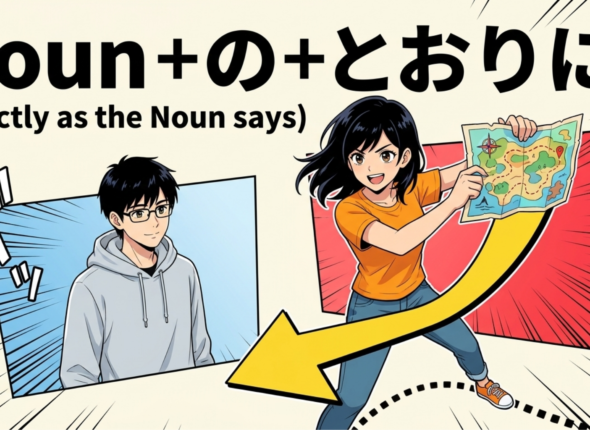
GrammarBook N4: Noun + の + とおりに (Exactly as)
N4-G-034 Noun + の + とおりに (Exactly as) Supporting / Duplication & Instructions 👀 Layer A: Visual Guide 📝 Quick Summary This grammar point is used to state that an action is...
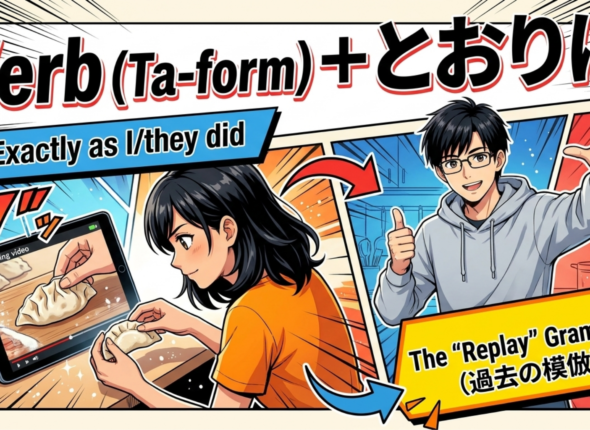
GrammarBook N4: Verb た+とおりに (Exactly as I/they did)
N4-G-033 Verb た+とおりに (Exactly as I/they did) Supporting / Duplication & Past Actions 👀 Layer A: Visual Guide 📝 Quick Summary This grammar point is used to perform an action in the...

GrammarBook N4: Verb (dictionary form) + とおりに (Exactly as)
N4-G-032 Verb (dictionary form) + とおりに (Exactly as) Supporting / Duplication & Instructions 👀 Layer A: Visual Guide 📝 Quick Summary This grammar point is used when you want someone to perform...

GrammarBook N4 : Plain form+と言っていました (He/She said that…)
N4-G-031 Plain form+と言っていました (He/She said that…) Core / Reported Speech 👀 Layer A: Visual Guide 📝 Quick Summary This grammar point is used to report what a third person said. The particle...

【使い分け】「なるほど」と「そうなんですね」の微妙な違い の違い [日本語学習]
(電球が光って論理的に納得するJoy [なるほど] vs. 温かい笑顔で相手の話に共感するKen [そうなんですね]) 「ああっ、そういう仕組みだったのか!」→ なるほど! 「へえ、そういう事情があるのですね。」→ そうなんですね。 会話において、「あなたの話を聞いていますよ」と伝える反応を「相槌(あいづち)」と呼びます。代表的なものが「なるほど (Naruhodo)」と「そうなんですね (Sou nan desu ne)」です。辞書ではどちらも「I see」と訳されますが、プロフェッショナルな環境でこの2つを間違えると、意図せずホスピタリティ(おもてなしの心)を壊してしまうことがあります。Joyがミーティングで間違った言葉を使った時に何が起きるか見てみましょう。 🗣 会話シーン (Conversation Scene) Joyは、新しいシーズン1のコーススケジュールの統合について、田中ディレクターから説明を受けています。 田中 この予約システムは、WhatsApp APIと連携して動いているんです。 (This booking system works by integrating with the...
The Difference Between 「なるほど」と「そうなんですね」の微妙な違い の違い |Japanese Grammar (N5–N3)
(Joy having a logical realization with a lightbulb [Naruhodo] vs. Ken listening empathetically with a warm smile [Sou nan desu ne]) “Ah, so that’s how it works!” -> Naruhodo! “Oh, is that...
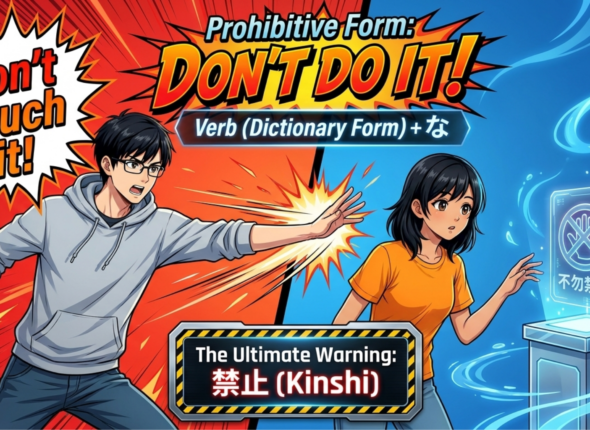
GrammarBook N4 : Prohibitive (Don’t do!) / 禁止
N4-G-030 Prohibitive (Don’t do!) / 禁止 Supporting / Negative Commands & Signs 👀 Layer A: Visual Guide 📝 Quick Summary The Prohibitive form (禁止 – Kinshi) is the strongest way to tell...
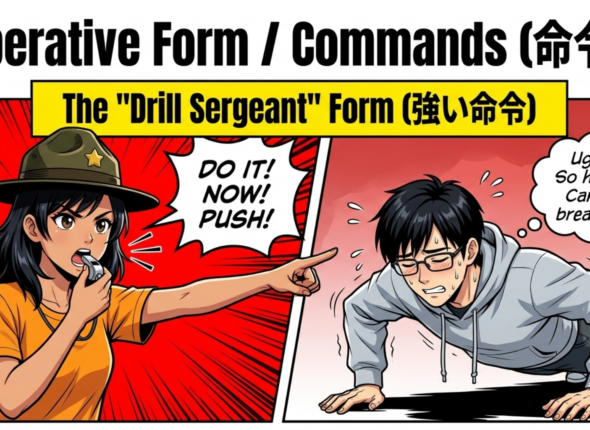
GrammarBook N4 : Imperative (Commands) / 命令形
N4-G-029 Imperative (Commands) / 命令形 Peripheral / Extreme Orders & Signs 👀 Layer A: Visual Guide 📝 Quick Summary The Imperative form (命令形 – Meireikei) is the strongest and most direct way...
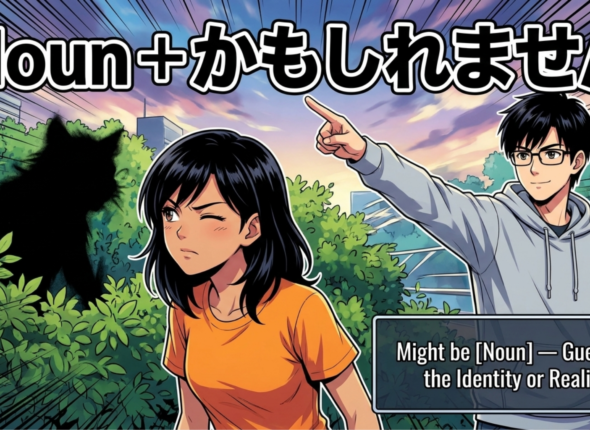
GrammarBook N4 : Noun(no だ)+かもしりません (Might be)
N4-G-028 Noun(no だ)+かもしりません (Might be) Core / Probability with Nouns 👀 Layer A: Visual Guide 📝 Quick Summary This grammar expresses a guess or possibility about what something is, or what the...
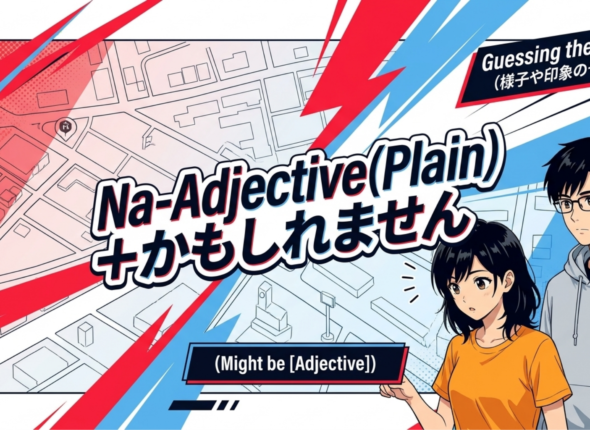
GrammarBook N4 : Na adjective plain form+かもしりません (Might be)
N4-G-027 Na adjective plain form+かもしりません (Might be) Core / Probability with Na-Adjectives 👀 Layer A: Visual Guide 📝 Quick Summary Use this to express that someone or something might have a certain...
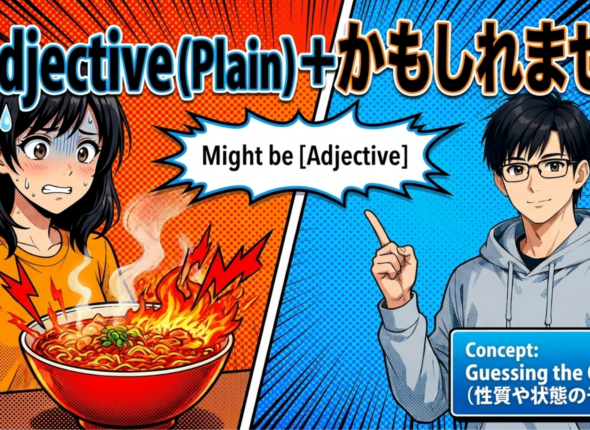
GrammarBook N4 : I adjective plain form+かもしりません (Might be)
N4-G-026 I adjective plain form+かもしりません (Might be) Core / Probability with Adjectives 👀 Layer A: Visual Guide 📝 Quick Summary Use this to express a possibility that something has a certain quality....
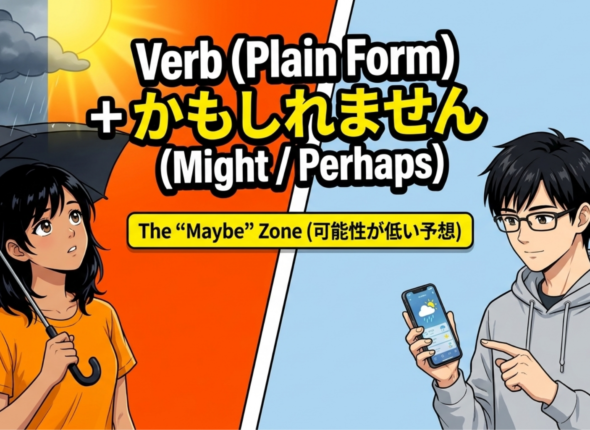
GrammarBook N4 : Verb Plain Form+かもしりません (Might)
N4-G-025 Verb Plain Form+かもしりません (Might) Core / Probability & Guessing 👀 Layer A: Visual Guide 📝 Quick Summary This grammar point expresses a possibility that something might happen or might be true....

GrammarBook N4 : まだ+Affirmative Form (Still / More)
N4-G-024 まだ+Affirmative Form (Still / More) Supporting / Continuity & Quantity 👀 Layer A: Visual Guide 📝 Quick Summary When “Mada” is used with a positive (affirmative) verb, it means “still.” It...
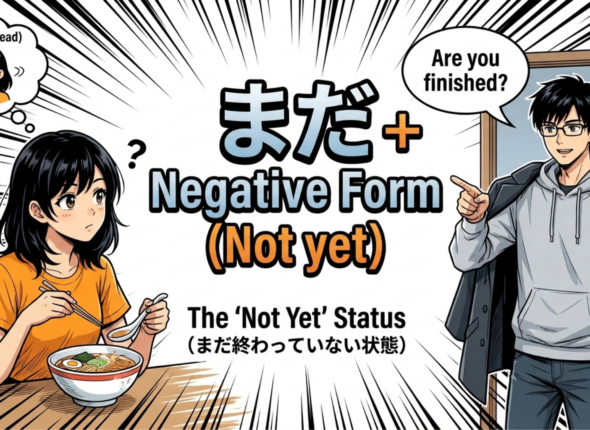
GrammarBook N4 : まだ+Negative Form (Not yet)
N4-G-023 まだ+Negative Form (Not yet) Core / Progress & Status 👀 Layer A: Visual Guide 📝 Quick Summary This grammar point expresses that an expected action has not yet occurred. While “Mada”...
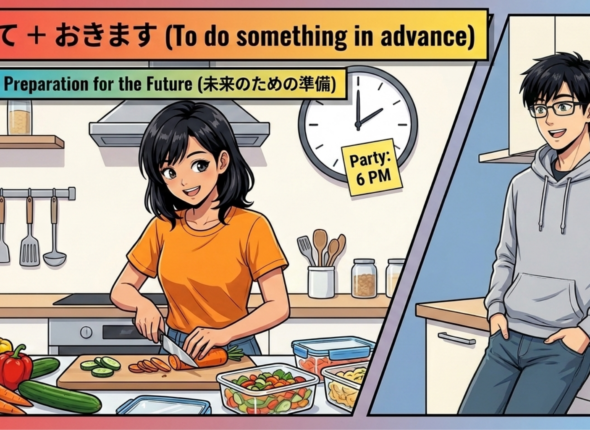
GrammarBook N4 : Verb ておきます (To do in advance)
N4-G-022 Verb ておきます (To do in advance) Core / Preparation & Maintenance 👀 Layer A: Visual Guide 📝 Quick Summary This grammar point expresses doing an action in advance to prepare for...

GrammarBook N4 : Verbて+みません (Won’t you try…?)
N4-G-021 Verbて+みません (Won’t you try…?) Supporting / Invitations & Suggestions 👀 Layer A: Visual Guide 📝 Quick Summary This grammar point is most commonly used in its question form: “~te mimasen ka?”....
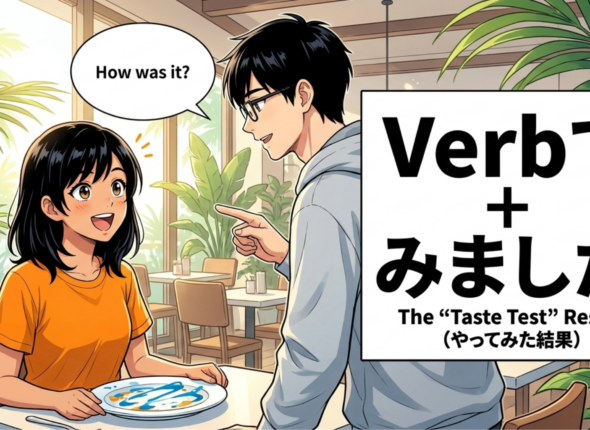
GrammarBook N4 : Verbて+みました (I tried doing…)
N4-G-020 Verbて+みました (I tried doing…) Supporting / Experience & Results 👀 Layer A: Visual Guide 📝 Quick Summary This is the past tense of “te-mimasu”. It means you actually performed an action...
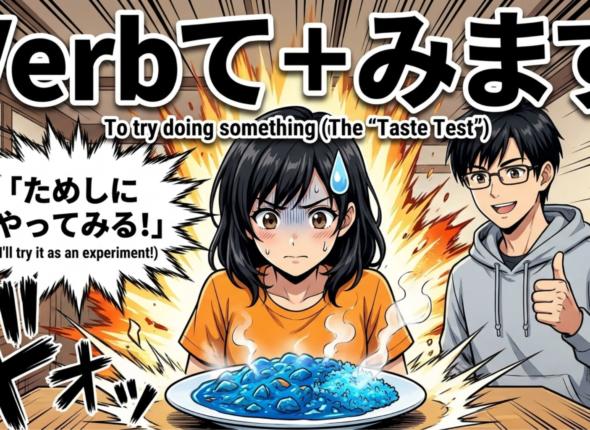
GrammarBook N4 : Verbて+みます (To try doing something)
N4-G-019 Verbて+みます (To try doing something) Core / Experience & Experiment 👀 Layer A: Visual Guide 📝 Quick Summary This grammar point means “to try doing something to see what it is...
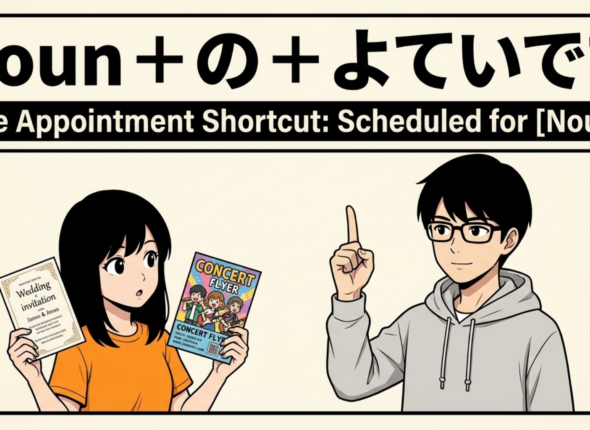
GrammarBook N4 : Noun+の+よていです (Scheduled for…)
N4-G-018 Noun+の+よていです (Scheduled for…) Supporting / Business & Appointments 👀 Layer A: Visual Guide 📝 Quick Summary This grammar point allows you to state official schedules using a noun instead of a...
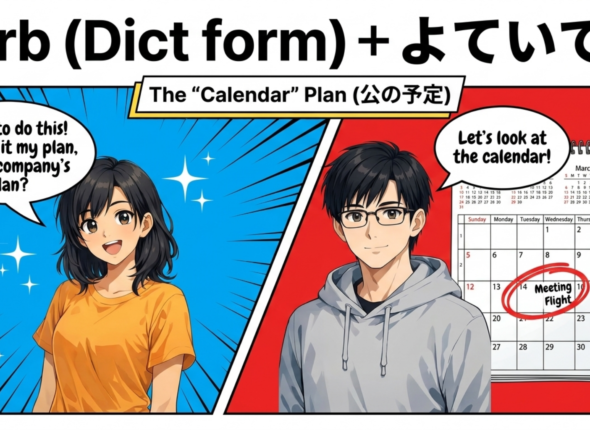
GrammarBook N4 : Verb dictionary form+よていです (Scheduled to)
N4-G-017 Verb dictionary form+よていです (Scheduled to) Core / Schedules & Official Plans 👀 Layer A: Visual Guide 📝 Quick Summary This grammar point is used to express an official schedule or a...