N4-G-021
Verbて+みません (Won’t you try…?)
Supporting / Invitations & Suggestions
👀 Layer A: Visual Guide
📝 Quick Summary
This grammar point is most commonly used in its question form: “~te mimasen ka?”. It is a very polite way to invite or suggest someone to try a new experience. It is softer and more indirect than “te kudasai” (please do).
Structure: [Verb て-form] + みませんか?
Meaning: Won’t you try doing [Verb]?
Example: 日本の おさけを のんで みませんか (Won’t you try drinking Japanese sake?).
🔗 Connected Grammar:
🔍 Layer B: Deepening
💡 Raya’s Hack
The “Gentle Push”
In Japan, being direct can sometimes feel like a command. If you want to recommend a restaurant or a movie to a friend, using “~te mimasen ka?” is perfect. It says “I think you’ll enjoy this experience, so why not give it a try?” while leaving the final choice to them. It’s the ultimate polite recommendation!
🚧 Joy’s Mistake
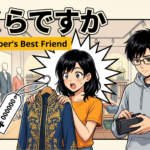
Scene: Joy is at a shoe store and wants to try on the shoes.
Joy: 「この くつを はいて みませんか?」
(Kono kutsu o haite mimasen ka?)
❌ Inviting the Clerk!
Why?
By saying “mimasen ka”, Joy is inviting the shoe clerk to try on the shoes! If you are the one who wants to try something, you should use the “request permission” form: “~te mo ii desu ka?”.
Correct for Joy: 「はいて みても いいですか?」 (May I try wearing them?)
🔥 Layer C: Practice Loop
Master the art of polite suggestions! (Hiragana and English only)
Level 1: Build the Invitation
Q1. Won’t you try eating? (たべる)
Q2. Won’t you try going? (いく)
Q3. Won’t you try reading? (よむ)
Q4. Won’t you try wearing? (きる)
Q5. Won’t you try using? (つかう)
Level 2: Full Sentences
Q6. Won’t you try eating this apple?
Q7. Won’t you try going to that shop together?
Q8. Won’t you try speaking in Japanese?
Q9. Won’t you try reading this book? (よむ)
Q10. I won’t try drinking that coffee. (Statement)