

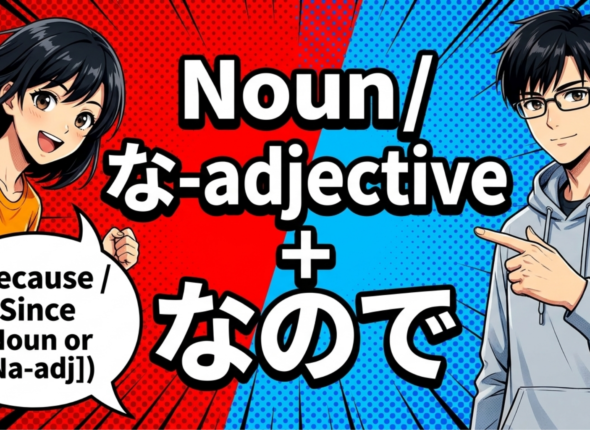
GrammarBook: なので (Because / Since [Noun or Na-adjective])
N4-G-095 なので (Because / Since [Noun or Na-adjective]) Core / Reason & Explanation 👀 Layer A: Visual Guide 📝 Quick Summary This grammar pattern connects a Noun or な-adjective base to ので...
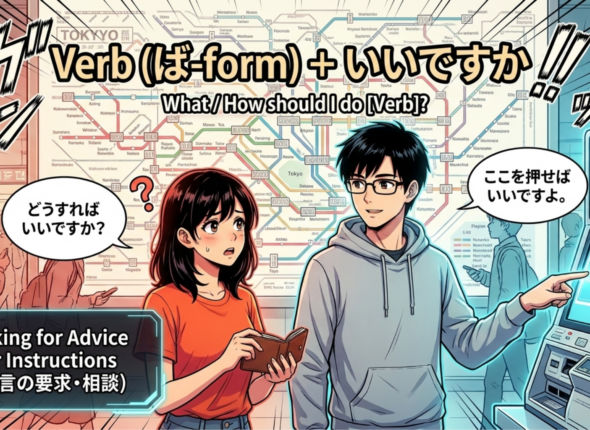
GrammarBook: Verb (ば-form) + いいですか (What / How / Where should I [Verb]?)
N4-G-094 Verb (ば-form) + いいですか (What / How / Where should I [Verb]?) Core / Asking for Advice & Instructions 👀 Layer A: Visual Guide 📝 Quick Summary This grammar pattern combines...
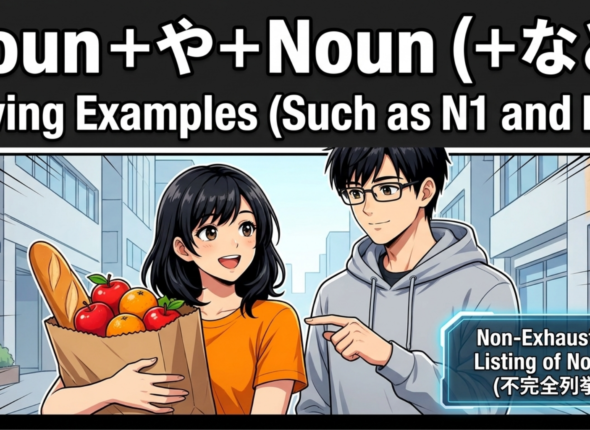
GrammarBook: Noun + や + Noun (+ など) (N1, N2, etc.)
N4-G-093 Noun + や + Noun (+ など) (N1, N2, etc.) Supporting / Non-Exhaustive Listing 👀 Layer A: Visual Guide 📝 Quick Summary This grammar pattern uses particle や (ya) between nouns...
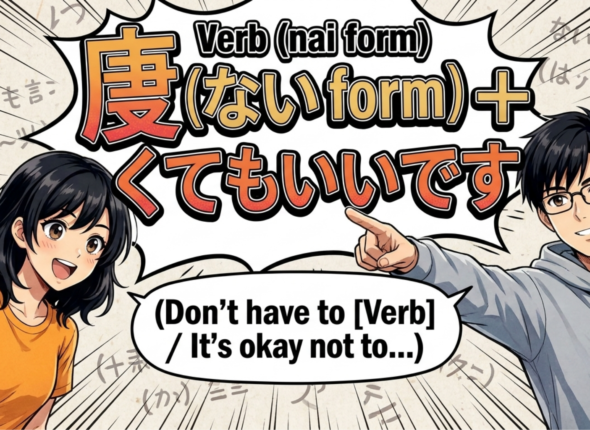
GrammarBook: Verb (ない form) + くてもいいです (Don’t have to [Verb])
N4-G-092 Verb (ない form) + くてもいいです (Don’t have to [Verb]) Core / Lack of Obligation & Permission 👀 Layer A: Visual Guide 📝 Quick Summary This grammar pattern connects to a verb’s...
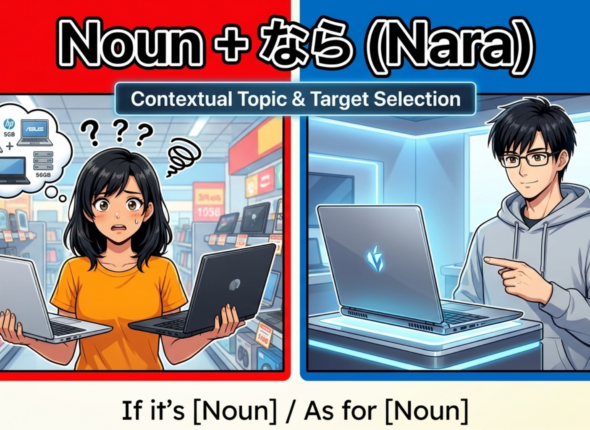
GrammarBook: Noun + なら (If [Noun] / As for [Noun])
N4-G-091 Noun + なら (If [Noun] / As for [Noun]) Supporting / Contextual & Topic Conditions 👀 Layer A: Visual Guide 📝 Quick Summary This grammar pattern attaches なら (nara) directly to...
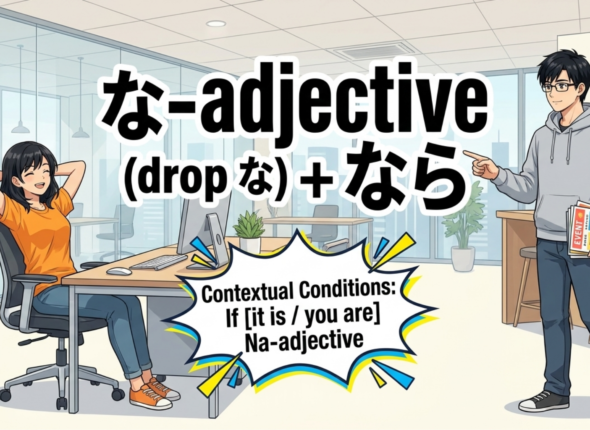
GrammarBook: な-adjective + なら (If [Na-adjective])
N4-G-090 な-adjective + なら (If [Na-adjective]) Core / Contextual & Topic Conditions 👀 Layer A: Visual Guide 📝 Quick Summary This grammar pattern connects a な-adjective base (dropping な) directly to なら...
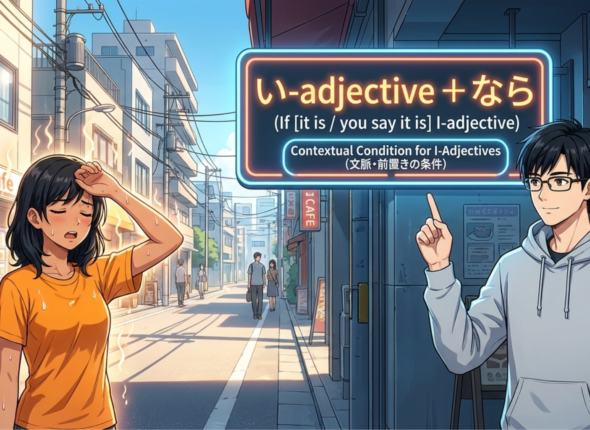
GrammarBook: い-adjective + なら (If [I-adjective])
N4-G-089 い-adjective + なら (If [I-adjective]) Core / Contextual & Topic Conditions 👀 Layer A: Visual Guide 📝 Quick Summary This grammar pattern connects an い-adjective in its Plain Form directly to...
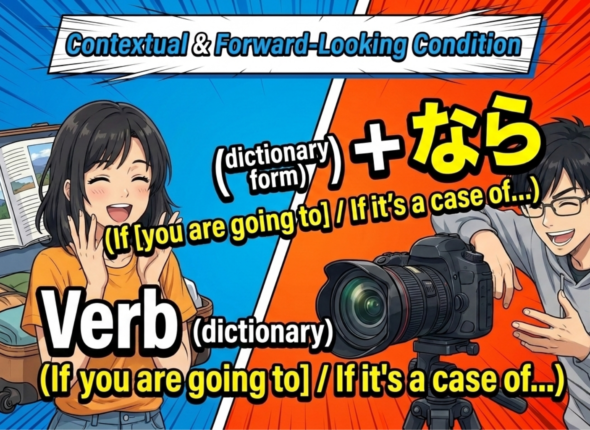
GrammarBook: Verb (dictionary form) + なら (If [you are going to / case of Verb])
N4-G-088 Verb (dictionary form) + なら (If [you are going to / case of Verb]) Core / Contextual & Forward-Looking Conditions 👀 Layer A: Visual Guide 📝 Quick Summary The conditional なら...
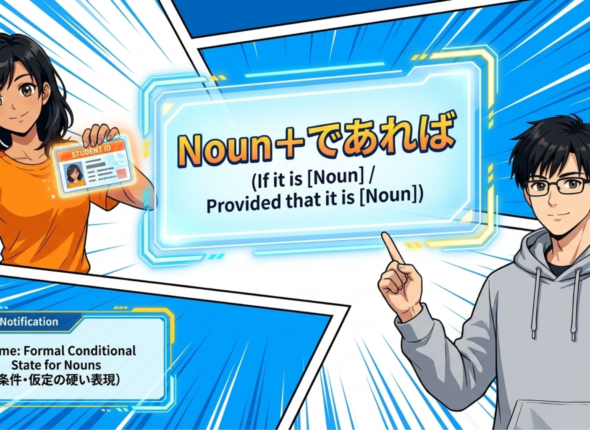
GrammarBook: Noun + であれば (If it is [Noun])
N4-G-087 Noun + であれば (If it is [Noun]) Core / Hypothetical Conditions & Logic 👀 Layer A: Visual Guide 📝 Quick Summary The ば conditional form (仮定形 – かていけい) for Nouns attaches...
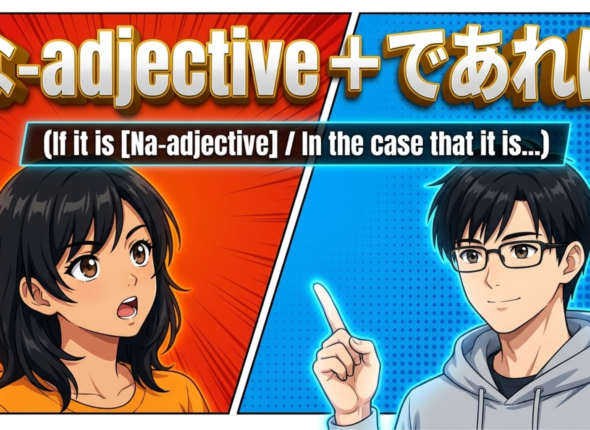
GrammarBook: Change な → であれば (If [Na-adjective])
N4-G-086 Change な → であれば (If [Na-adjective]) Supporting / Hypothetical Conditions & Logic 👀 Layer A: Visual Guide 📝 Quick Summary The ば conditional form (仮定形 – かていけい) for な-adjectives attaches であれば...
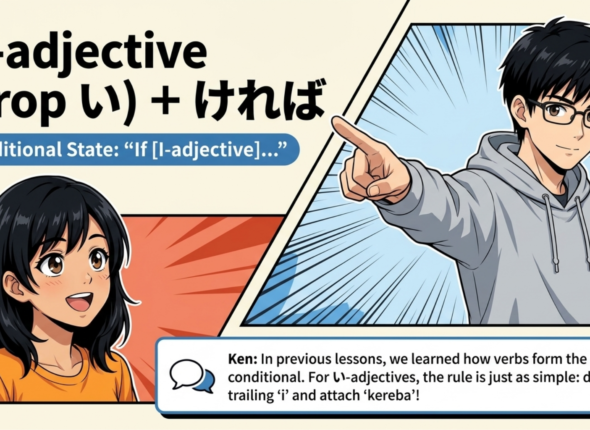
GrammarBook: Change い → ければ (If [I-adjective])
N4-G-085 Change い → ければ (If [I-adjective]) Supporting / Hypothetical Conditions & Logic 👀 Layer A: Visual Guide 📝 Quick Summary The ば conditional form (仮定形 – かていけい) expresses “if X quality/condition...
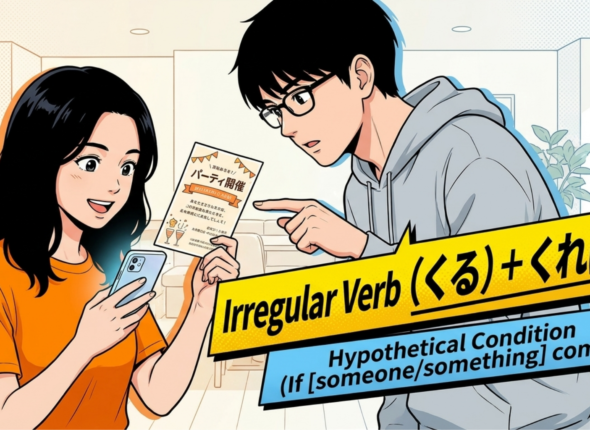
GrammarBook: ば conditional (verb G3): くる → くれば
N4-G-084 ば conditional (verb G3): くる → くれば Core / Hypothetical Conditions & Logic 👀 Layer A: Visual Guide 📝 Quick Summary The ば conditional form (仮定形 – かていけい) expresses “if X...
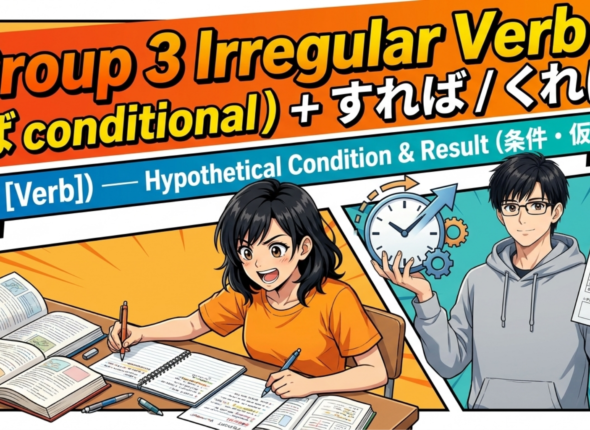
GrammarBook: ば conditional (verb G3): する → すれば / くる → くれば
N4-G-083 ば conditional (verb G3): する → すれば / くる → くれば Core / Hypothetical Conditions & Logic 👀 Layer A: Visual Guide 📝 Quick Summary The ば conditional form (仮定形 –...
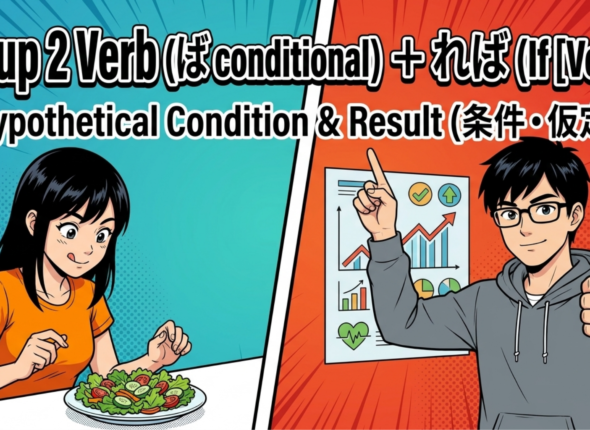
GrammarBook: ば conditional (verb G2): Remove る + れば
N4-G-082 ば conditional (verb G2): Remove る + れば Core / Hypothetical Conditions & Logic 👀 Layer A: Visual Guide 📝 Quick Summary The ば conditional form (仮定形 – かていけい) expresses “if...
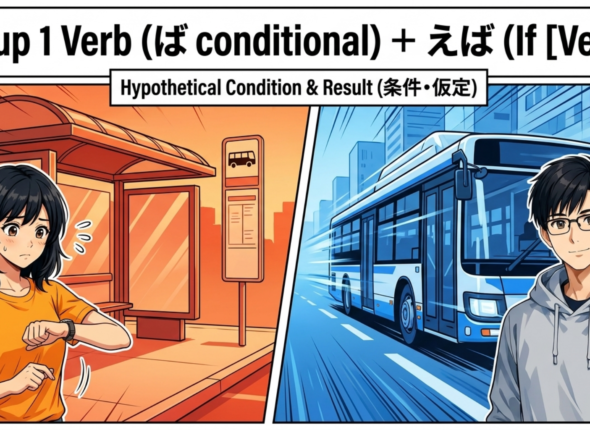
GrammarBook: ば conditional (verb G1): Change final う to え + ば
N4-G-081 ば conditional (verb G1): Change final う to え + ば Core / Hypothetical Conditions & Logic 👀 Layer A: Visual Guide 📝 Quick Summary The ば conditional form (仮定形 –...
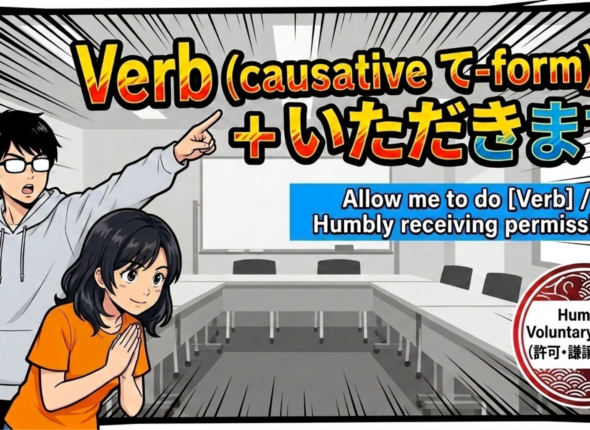
GrammarBook: Verb (causative て-form) + いただきます (Allow me to do [Verb])
N4-G-080 Verb (causative て-form) + いただきます (Allow me to do [Verb]) Peripheral / Permission & Humble Voluntary Action 👀 Layer A: Visual Guide 📝 Quick Summary This grammar pattern combines a verb...
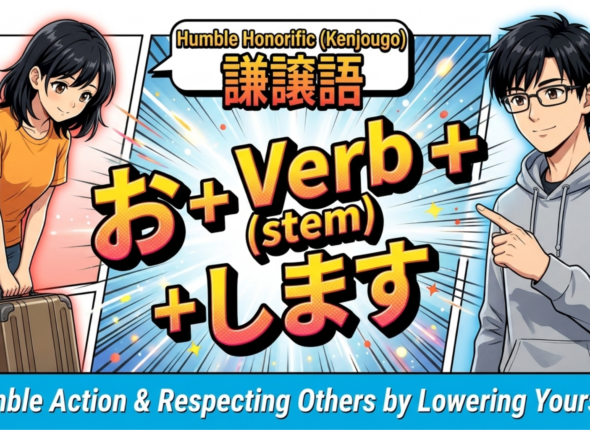
GrammarBook: お + Verb (stem) + します (Humble Honorific / Kenjougo)
N4-G-079 お + Verb (stem) + します (Humble Honorific / Kenjougo) Supporting / Humbly Lowering Your Own Actions 👀 Layer A: Visual Guide 📝 Quick Summary This grammar pattern is a regular...
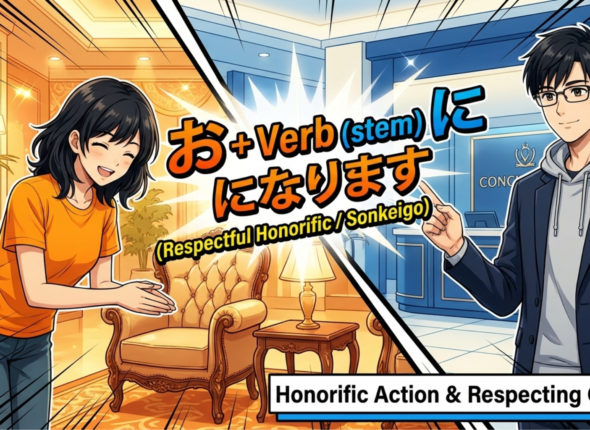
GrammarBook: お + Verb (stem) + になります (Respectful Honorific / Sonkeigo)
N4-G-078 お + Verb (stem) + になります (Respectful Honorific / Sonkeigo) Supporting / Respecting Others’ Actions 👀 Layer A: Visual Guide 📝 Quick Summary This grammar pattern is a regular formula for...
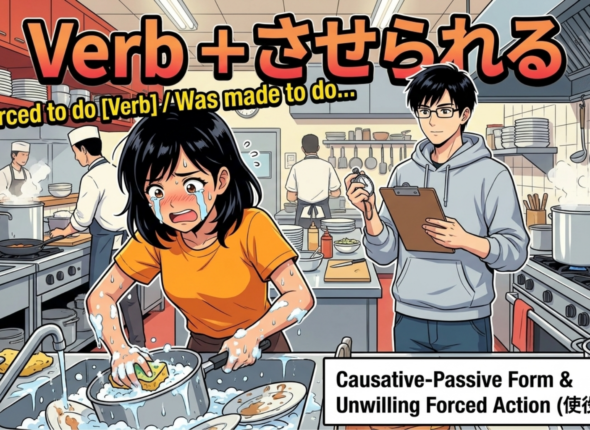
GrammarBook: Verb+させられる (Forced to do [Verb] / Made to do)
N4-G-077 Verb+させられる (Forced to do [Verb] / Made to do) Peripheral / Expressing Unwilling Forced Action 👀 Layer A: Visual Guide 📝 Quick Summary The Causative-Passive Form (使役受身形 – しえきうけみけい) combines the...

GrammarBook: Verb + させない (Won’t let / Won’t make [Verb])
N4-G-076 Verb + させない (Won’t let / Won’t make [Verb]) Supporting / Refusing Permission & Compulsion 👀 Layer A: Visual Guide 📝 Quick Summary The Causative Negative Form (使役否定形) expresses refusing permission...