

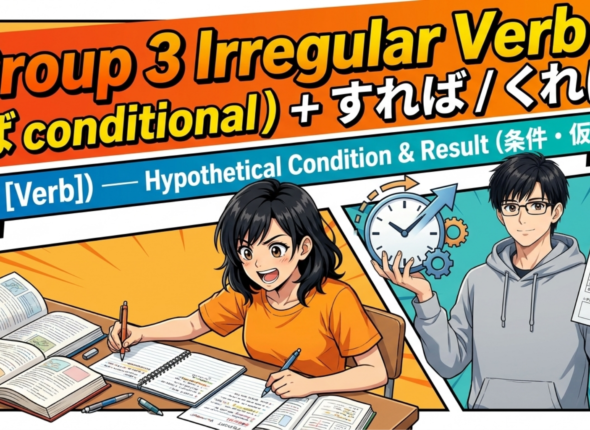
GrammarBook: ば conditional (verb G3): する → すれば / くる → くれば
N4-G-083 ば conditional (verb G3): する → すれば / くる → くれば Core / Hypothetical Conditions & Logic 👀 Layer A: Visual Guide 📝 Quick Summary The ば conditional form (仮定形 –...
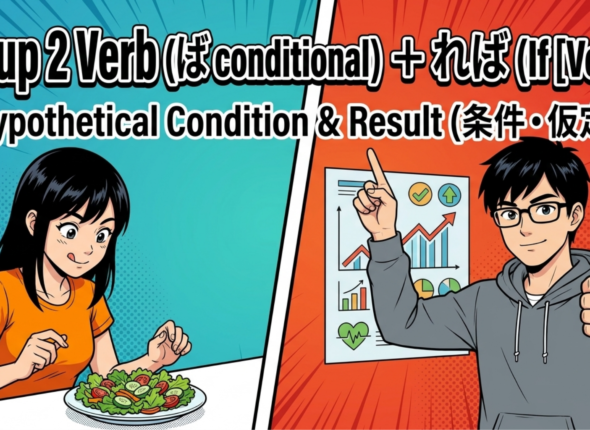
GrammarBook: ば conditional (verb G2): Remove る + れば
N4-G-082 ば conditional (verb G2): Remove る + れば Core / Hypothetical Conditions & Logic 👀 Layer A: Visual Guide 📝 Quick Summary The ば conditional form (仮定形 – かていけい) expresses “if...
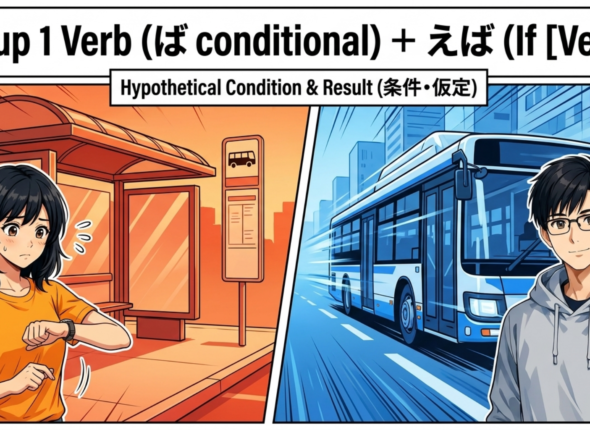
GrammarBook: ば conditional (verb G1): Change final う to え + ば
N4-G-081 ば conditional (verb G1): Change final う to え + ば Core / Hypothetical Conditions & Logic 👀 Layer A: Visual Guide 📝 Quick Summary The ば conditional form (仮定形 –...
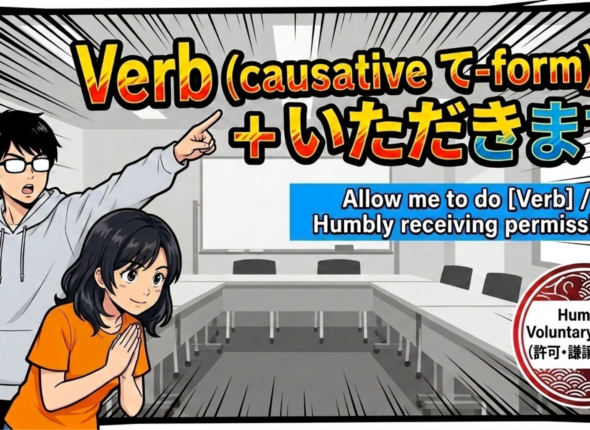
GrammarBook: Verb (causative て-form) + いただきます (Allow me to do [Verb])
N4-G-080 Verb (causative て-form) + いただきます (Allow me to do [Verb]) Peripheral / Permission & Humble Voluntary Action 👀 Layer A: Visual Guide 📝 Quick Summary This grammar pattern combines a verb...

GrammarBook: お + Verb (stem) + します (Humble Honorific / Kenjougo)
N4-G-079 お + Verb (stem) + します (Humble Honorific / Kenjougo) Supporting / Humbly Lowering Your Own Actions 👀 Layer A: Visual Guide 📝 Quick Summary This grammar pattern is a regular...
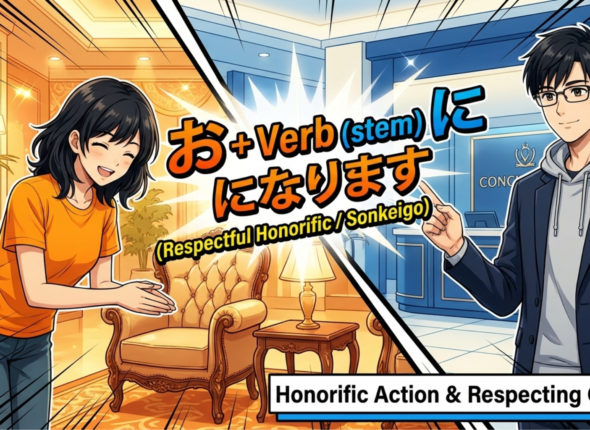
GrammarBook: お + Verb (stem) + になります (Respectful Honorific / Sonkeigo)
N4-G-078 お + Verb (stem) + になります (Respectful Honorific / Sonkeigo) Supporting / Respecting Others’ Actions 👀 Layer A: Visual Guide 📝 Quick Summary This grammar pattern is a regular formula for...
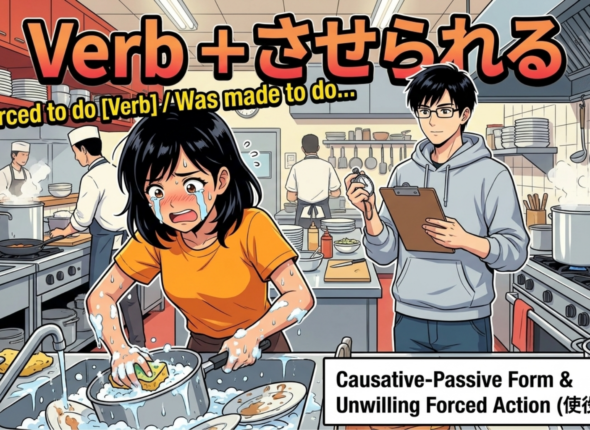
GrammarBook: Verb+させられる (Forced to do [Verb] / Made to do)
N4-G-077 Verb+させられる (Forced to do [Verb] / Made to do) Peripheral / Expressing Unwilling Forced Action 👀 Layer A: Visual Guide 📝 Quick Summary The Causative-Passive Form (使役受身形 – しえきうけみけい) combines the...

GrammarBook: Verb + させない (Won’t let / Won’t make [Verb])
N4-G-076 Verb + させない (Won’t let / Won’t make [Verb]) Supporting / Refusing Permission & Compulsion 👀 Layer A: Visual Guide 📝 Quick Summary The Causative Negative Form (使役否定形) expresses refusing permission...
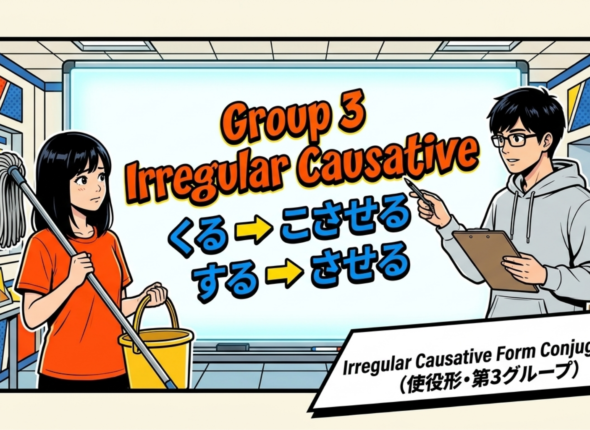
GrammarBook: Irregular causative Verbs: する → させる / くる → こさせる
N4-G-075 Irregular causative Verbs: する → させる / くる → こさせる Supporting / Expressing Compulsion & Permission 👀 Layer A: Visual Guide 📝 Quick Summary The Causative Form (使役形 – しえきけい) expresses...
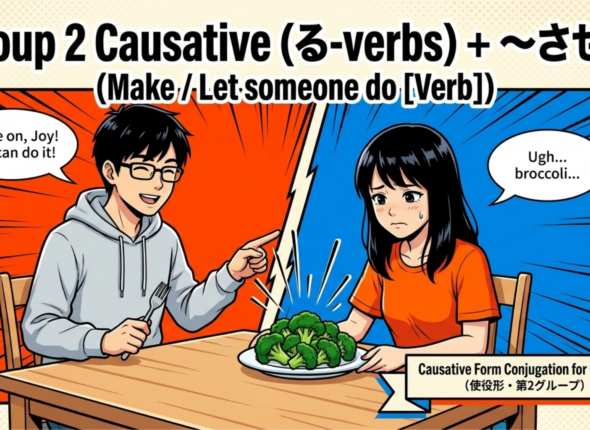
GrammarBook: Group 2 causative (る-verbs): Remove る + させる
N4-G-074 Group 2 causative (る-verbs): Remove る + させる Supporting / Expressing Compulsion & Permission 👀 Layer A: Visual Guide 📝 Quick Summary The Causative Form (使役形 – しえきけい) expresses making someone...
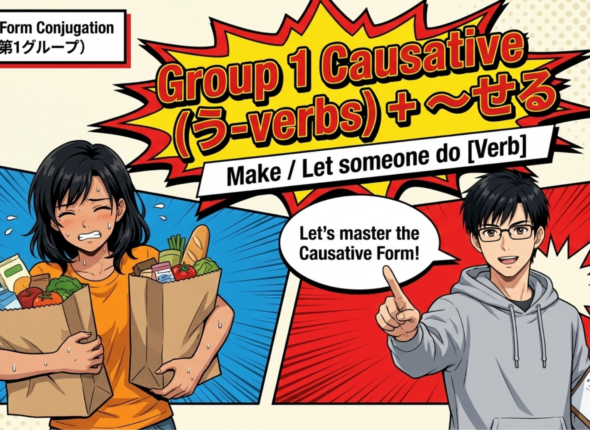
GrammarBook: Group 1 causative (う-verbs): Change u → a + せる
N4-G-073 Group 1 causative (う-verbs): Change u → a + せる Supporting / Expressing Compulsion & Permission 👀 Layer A: Visual Guide 📝 Quick Summary The Causative Form (使役形 – しえきけい) expresses...
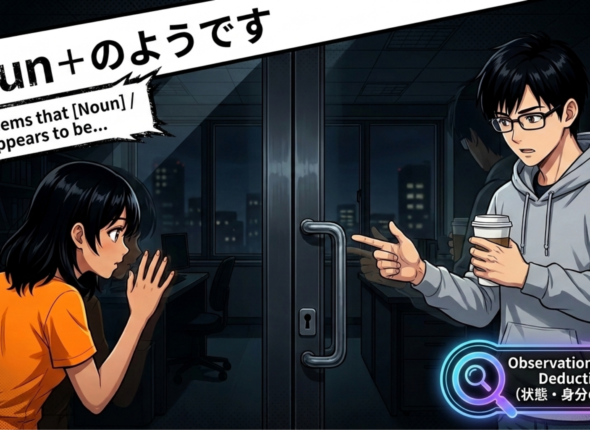
GrammarBook: Noun + の ようです (It seems [Noun])
N4-G-072 Noun + の ようです (It seems [Noun]) Core / Conjectural & Observation-based Supposition 👀 Layer A: Visual Guide 📝 Quick Summary This grammar pattern connects a Noun to ようです using the...
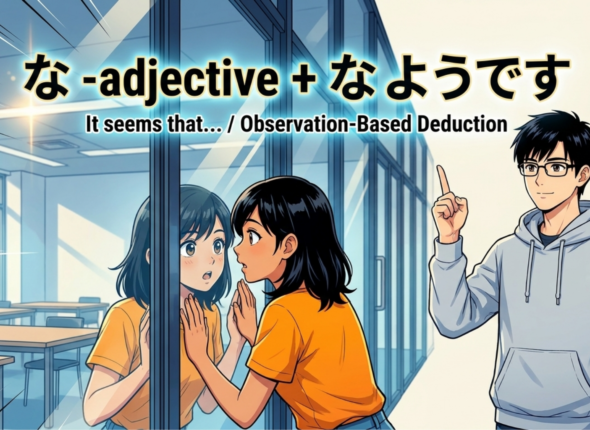
GrammarBook: な-adjective + な ようです (It seems [Na-adjective])
N4-G-071 な-adjective + な ようです (It seems [Na-adjective]) Core / Conjectural & Observation-based Supposition 👀 Layer A: Visual Guide 📝 Quick Summary This grammar pattern connects a な-adjective to ようです by attaching...
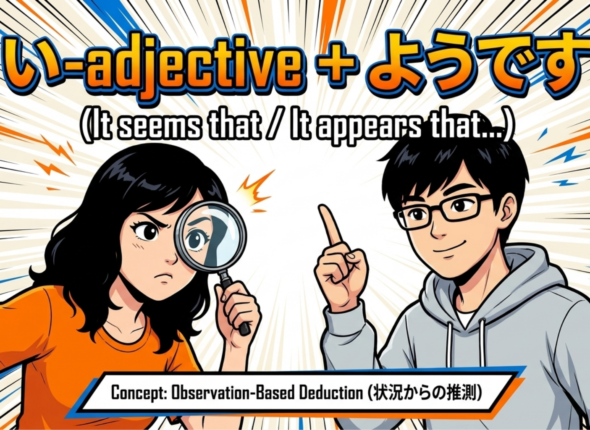
GrammarBook: い-adjective + ようです (It seems [I-adjective])
N4-G-070 い-adjective + ようです (It seems [I-adjective]) Core / Conjectural & Observation-based Supposition 👀 Layer A: Visual Guide 📝 Quick Summary This grammar pattern connects an い-adjective in its Plain Form directly...
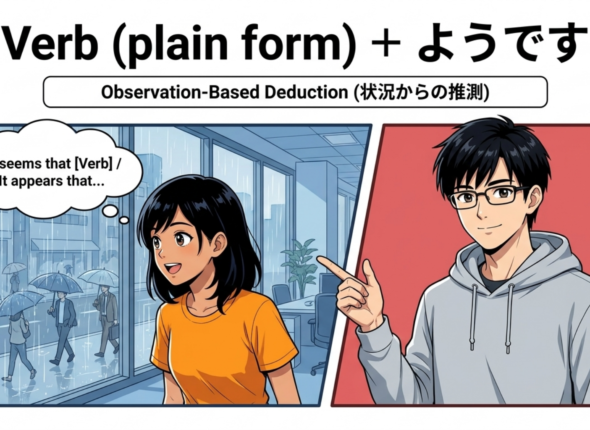
GrammarBook: Verb (plain form) + ようです (It seems/appears that [Verb])
N4-G-069 Verb (plain form) + ようです (It seems/appears that [Verb]) Core / Conjectural & Observation-based Supposition 👀 Layer A: Visual Guide 📝 Quick Summary This grammar pattern connects a verb in its...
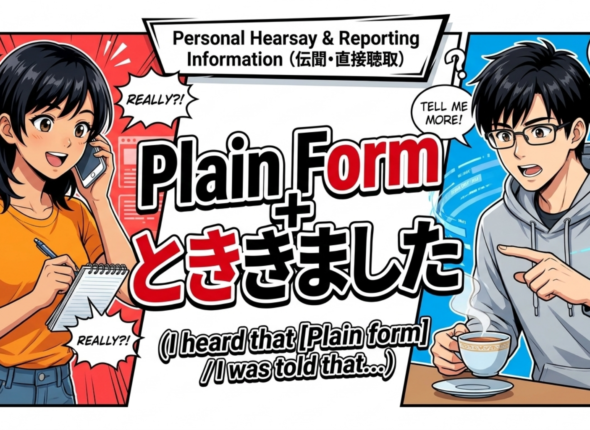
GrammarBook: Plain form + とききました (I heard that [Plain form])
N4-G-068 Plain form + とききました (I heard that [Plain form]) Supporting / Hearsay & Reporting Information 👀 Layer A: Visual Guide 📝 Quick Summary This grammar pattern connects a clause in its...
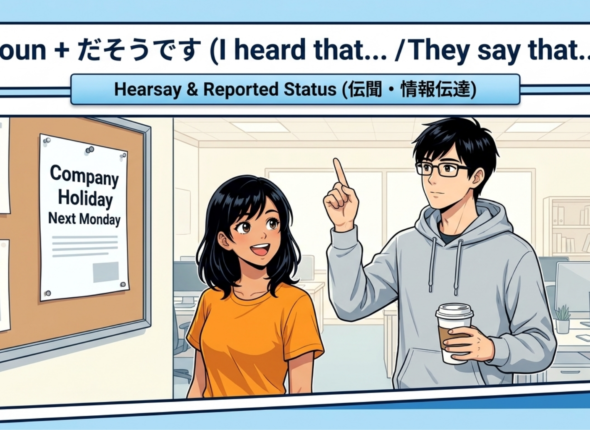
GrammarBook: Noun + だ そうです (I heard that [Noun])
N4-G-067 Noun + だ そうです (I heard that [Noun]) Core / Hearsay & Reporting Information 👀 Layer A: Visual Guide 📝 Quick Summary This grammar pattern connects a Noun in its Plain...
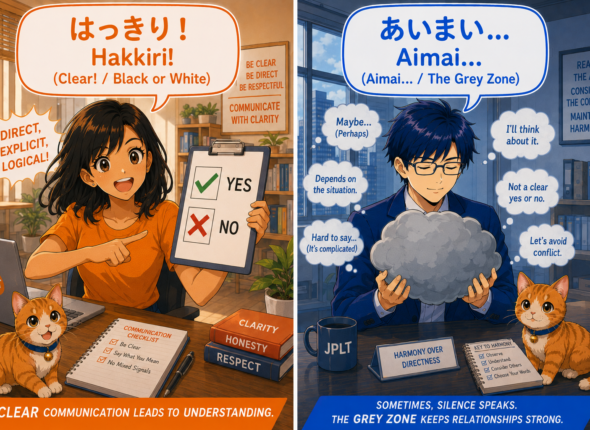
【使い分け】あいまい表現と明確表現、日本語と英語の違い の違い [日本語学習]
(はっきりとしたYES/NOのバインダーを持ち自信満々なJoy [明確/英語圏] vs. 形のないグレーの雲を持ち、曖昧に微笑むKen [あいまい/日本]) 「このアイデアはダメだ。やめよう。」→ 明確表現(Meikaku – 白黒はっきり / 英語) 「前向きに検討させていただきます。」→ あいまい表現(Aimai – グレーゾーン / 日本) 英語圏の文化において、曖昧さ(アンビギュイティ)はビジネスの敵です。明確で、正確で、「白か黒か」はっきりしていることが、知性と敬意の表れです。しかし日本では、物事を「白か黒か」で強制的に割り切ることは、勝者と敗者を生み出し、調和(和)を破壊する行為とされます。関係性を壊さずに生き残るため、日本人は「あいまい(グレーゾーン)」を多用します。Joyが重要なマーケティングのPRビジュアルを提出した時、何が起こるか見てみましょう。 🗣 会話シーン (Conversation Scene) Joyは、マレーシア市場向けの新しいプログラムのPRビジュアル素材を作成し終え、田中ディレクターにチェックを求めています。 Joy ディレクター!マレーシア向けの新規プログラムのPRビジュアルが完成しました!いかがですか? (Director! The PR visual for the new...
The Difference Between あいまい表現と明確表現、日本語と英語の違い の違い |Japanese Grammar (N5–N3)
(Joy holding a clear YES/NO clipboard [Black or White] vs. Ken holding a vague grey cloud [Aimai / The Grey Zone]) “This idea is bad. Let’s not do it.” -> 明確表現 (Meikaku...
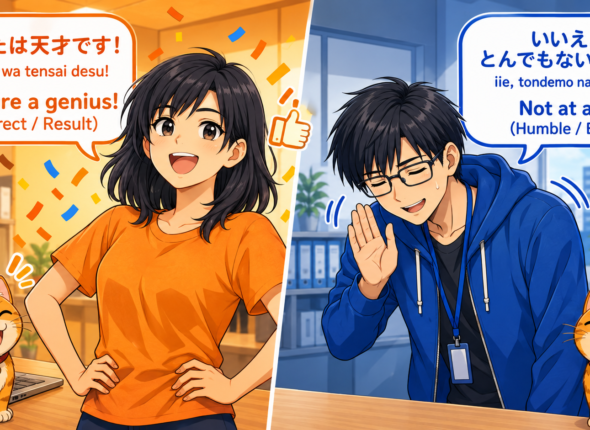
The Difference Between 直接褒める英語と控えめに褒める日本語の違い の違い |Japanese Grammar (N5–N3)
(Joy accepting praise proudly [Direct/English] vs. Ken humbly waving his hand to deflect praise [Kenson/Japanese]) “You are an absolute genius!” -> Direct Praise (Focus on Talent) “No, no, I still have much...