

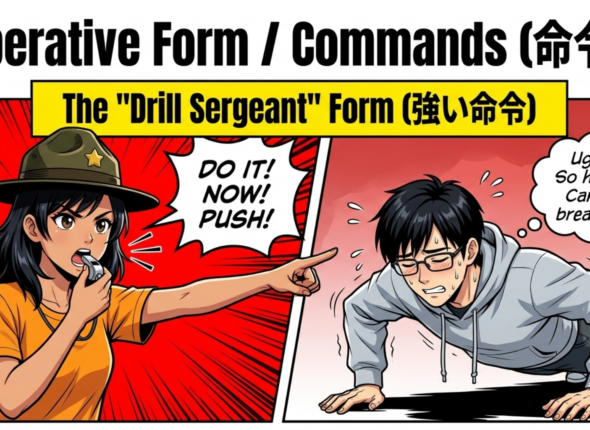
GrammarBook N4 : Imperative (Commands) / 命令形
N4-G-029 Imperative (Commands) / 命令形 Peripheral / Extreme Orders & Signs 👀 Layer A: Visual Guide 📝 Quick Summary The Imperative form (命令形 – Meireikei) is the strongest and most direct way...
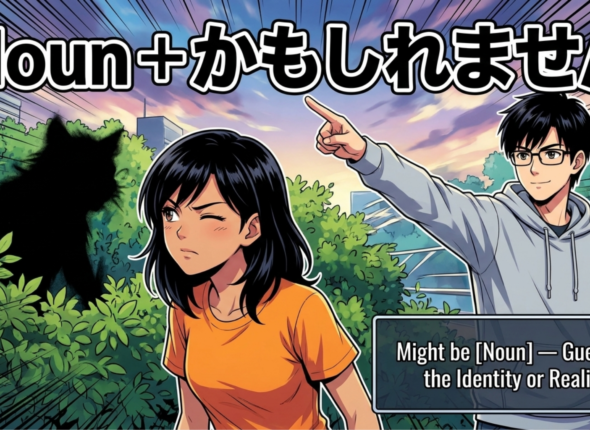
GrammarBook N4 : Noun(no だ)+かもしりません (Might be)
N4-G-028 Noun(no だ)+かもしりません (Might be) Core / Probability with Nouns 👀 Layer A: Visual Guide 📝 Quick Summary This grammar expresses a guess or possibility about what something is, or what the...

GrammarBook N4 : Na adjective plain form+かもしりません (Might be)
N4-G-027 Na adjective plain form+かもしりません (Might be) Core / Probability with Na-Adjectives 👀 Layer A: Visual Guide 📝 Quick Summary Use this to express that someone or something might have a certain...
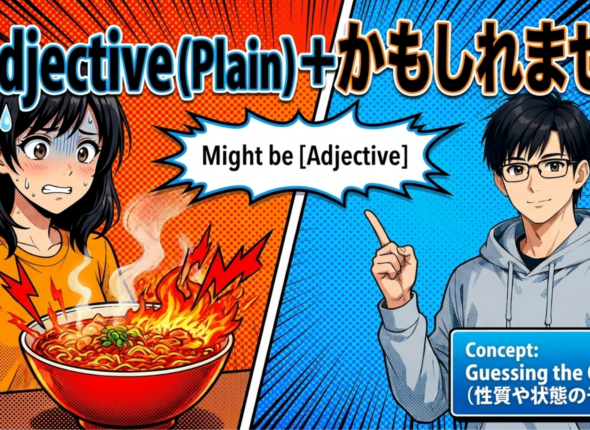
GrammarBook N4 : I adjective plain form+かもしりません (Might be)
N4-G-026 I adjective plain form+かもしりません (Might be) Core / Probability with Adjectives 👀 Layer A: Visual Guide 📝 Quick Summary Use this to express a possibility that something has a certain quality....

GrammarBook N4 : Verb Plain Form+かもしりません (Might)
N4-G-025 Verb Plain Form+かもしりません (Might) Core / Probability & Guessing 👀 Layer A: Visual Guide 📝 Quick Summary This grammar point expresses a possibility that something might happen or might be true....

GrammarBook N4 : まだ+Affirmative Form (Still / More)
N4-G-024 まだ+Affirmative Form (Still / More) Supporting / Continuity & Quantity 👀 Layer A: Visual Guide 📝 Quick Summary When “Mada” is used with a positive (affirmative) verb, it means “still.” It...
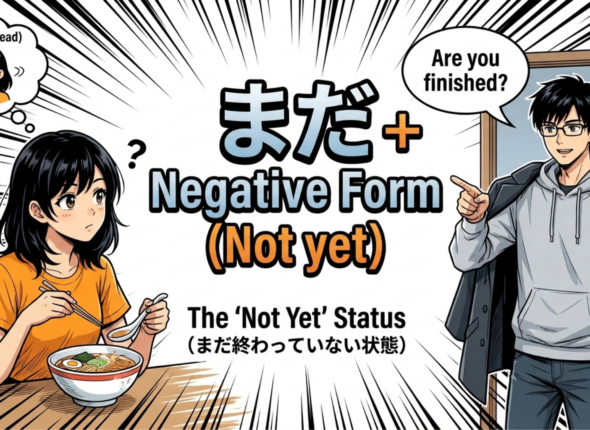
GrammarBook N4 : まだ+Negative Form (Not yet)
N4-G-023 まだ+Negative Form (Not yet) Core / Progress & Status 👀 Layer A: Visual Guide 📝 Quick Summary This grammar point expresses that an expected action has not yet occurred. While “Mada”...
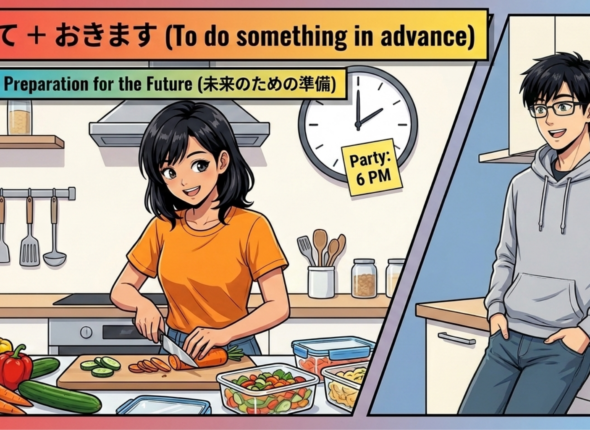
GrammarBook N4 : Verb ておきます (To do in advance)
N4-G-022 Verb ておきます (To do in advance) Core / Preparation & Maintenance 👀 Layer A: Visual Guide 📝 Quick Summary This grammar point expresses doing an action in advance to prepare for...

GrammarBook N4 : Verbて+みません (Won’t you try…?)
N4-G-021 Verbて+みません (Won’t you try…?) Supporting / Invitations & Suggestions 👀 Layer A: Visual Guide 📝 Quick Summary This grammar point is most commonly used in its question form: “~te mimasen ka?”....
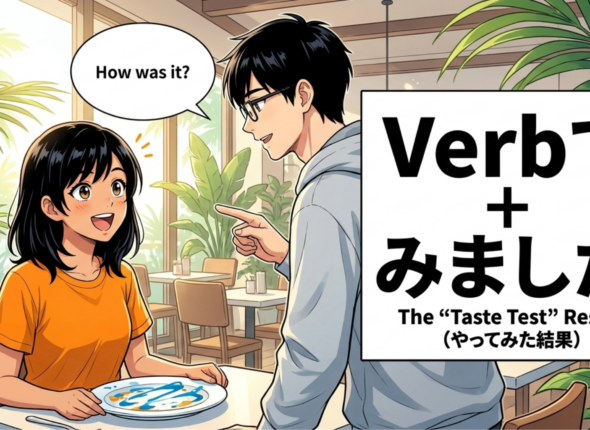
GrammarBook N4 : Verbて+みました (I tried doing…)
N4-G-020 Verbて+みました (I tried doing…) Supporting / Experience & Results 👀 Layer A: Visual Guide 📝 Quick Summary This is the past tense of “te-mimasu”. It means you actually performed an action...
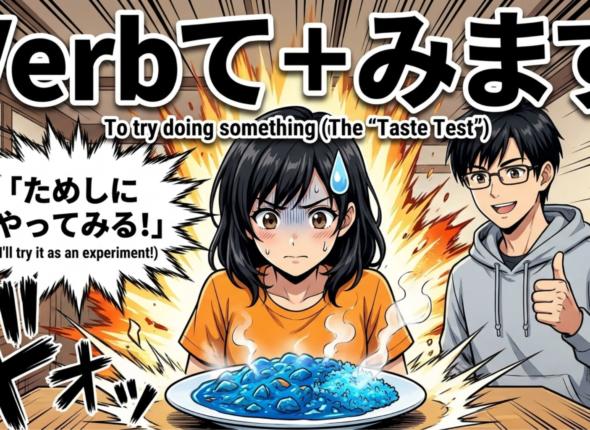
GrammarBook N4 : Verbて+みます (To try doing something)
N4-G-019 Verbて+みます (To try doing something) Core / Experience & Experiment 👀 Layer A: Visual Guide 📝 Quick Summary This grammar point means “to try doing something to see what it is...
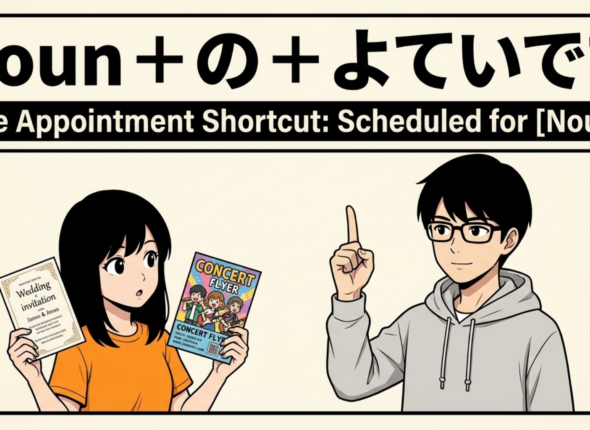
GrammarBook N4 : Noun+の+よていです (Scheduled for…)
N4-G-018 Noun+の+よていです (Scheduled for…) Supporting / Business & Appointments 👀 Layer A: Visual Guide 📝 Quick Summary This grammar point allows you to state official schedules using a noun instead of a...
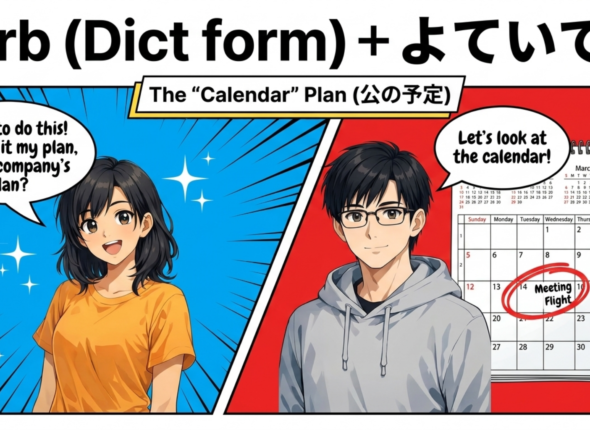
GrammarBook N4 : Verb dictionary form+よていです (Scheduled to)
N4-G-017 Verb dictionary form+よていです (Scheduled to) Core / Schedules & Official Plans 👀 Layer A: Visual Guide 📝 Quick Summary This grammar point is used to express an official schedule or a...
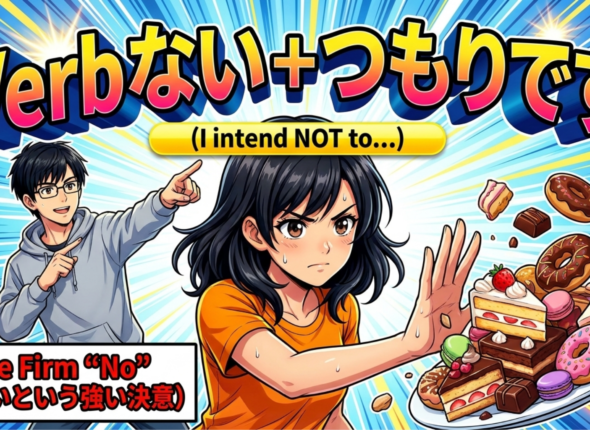
GrammarBook N4 : Verb ない+つもりです (I intend NOT to)
N4-G-016 Verb ない+つもりです (I intend NOT to) Supporting / Negative Intentions 👀 Layer A: Visual Guide 📝 Quick Summary This grammar point is used to express a firm decision not to do...
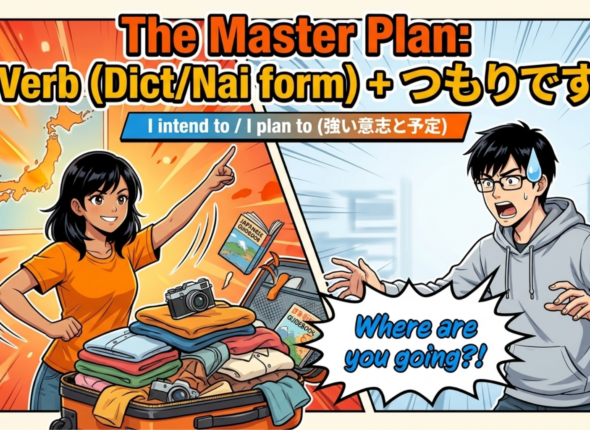
GrammarBook N4 : Verb(dict)+つもりです (I intend to / plan to)
N4-G-015 Verb(dict)+つもりです (I intend to / plan to) Core / Intentions & Plans 👀 Layer A: Visual Guide 📝 Quick Summary This grammar point expresses a solid intention or plan. It is...
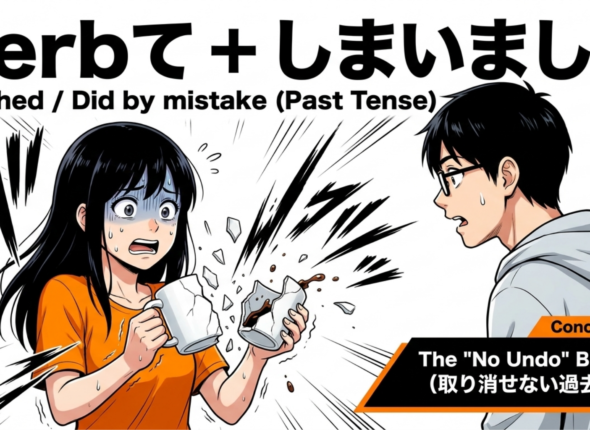
GrammarBook N4 : Verbて+しまいました (Completion / Regret – Past)
N4-G-014 Verbて+しまいました (Completion / Regret – Past) Core / Past Emotions & Apologies 👀 Layer A: Visual Guide 📝 Quick Summary This is the past tense form of “te-shimaimasu”. It is...
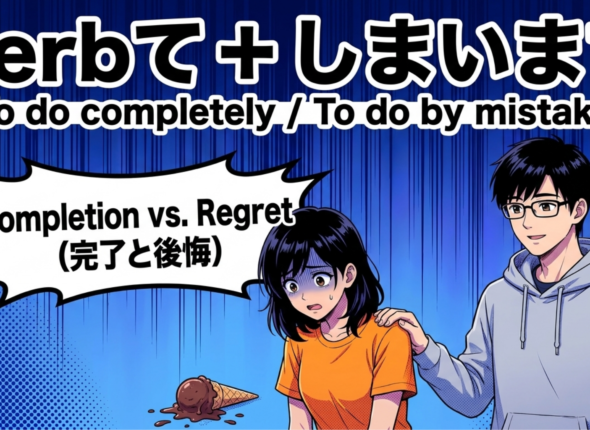
GrammarBook N4 : Verbて+しまいます (Completion / Regret)
N4-G-013 Verbて+しまいます (Completion / Regret) Core / Result & Emotion 👀 Layer A: Visual Guide 📝 Quick Summary This grammar point has two main meanings: 1) To finish an action completely,...
![[2026] Yoshida Sensei](https://jplt-dialogplus.com/wp-content/uploads/2025/07/2026-Yoshida-Sensei-590x430.png)
Business Japanese Lesson with Teacher Yoshida
Join Teacher Yoshida’s Business Japanese Lesson at JPLT Online Japanese School and build the confidence to communicate professionally in Japanese. From workplace conversations to business etiquette and real-life scenarios, each lesson is...
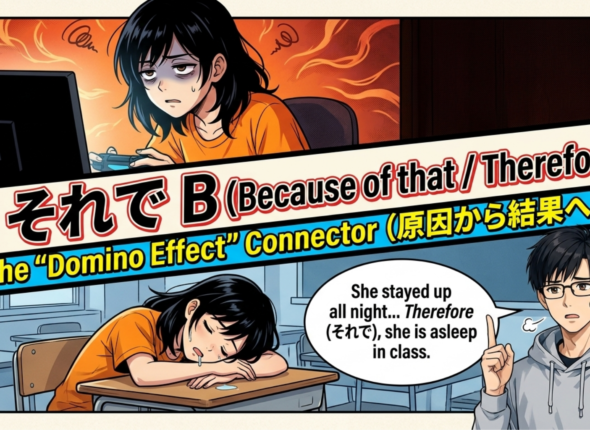
GrammarBook N4 : A それで B (Because of that / Therefore)
N4-G-012 A それで B (Because of that / Therefore) Core / Cause and Effect 👀 Layer A: Visual Guide (直感理解) 📝 Quick Summary (まとめ) 「Aが理由(りゆう)で、Bという結果(けっか)になった」という、原因(げんいん)から結果への「つながり」を表す接続詞(せつぞくし)です。ドミノ倒しのように、前のことが理由で自然に次のことが起きた時に使います。 “Sorede” means “because of that”, “therefore”, or...
![[Excuse me] vs. Ken bowing and apologizing for dropping papers [I’m sorry]](https://jplt-dialogplus.com/wp-content/uploads/2026/04/Excuse-me-vs.-Ken-bowing-and-apologizing-for-dropping-papers-Im-sorry-590x430.png)
【使い分け】「すみません」は謝罪?呼びかけ?正しい使い分け の違い [日本語学習]
(レストランで手を挙げて店員を呼ぶJoy [呼びかけ] vs. 書類を落としてしまいお辞儀をして謝るKen [謝罪]) 「あの、ちょっと!注文をお願いします」→ すみません! 「遅れてごめんなさい。」→ 遅れてすみません。 日本へ旅行する前に、もし1つだけ言葉を覚えるとしたら、それは絶対に「すみません (Sumimasen)」であるべきです!これは日本語の「魔法の言葉」と呼ばれています。しかし、レストランで店員に「I’m sorry」と言ったり、プレゼントをもらって「I’m sorry」と言ったりしているのを聞いて、外国人は混乱してしまいます。なぜ一つの言葉がこんなに多くの意味を持つのでしょうか?JoyとKenの使い方を見てみましょう。 🗣 会話シーン (Conversation Scene) JoyとKenがレストランにいます。Joyは注文したいのですが、間違えて水をこぼしてしまいました。 シーンA:注意を引く・呼びかける時 Joy すみません!注文(ちゅうもん)をお願いします。 (手を挙げながら。店員を呼ぶための「あの、ちょっと(Excuse me)」の意味) シーンB:ミスをして謝る時 Joy あっ!水をこぼしてしまいました。本当にすみません! (頭を下げながら。迷惑をかけたことを謝る「ごめんなさい(I’m sorry)」の意味) Ken 大丈夫ですよ。店員さんを呼びましょう。 (It’s okay....