

Blog

【よく目にする日本語】「こちらになります」と店員さんがよく言うのはなぜ? [日本語学習]
( カフェで「こちらになります」とパンケーキを運んでくる店員、目を輝かせるJoy、微笑むKenとRaya、メニューの後ろから覗く可愛いオレンジ色の猫) 新シリーズ「Japanese You Keep Seeing」へようこそ! 日本でコーヒーを注文したり、服を買ったり、レストランで席に案内されたりすると、スタッフはほぼ必ずこう言いながらアイテムを提示してくれます。「こちらになります (Kochira ni narimasu)」。これは日本の接客業において究極のフレーズです。しかし、厳格な日本の国語の先生たちが、このフレーズを「間違った日本語だ!」と嫌っていることをご存知でしたか?この言葉の意味と、「バイト敬語」をめぐる論争を解読しましょう! 🗣 会話シーン (Conversation Scene) Joy、Ken、Rayaの3人は、分厚くてフワフワなスフレパンケーキで有名な東京のカフェで休憩しています。店員さんが、Joyが待ちに待ったオーダーをテーブルに運んできました。 店員 Line 1: こちらになります。 Line 2: Kochira ni narimasu. Line 3: (Here is your order.) お待たせいたしました。特製パンケーキ、こちらになります。...
Japanese You Keep Seeing: 「こちらになります」と店員さんがよく言うのはなぜ? |Japanese Grammar (N5–N3)
( A cafe clerk serving a fluffy pancake to Joy and saying “Kochira ni narimasu”, with Ken and Raya smiling, and an orange cat peeking from behind a menu) Welcome to...

【よく目にする日本語】店員さんの「少々お待ちください」はどのくらい待つ? [日本語学習]
( ブティックのレジでJoyに「少々お待ちください」と丁寧に手を差し出す店員、微笑むKen、服を見るRaya、レジカウンターのリボンで遊ぶオレンジ色の猫) 新シリーズ「Japanese You Keep Seeing」へようこそ! カスタマーサービスに電話をかける時、ホテルにチェックインする時、またはお店のスタッフに別のサイズがあるか尋ねる時、あなたは必ずこのエレガントなフレーズを耳にするでしょう:「少々お待ちください (Shoushou omachi kudasai)」。これは、日本における「丁寧にお待ちいただくため」の最高水準の言葉です。しかし、日本語学習者にとっての大きな疑問は、「少々(A moment)」とは日本では具体的にどれくらいの時間を指すのか?ということです。早速見ていきましょう! 🗣 会話シーン (Conversation Scene) Joy、Ken、Rayaの3人は、素敵なデパートのブティックで買い物をしています。Joyは気に入ったシャツを見つけましたが、裏の倉庫にMサイズがあるかどうか店員さんに確認する必要があります。 店員 Line 1: 少々お待ちください。 Line 2: Shōshō omachi kudasai. Line 3: (Please wait a moment.)...
Japanese You Keep Seeing: 店員さんの「少々お待ちください」はどのくらい待つ? |Japanese Grammar (N5–N3)
(A boutique clerk politely asking Joy “Shoushou omachi kudasai”, while Ken smiles, Raya browses, and an orange cat plays with a ribbon) Welcome to “Japanese You Keep Seeing”! Whether you are...

【よく目にする日本語】「ポイントカードはお持ちですか?」と聞かれたらどう答える? [日本語学習]
(ドラッグストアのレジで店員に「ポイントカードはお持ちですか?」と聞かれて戸惑うJoy、アプリを見せるRaya、それを見つめるKen、商品棚の上でキーチェーンにじゃれつく可愛いオレンジ色の猫) 新シリーズ「Japanese You Keep Seeing」へようこそ! 「袋はどうしますか?」を乗り越えたのも束の間、日本のレジで必ずと言っていいほど聞かれる第2の「難問」がこちら。「ポイントカードはお持ちですか? (Pointo kādo wa omochi desu ka?)」。日本はポイントが大好きな社会で、コンビニやドラッグストア、スーパーなどで日常的にポイントカードの有無を尋ねられます。自信を持ってスマートに答えられる方法をマスターしましょう! 🗣 会話シーン (Conversation Scene) Joy、Ken、Rayaの3人は、東京のドラッグストアで買い物をしています。Joyが支払いのためにレジに行くと、店員さんがポイントカードについて尋ねてきました。 店員 Line 1: ポイントカードはお持ちですか? Line 2: Pointo kādo wa omochi desu ka? Line 3:...
Japanese You Keep Seeing: 「ポイントカードはお持ちですか?」と聞かれたらどう答える? |Japanese Grammar (N5–N3)
( A drugstore cashier asking Joy “Pointo kādo wa omochi desu ka?”, as Joy searches her purse, Raya holds up a smartphone barcode, Ken points, and an orange cat bats a...

【よく目にする日本語】レジで聞く「袋はどうしますか?」って何を聞かれている? [日本語学習]
(コンビニのレジで店員に「袋はどうしますか?」と聞かれて戸惑うJoy、エコバッグを取り出すRaya、それを指差すKen、ATMの上で遊ぶ可愛いオレンジ色の猫) 新シリーズ「Japanese You Keep Seeing」へようこそ! 欲しいお菓子を手に取り、レジに向かい、お金を準備しました。すると突然、店員さんが早口で質問をしてきます。「袋はどうしますか? (Fukuro wa dou shimasu ka?)」。このフレーズを知らないと、その場で固まってしまうかもしれません!2020年にレジ袋の有料化が義務付けられて以来、これは日本全国で最も頻繁に聞かれる質問になりました。スムーズな答え方を学びましょう! 🗣 会話シーン (Conversation Scene) Joy、Ken、Rayaの3人は、午後の休憩のために近所のコンビニエンスストアで飲み物やおやつを買っています。Joyが支払いのためにレジに行くと、店員さんが質問をしてきました。 店員 Line 1: 袋はどうしますか? Line 2: Fukuro wa dō shimasu ka? Line 3: (Would you...
Japanese You Keep Seeing:レジで聞く「袋はどうしますか?」って何を聞かれている |Japanese Grammar (N5–N3)
( A convenience store clerk asking Joy “Fukuro wa dou shimasu ka?”, with Raya pulling out an eco-bag, Ken pointing at it, and an orange cat playing on the ATM) Welcome...
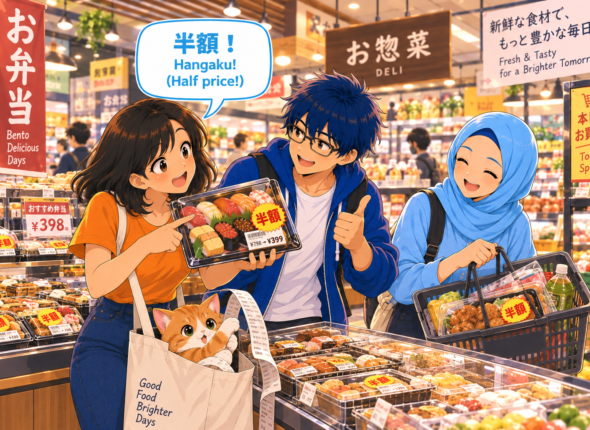
【よく目にする日本語】「半額」が読めると日本の買い物が楽しくなる [日本語学習]
( スーパーで寿司弁当を持ち「半額!」と喜ぶJoy、親指を立てるKen、買い物かごを持つRaya、エコバッグの中でレシートにじゃれつく可愛いオレンジ色の猫) 新シリーズ「Japanese You Keep Seeing」へようこそ! 日本での生活や旅行は、スーパーやデパートで見かける「ある特定のカラフルなステッカー」の漢字が読めるようになると、100倍楽しくなります。その魔法の言葉こそが「半額 (Hangaku)」です。夕方になると、多くの人が店員さんの後ろを静かに尾行し、生鮮食品にこのシールが貼られるのを待ち構えています。日本の究極の「宝探し」に参加する方法を学びましょう! 🗣 会話シーン (Conversation Scene) Joy、Ken、Rayaの3人は、デザインスタジオでの長い1日を終えた午後8時頃、地元の日本のスーパーマーケット(Super)に立ち寄りました。Joyは、店員さんが残っているお弁当に次々とシールを貼っているのを発見します。 Joy Line 1: 半額! Line 2: Hangaku! Line 3: (Half price!) Kenさん、見て!この高級寿司セットに「半額」シールが貼ってあります! Ken いい買い物をしましたね、Joyさん!夕方になると、食品ロスを防ぐために生鮮食品が割引されるんですよ。 Raya すごい!オフィス用にデザートも半額で買っていきましょう! 💡 解説:夜の宝探し(タイムセール)...
Japanese You Keep Seeing: 「半額」が読めると日本の買い物が楽しくなる |Japanese Grammar (N5–N3)
(Joy holding a sushi bento and saying “Hangaku!” in a Japanese supermarket, with Ken giving a thumbs up, Raya holding a basket, and a cat in an eco-bag) Welcome to “Japanese...

【よく目にする日本語】「売り切れ」と書いてあったらもう買えない? [日本語学習]
( ケーキ屋の空のトレイを見て「売り切れ?」と悲しむJoy、肩をすくめるKen、別のケーキの箱を持って励ますRaya、ショーケースのガラスに前足を突いて悲しむオレンジ色の猫) 新シリーズ「Japanese You Keep Seeing」へようこそ! ついに東京の有名なケーキ屋さんに到着した、あるいは欲しかった限定スニーカーをようやく見つけた。しかし、棚を見るとそこには「売り切れ (Urikire)」という3つの漢字が書かれた赤いサインが…。心が沈みますよね。でも待ってください、これは「その商品が永遠に失われた」ことを意味するのでしょうか?それともまた戻ってくるのでしょうか?日本のショッピングで最もがっかりする、しかし重要なサインの読み方を学びましょう! 🗣 会話シーン (Conversation Scene) Joy、Ken、Rayaの3人は、有名な季節のいちごのショートケーキを食べるために、高評価のパティスリー(ケーキ屋)を訪れました。残念ながら、午後の少し遅い時間に着いてしまいました。 Joy Line 1: 売り切れ? Line 2: Urikire? Line 3: (Sold out?) あ!いちごのケーキのところに「売り切れ」って書いてある! Ken 残念ですね。今日はもう全部売れてしまったみたいです。 Raya 心配しないでJoy!代わりに抹茶のロールケーキを買えたよ。さあ食べよう! 💡 解説:今日はなくても、明日はある?...
Japanese You Keep Seeing: 「売り切れ」と書いてあったらもう買えない?|Japanese Grammar (N5–N3)
( Joy looking sad at an empty cake tray asking “Urikire?”, with Ken shrugging, Raya holding a different cake box, and an orange cat pawing sadly at the glass) Welcome to...

【よく目にする日本語】日本の店でよく見る「新商品」ってどう読む? [日本語学習]
( 文房具店でペンを持ち「新商品?」と尋ねるJoy、親指を立てていいねをするKen、ペンを試し書きするRaya、ワイヤーバスケットの中で眠る可愛いオレンジ色の猫) 新シリーズ「Japanese You Keep Seeing」へようこそ! 日本は絶えず新しいものを生み出す(イノベーションの)国として有名です。コンビニエンスストア、化粧品売り場、または家電量販店など、どの店舗でもほぼ毎週のようにワクワクするような新しいアイテムが棚に並びます!お店は客の注意を引くために、赤や金色の目立つサインで「新商品」と大々的に宣伝します。しかし、これはどう読み、実際にはどういう意味なのでしょうか?ショッピングに欠かせないこの言葉を解読しましょう! 🗣 会話シーン (Conversation Scene) Joy、Ken、Rayaの3人は、デザインスタジオで使う備品を探すために、巨大な日本の文房具店(ロフトや東急ハンズのようなお店)を探索しています。Joyは、これまで見たことのないモダンで洗練されたペンの美しいディスプレイを発見しました。 Joy Line 1: 新商品? Line 2: Shin-shōhin? Line 3: (New product?) Kenさん、このポップの漢字はなんて読むんですか?新商品? Ken 正解です!「しんしょうひん」ですね。今週発売されたばかりのペンですよ。 Raya わあ、新商品!書き心地がすごく滑らか。オフィス用にいくつか買いましょう! 💡 解説:お店で一番ホットなアイテム 日本の店内で漢字のサインを読むのは難しいかもしれませんが、この言葉を一つ覚えるだけで、ショッピングの体験が信じられないほど充実します。...
Japanese You Keep Seeing: 日本の店でよく見る「新商品」ってどう読む?|Japanese Grammar (N5–N3)
(Joy pointing at a promotional sign asking “Shin-shōhin?” in a Japanese stationery store, with Ken giving a thumbs up and an orange cat sleeping in a basket) Welcome to “Japanese You...

【よく目にする日本語】「限定」を見つけたら何が特別? [日本語学習]
( コンビニで桜味の限定お菓子を手に取り「限定?」と尋ねるJoy、指を立てて説明するKen、ドリンクを持つRaya、空き箱から顔を出すオレンジ色の猫) 新シリーズ「Japanese You Keep Seeing」へようこそ! 日本の消費者の足を止めさせ、すぐさま財布に手を伸ばさせる強力な言葉が一つあります。それは「限定 (Gentei)」です。スターバックスのメニュー、コンビニのお菓子、駅のお土産屋さんなど、至る所でこの言葉を目にするでしょう。しかし、なぜこのシンプルな言葉がこれほどまでに強い力を持っているのでしょうか?「限定」アイテムを特別なものにしている秘密と、日本のリミテッド・エディション文化を解き明かしましょう! 🗣 会話シーン (Conversation Scene) Joy、Ken、Rayaの3人は、おやつを買うために近くのコンビニエンスストアに立ち寄りました。Joyは、目立つステッカーが貼られたピンク色の「桜(さくら)フレーバー」のお菓子が大量に並んでいる特設コーナーに気づきました。 Joy Line 1: 限定? Line 2: Gentei? Line 3: (Limited?) Kenさん、このお菓子のシールに「春限定」って書いてあります。 Ken そうです!今の季節しか買えない特別な味なんですよ。 Raya 限定なら、無くなる前に絶対に試してみないとね! 💡 解説:FOMO(見逃すことへの恐怖)と季節感 「限定...
Japanese You Keep Seeing: 「限定」を見つけたら何が特別? |Japanese Grammar (N5–N3)
(Joy looking at a sakura snack box asking “Gentei?” in a Japanese convenience store, with Ken explaining, Raya holding a drink, and an orange cat in a cardboard box) Welcome to...
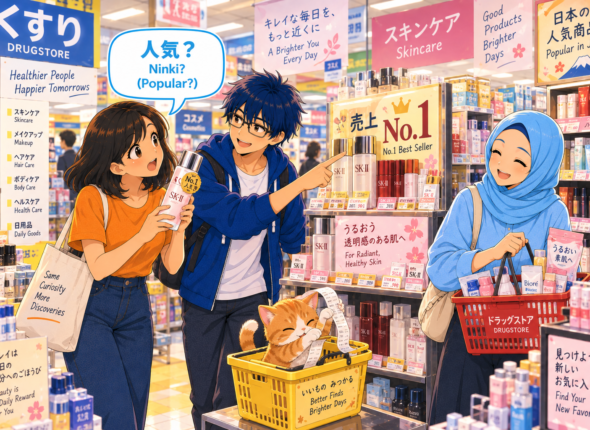
【よく目にする日本語】商品に書いてある「人気」って何? [日本語学習]
(ドラッグストアでスキンケアのボトルを持ちながら「人気?」と尋ねるJoy、棚の看板を指差すKen、買い物かごで遊ぶオレンジ色の猫) 新シリーズ「Japanese You Keep Seeing」へようこそ! 日本のドラッグストア、スーパー、またはお土産屋さんに入ると、キラキラ光るステッカーに書かれた特定の漢字を至る所で見かけるはずです。それが「人気 (Ninki)」です。「No.1」という文字とセットになることが多いこの言葉は、日本の小売マーケティングにおける最強の原動力です。しかし、正確にはどういう意味で、単に「有名」であることとは何が違うのでしょうか?買い物に出かけて確かめてみましょう! 🗣 会話シーン (Conversation Scene) Joy、Ken、Rayaの3人は、賑やかな東京のドラッグストアで買い物をしています。Joyは良い保湿クリームを探していますが、棚に並ぶあまりにも多くの選択肢に圧倒されてしまっています。 Joy Line 1: 人気? Line 2: Ninki? Line 3: (Popular?) Kenさん、このシールに「人気ナンバーワン」って書いてあります。 Ken あ、それは一番よく売れているという意味ですよ。みんなが買っているんです。 Raya みんなが買ってる「人気No.1」なら、私も絶対にこれにしよっと! 💡 解説:人々が集まる力 協調性や集団の調和を重んじる日本の社会において、消費者は「他の皆が買っているもの」を買うことに最も安心感を覚えます。だからこそ、商品の「人気」をアピールすることが、最大の販売戦略(マーケティング)になるのです。 1....
Japanese You Keep Seeing: 商品に書いてある「人気」って何 |Japanese Grammar (N5–N3)
( Joy holding a skincare bottle asking “Ninki?” in a brightly lit Japanese drugstore, while Ken points at a sign and an orange cat plays with a receipt) Welcome to “Japanese...

【よく目にする日本語】お店で見る「おすすめ」ってどういう意味? [日本語学習]
(パン屋でトングとトレイを持ちながら「おすすめは?」とKenに聞くJoy、亀の形のパンを買うRaya、バゲットの後ろから覗く小さなコック帽を被ったオレンジ色の猫) 新シリーズ「Japanese You Keep Seeing」へようこそ! 日本のレストランに入り、英語の翻訳がない膨大なメニューを見てパニックになったことはありませんか?でも心配はいりません!そんな時にあなたを毎回救ってくれる魔法の言葉があります。それが「おすすめ (Osusume)」です。お店のカラフルなポップに書かれている場合でも、会話の中で使う場合でも、この言葉を知っていれば、最高の体験ができること間違いなしです。どのように機能するのか見てみましょう! 🗣 会話シーン (Conversation Scene) Joy、Ken、Rayaの3人は、簡単なランチを買うために、地元で有名な日本のパン屋(Pan-ya)を訪れました。店内には甘いパンからお惣菜パンまで何十種類ものパンが並んでおり、Joyは何を選べばいいのか全くわかりません。 Joy Line 1: おすすめは? Line 2: Osusume wa? Line 3: (What do you recommend?) パンの種類が多すぎて選べないです!Kenさんのおすすめは? Ken このお店の「おすすめ」はカレーパンですよ。一番人気です! Raya 見てJoy、パンの隣にも大きく「おすすめ」って書かれた看板があるよ!...
Japanese You Keep Seeing: お店で見る「おすすめ」ってどういう意味 |Japanese Grammar (N5–N3)
(Joy holding a tray in a Japanese bakery asking Ken “Osusume wa?”, with Raya buying bread and an orange cat in a baker’s hat hiding behind baguettes) Welcome to “Japanese You...