
Blog
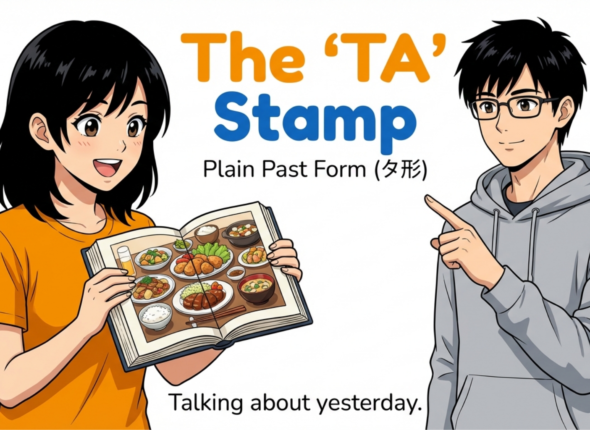
GrammarBook N5: Plain Past Form in Japanese
N5-G-050 Plain Past Form (Casual Past) Supporting / Casual Speech 👀 Layer A: Visual Guide (直感理解) 📝 Quick Summary (まとめ) 友達との会話で使う「過去形(~た)」です。「タ形(Ta-form)」とも呼ばれます。作り方は「テ形(Te-form)」と同じです。 This is the casual past form used with friends. It is...
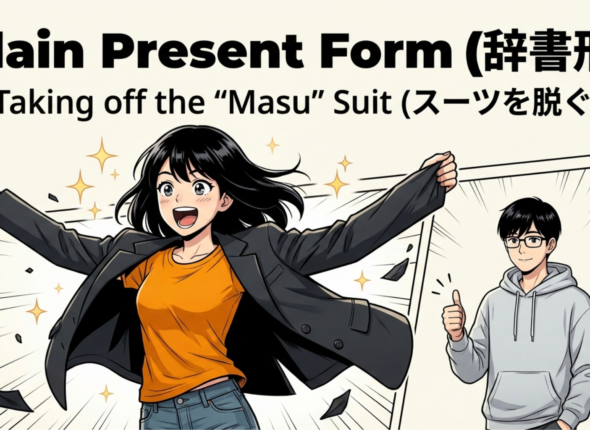
GrammarBook N5: Plain Present Form in Japanese
N5-G-049 Plain Present Form (Casual Speech) Supporting / Casual Speech 👀 Layer A: Visual Guide (直感理解) 📝 Quick Summary (まとめ) 友達や家族と話すときの「タメ口(カジュアル)」の形です。「ます形」ではなく「辞書形(Dictionary Form)」を使います。 This is the casual form used with friends and family....
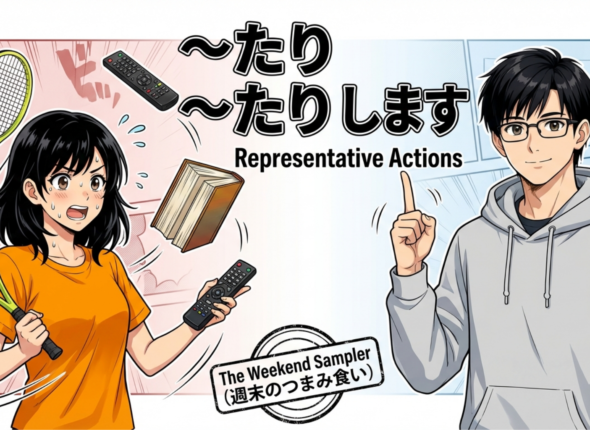
GrammarBook N5: ~たり~たりします
N5-G-048 ~たり~たりします (Varied actions) Supporting / Listing 👀 Layer A: Visual Guide (直感理解) 📝 Quick Summary (まとめ) いくつかの動作の中から、代表的なものを2〜3個ピックアップして伝える表現です。「Aをしたり、Bをしたりします(他にもあるけど)」というニュアンスです。 Use this pattern to list representative actions (“I do things like A and B…”)....

GrammarBook N5: ~てから (The strict sequence)
N5-G-047 ~てから (After / Since) Supporting / Sequence 👀 Layer A: Visual Guide (直感理解) 📝 Quick Summary (まとめ) 「Aをして、それからBをする」という行動の順番(じゅんばん)をはっきり言うときに使います。また、「日本に来てから(ずっと)~」のように、「~してから今まで」という意味でも使います。 Use this pattern to emphasize the sequence “After doing A, I do B”....
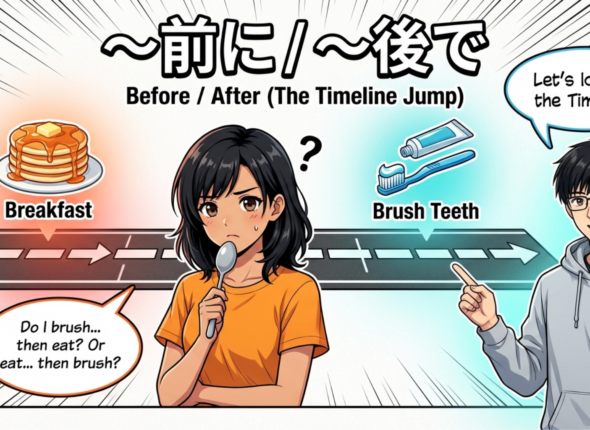
GrammarBook N5: ~前に / ~後で (Before/After)
N5-G-046 ~前に / ~後で (Before / After) Supporting / Sequence 👀 Layer A: Visual Guide (直感理解) 📝 Quick Summary (まとめ) 行動の順番(じゅんばん)を説明する表現です。「Aをする前にBをする」「Aをした後でBをする」と言いたいときに使います。動詞の形に注意が必要です。 Use these patterns to describe the order of actions (“Before doing...
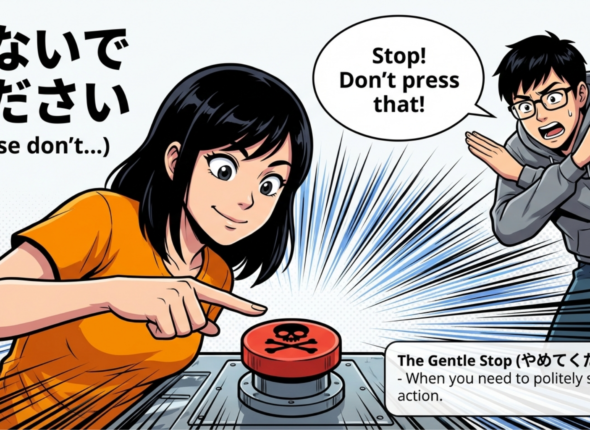
GrammarBook N5: ~ないでください
N5-G-045 ~ないでください (Please don’t) Supporting / Request 👀 Layer A: Visual Guide (直感理解) 📝 Quick Summary (まとめ) 相手に「~しないでほしい」と丁寧に頼むときに使います。動詞の「ナイ形(Nai-form)」を使います。 Use this pattern to politely ask someone NOT to do something (“Please don’t…”). It...
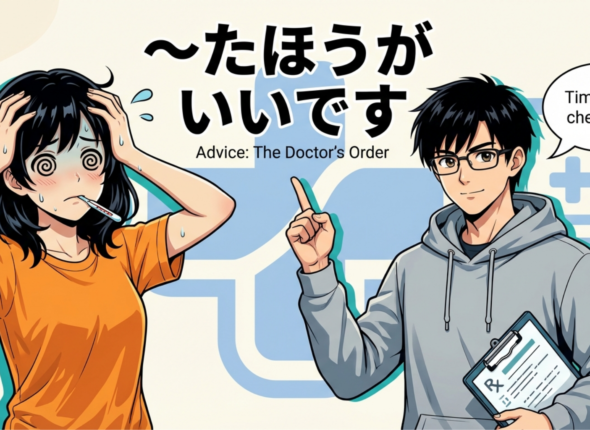
GrammarBook N5: ~たほうがいいです
N5-G-044 ~たほうがいいです (Advice) Peripheral / Advice 👀 Layer A: Visual Guide (直感理解) 📝 Quick Summary (まとめ) 相手に「~したほうがいいよ」とアドバイスするときに使います。これからすることですが、動詞は「タ形(過去形)」を使うのがポイントです。 Use this pattern to give specific advice (“You’d better…”, “It’s better to…”). Even though it...
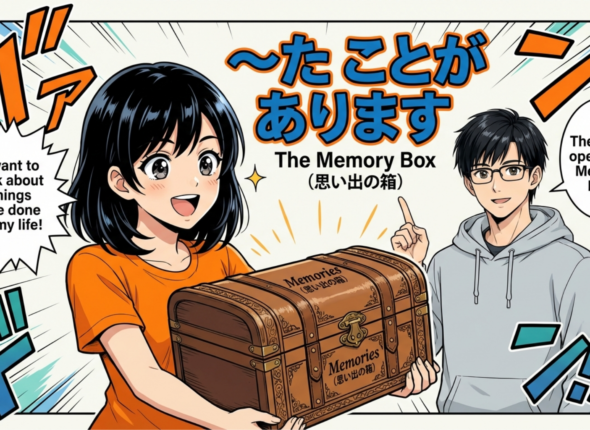
GrammarBook N5: ~たことがあります
N5-G-043 ~たことがあります (Experience) Peripheral / Past Tense 👀 Layer A: Visual Guide (直感理解) 📝 Quick Summary (まとめ) 「過去にそれをした経験(けいけん)があるか」を話すときに使います。「昨日~した」のような単なる過去の出来事ではなく、「人生で一度でもしたことがあるか」というニュアンスです。 Use this pattern to talk about past experiences (“I have done…”). It refers to...
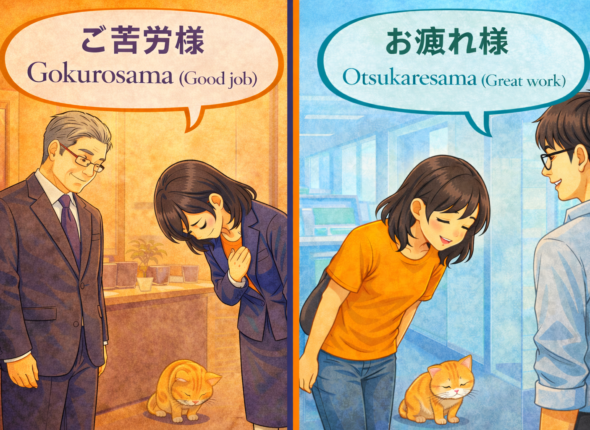
【使い分け】「ご苦労さま」と「お疲れさま」の違い[日本語学習]
(偉そうな上司 [ご苦労さま] vs. 丁寧なJoy [お疲れさま]) 「仕事が終わった!挨拶(あいさつ)は何?」 日本語には「Good job」にあたる言葉が2つあります。「ご苦労(くろう)さま」と「お疲(つか)れさま」です。これを間違(まちが)えると、上司(じょうし)を怒(おこ)らせてしまうかもしれません!JoyとKenと一緒に正しいルールを学びましょう。 🗣 会話シーン (Conversation Scene) 午後6時。Joyが仕事を終えて帰るところです。 Joy 部長(ぶちょう)、お先に失礼します。 ご苦労(くろう)さまでした! (Manager, I’m leaving now. “Good job on your toil”!) Ken ストップ!Joyさん、上司(じょうし)に「ご苦労さま」はダメですよ。 とても 偉(えら)そうに 聞こえます! (Stop! Joy,...
The Difference Between「ご苦労さま」と「お疲れさま」の違い|Japanese Grammar (N5–N3)
(Boss saying Gokurosama [Authority] vs. Joy saying Otsukaresama [Polite]) “Good work today!” In Japanese, how you say “Good job” depends on your rank. ご苦労さま (Gokurosama) is for subordinates. お疲れさま (Otsukaresama) is for...
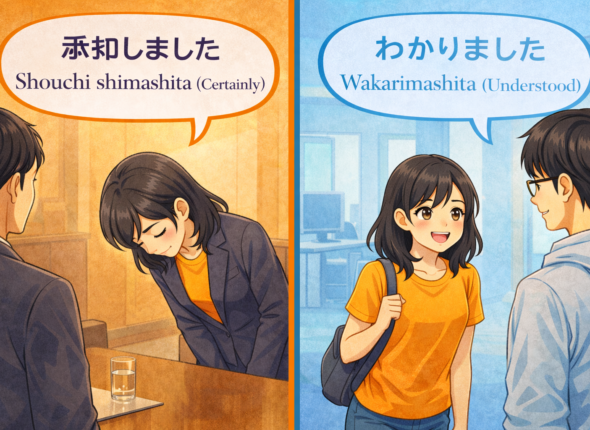
【使い分け】「承知しました」と「分かりました」の違い[日本語学習]
(上司にお辞儀するJoy [承知しました] vs. 同僚に頷くJoy [分かりました]) 「はい、理解しました」。 日常会話(にちじょうかいわ)では「分かりました (Wakarimashita)」でOKです。でも、クライアントにこれを使うと、少し頼(たよ)りなく聞こえます。プロは「承知(しょうち)しました (Shouchi shimashita)」を使います。JoyとKenと一緒に学びましょう! 🗣 会話シーン (Conversation Scene) Joyが部長(ぶちょう)から急(いそ)ぎの仕事(しごと)を頼(たの)まれています。 Ken Joyさん、この資料(しりょう)を 3時までに 修正(しゅうせい)してくれますか? 急(いそ)ぎです。 (Joy, can you correct this document by 3 PM? It’s urgent.) Joy...
The Difference Between「承知しました」と「分かりました」の違い|Japanese Grammar (N5–N3)
(Joy bowing to boss [Shouchi shimashita] vs. Joy nodding to coworker [Wakarimashita]) “I understand.” In daily life, 分かりました (Wakarimashita) is perfect. But in business, saying this to a client might make you...
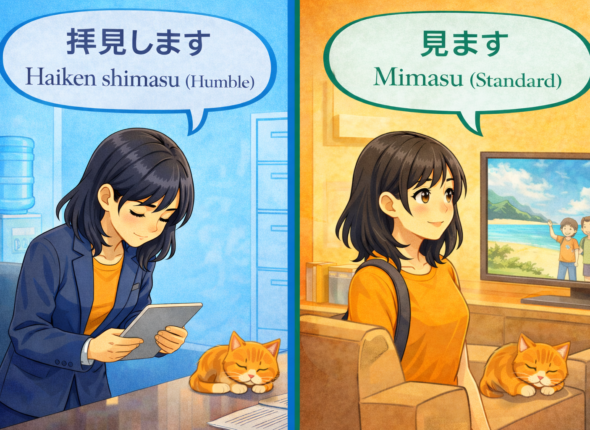
【使い分け】「拝見します」と「見ます」の違い[日本語学習]
(資料を丁寧に確認するJoy [拝見します] vs. テレビを見るJoy [見ます]) 「メールを見ました」。 ビジネスでは、この言い方は少しカジュアルすぎます。「拝見(はいけん)しました」を使いましょう。「拝見」は「謙譲語(けんじょうご)」です。JoyとKenと一緒に、正しい敬語(けいご)を学びましょう! 🗣 会話シーン (Conversation Scene) Joyが仕事のメールをチェックしています。 Joy 田中様(たなかさま)からのメールを 拝見(はいけん)しました。 すぐに返信(へんしん)します。 (I have “humbly seen/read” the email from Mr. Tanaka. I will reply immediately.) Ken ありがとうございます。 あ、Joyさん、昨日のニュースは...
The Difference Between「拝見します」と「見ます」の違い|Japanese Grammar (N5–N3)
(Joy checking a document politely [Haiken] vs. Joy watching TV [Mimasu]) “I saw your email.” In Japanese business, you cannot just say “Mimashita.” You must say 拝見しました (Haiken shimashita). This implies “I...
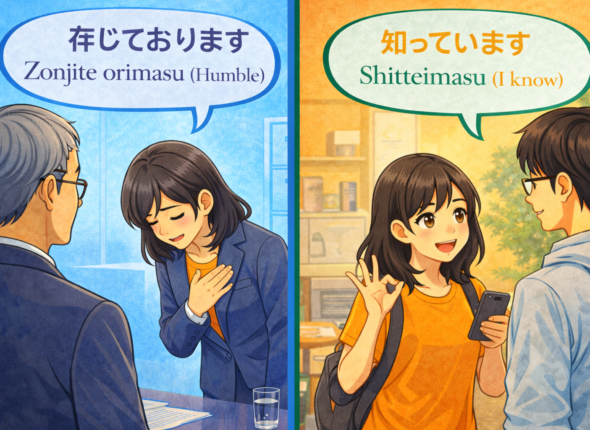
【使い分け】「存じます」と「知っています」の違い[日本語学習]
( 謙譲語を使うJoy [存じております] vs 標準語を使うJoy [知っています]) 「その件(けん)は知っています」。 お客様(きゃくさま)に「知っています」と言うと、少し子供っぽく聞こえます。ビジネスでは「存(ぞん)じております」を使(つか)いましょう。でも注意!質問(しつもん)するときに使うと失礼(しつれい)になります。JoyとKenと一緒に学びましょう! 🗣 会話シーン (Conversation Scene) Joyが電話でクライアントと話しています。 Joy はい、その件(けん)については 知(し)っています。 日程(にってい)も 分(わ)かります。 (Yes, I “know” about that matter. I “understand” the schedule too.) Ken Joyさん、お客様には 存(ぞん)じております...
The Difference Between「存じます」と「知っています」の違い|Japanese Grammar (N5–N3)
(Joy using humble Keigo [Zonjimasu] vs. Joy using standard Japanese [Shitteimasu]) “I know about that.” In Japanese business, saying “Shitteimasu” to a client can sound childish or too direct. You need to...
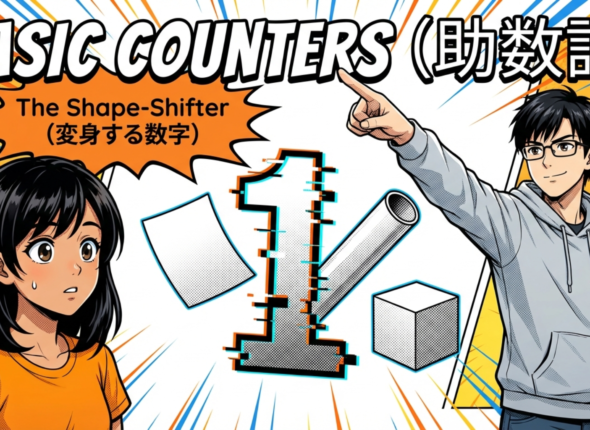
GrammarBook N5: Basic Counters in Japanese
N5-G-042 Basic Counters (助数詞) Supporting / Numbers 👀 Layer A: Visual Guide (直感理解) 📝 Quick Summary (まとめ) 日本語では、数えるものによって数字の後ろにつく言葉(助数詞)が変わります。「形」に注目するのがポイントです。 In Japanese, counting words change depending on the shape or nature of the object....
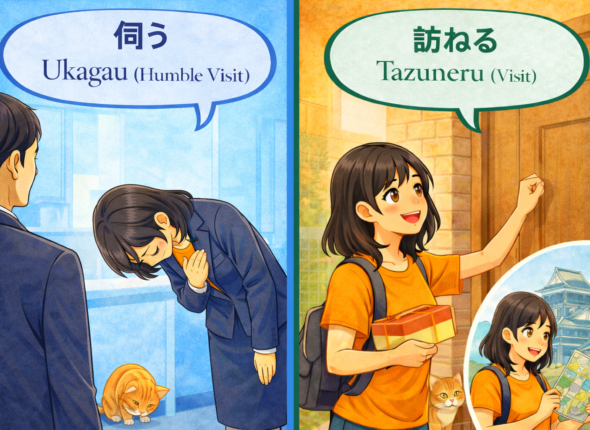
【使い分け】「伺う」と「訪ねる」の違い[日本語学習]
(クライアントを訪問するJoy [伺う] vs. 友達の家を訪ねるJoy [訪ねる]) 「明日、オフィスを訪(たず)ねます」。 これだと、少し観光(かんこう)のような軽い感じがします。ビジネスで会社に行くときは、謙譲語(けんじょうご)の「伺(うかが)います」を使いましょう。JoyとKenと一緒に学びましょう! 🗣 会話シーン (Conversation Scene) Joyが電話でお客様とアポイントを確認しています。 Joy はい、では明日(あした)の3時に、御社(おんしゃ)を 訪(たず)ねます! (Okay, I will “visit” your company at 3 PM tomorrow!) Ken ストップ!Joyさん。 お客様(きゃくさま)のところへ行くときは、伺(うかが)います を使いましょう。 (Stop! Joy. When...
The Difference Between「伺う」と「訪ねる」の違い|Japanese Grammar (N5–N3)
(Joy visiting a client [Ukagau] vs. Joy visiting a friend [Tazuneru]) “I will visit your office tomorrow.” If you say “Ashita, ofisu wo tazunemasu,” it sounds a bit like you are going...
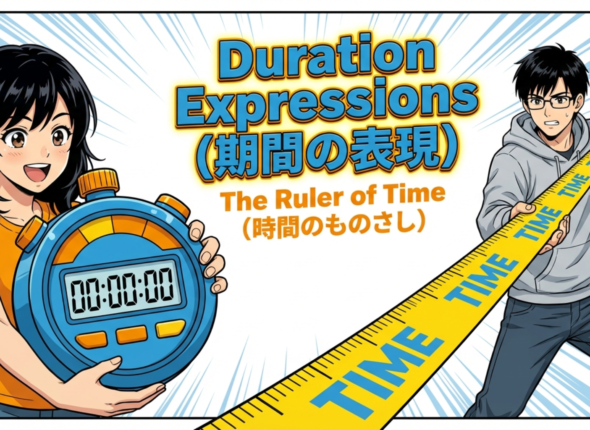
GrammarBook N5: Duration Expressions
N5-G-041 Duration Expressions (時間の長さ) Supporting / Numbers 👀 Layer A: Visual Guide (直感理解) 📝 Quick Summary (まとめ) 「どのくらい長く(期間)」を表す言葉です。「~時(Point)」と「~時間(Length)」を区別しましょう。 These expressions measure the length of time (Duration). Learn to distinguish between a point...