

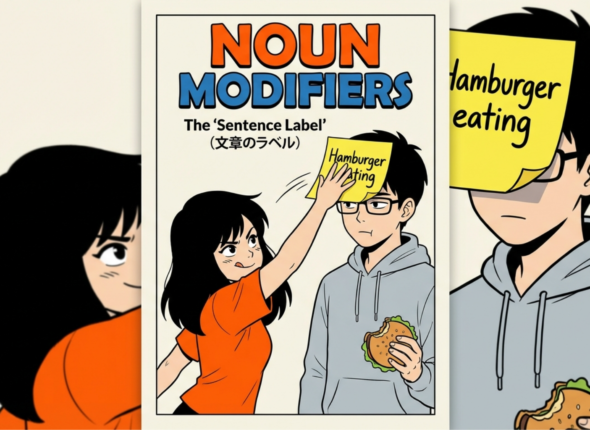
GrammarBook N5: Noun Modifiers in Japanese (Relative Clauses)
N5-G-072 Noun Modifiers (Relative Clauses) Supporting / Description 👀 Layer A: Visual Guide (直感理解) 📝 Quick Summary (まとめ) 「昨日食べたケーキ」のように、名詞(ケーキ)を詳しく説明する文法です。日本語では、説明する言葉(動詞の普通形)を名詞の **前** に置きます。 In Japanese, you modify a noun by placing a verb (in...
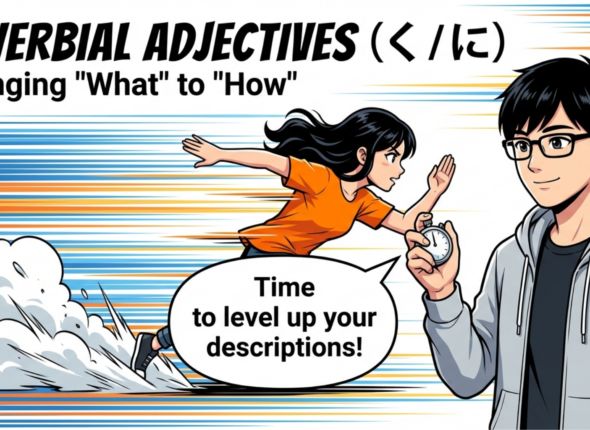
GrammarBook N5: Adverbial Adjectives in Japanese (ku/ni)
N5-G-071 Adverbial Adjectives (く / に) Supporting / Description 👀 Layer A: Visual Guide (直感理解) 📝 Quick Summary (まとめ) 形容詞を変化させて、動詞を詳しく説明する形(副詞)にします。「早い(Adjective)」を「早く(Adverb)」に変えて、「早く走る(Run fast)」のように使います。 Change Adjectives into Adverbs to describe actions. Use this to say...
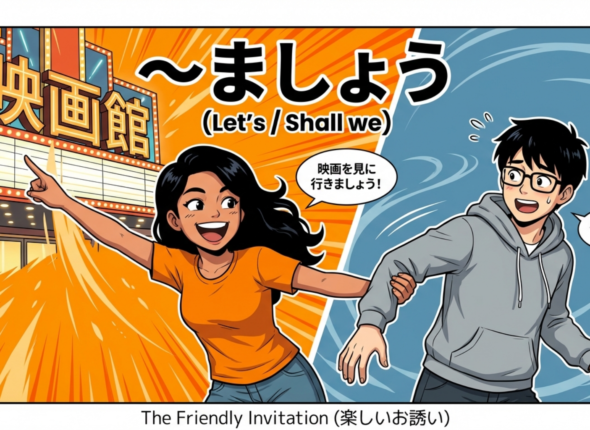
GrammarBook N5: ~ましょう (Let’s / Invitation)
N5-G-070 ~ましょう (Let’s / Invitation) Core / Invitation & Suggestion 👀 Layer A: Visual Guide (直感理解) 📝 Quick Summary (まとめ) 「一緒に~しよう!」と相手を積極的に誘う表現です。「私についてきて!」というリーダーシップのニュアンスがあります。 Use “Mashou” to say “Let’s…”. It is an active invitation where...

GrammarBook N5: Verb Dictionary form + ために (In order to)
N5-G-069 Verb Dict + ために (In order to) Peripheral / Purpose 👀 Layer A: Visual Guide (直感理解) 📝 Quick Summary (まとめ) はっきりした目的(もくてき)があって、「それをするために」何かをするときに使います。「意志(Will)」のある強い表現です。 Use “Tame ni” to express a clear purpose or goal...
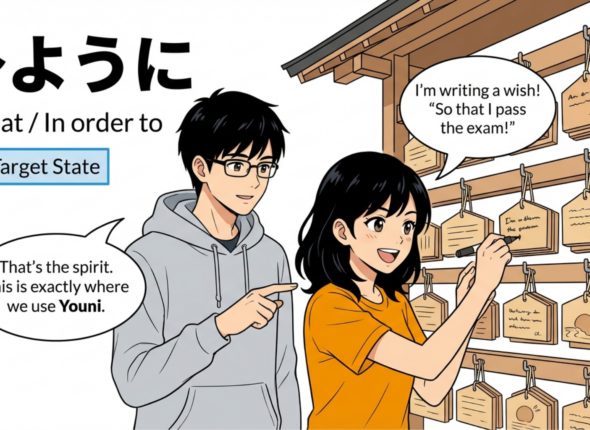
GrammarBook N5: ~ように (So that / In order to)
N5-G-068 ~ように (So that / In order to) Peripheral / Purpose & State 👀 Layer A: Visual Guide (直感理解) 📝 Quick Summary (まとめ) 「~できる(状態)になるために」や「~しない(状態)ように」という目標を表します。「可能形(Can)」や「ない形(Not)」と一緒によく使います。 Use “Youni” to express a target state, such...
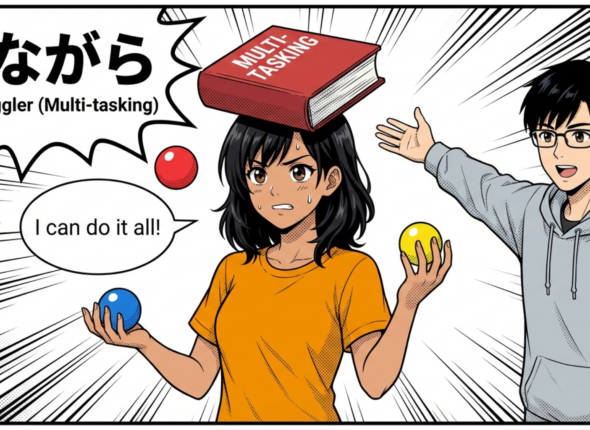
GrammarBook N5:~ながら (While doing)
N5-G-067 ~ながら (While doing) Peripheral / Simultaneous Action 👀 Layer A: Visual Guide (直感理解) 📝 Quick Summary (まとめ) 2つの動作を同時に行うときに使います。「音楽を聞きながら勉強する」や「歩きながら話す」などです。メインの動作は「ながら」の後ろに来ます。 Use “Nagara” to express doing two things at the same time (“multi-tasking”). The...
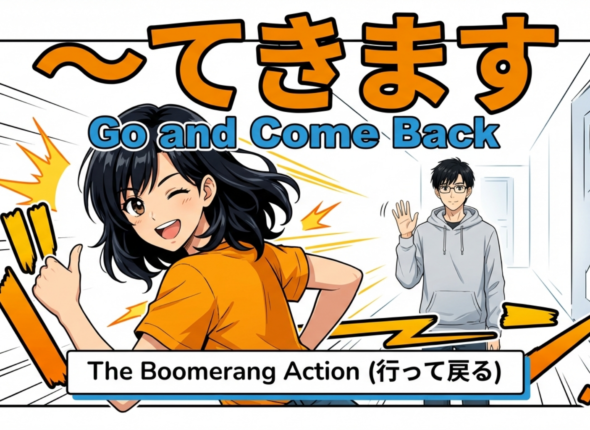
GrammarBook N5:~てきます (Go and come back)
N5-G-066 ~てきます (Go and come back) Peripheral / Movement & Change 👀 Layer A: Visual Guide (直感理解) 📝 Quick Summary (まとめ) 「どこかへ行って、何かをして、戻ってくる」という意味です。単に「来る」だけでなく、「往復(Round trip)」のニュアンスがあります。 Use “Te-kimasu” when you go somewhere to do something...

GrammarBook N5: ~ていきます (Go and… / Take)
N5-G-065 ~ていきます (Go and… / Take) Peripheral / Movement & Change 👀 Layer A: Visual Guide (直感理解) 📝 Quick Summary (まとめ) 「何かをしてから、出かける」または「ある状態のまま、遠くへ行く」ときに使います。また、「持って行く(Take)」や「連れて行く(Take someone)」の形でもよく使われます。 Use “Te-ikimasu” when you perform an action and then...
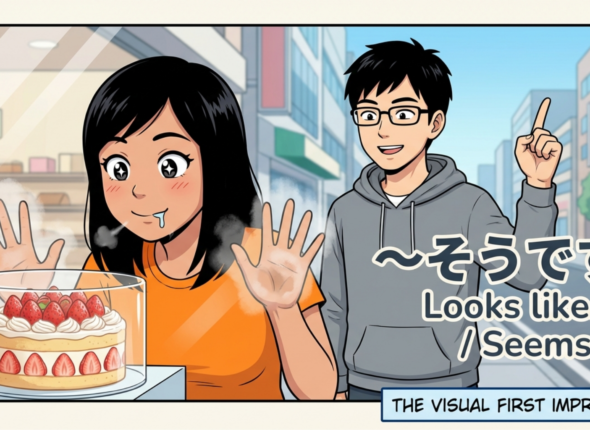
GrammarBook N5: ~そうです (Looks like)
N5-G-064 ~そうです (Looks like) Peripheral / Visual Impression 👀 Layer A: Visual Guide (直感理解) 📝 Quick Summary (まとめ) 目で見た印象(いんしょう)を言うときに使います。「美味しそう(食べてないけど、見た目が美味しい)」や「忙しそう(見た目が忙しい)」などです。 Use “Sou desu” to describe your visual impression (“It looks…”). It implies you...
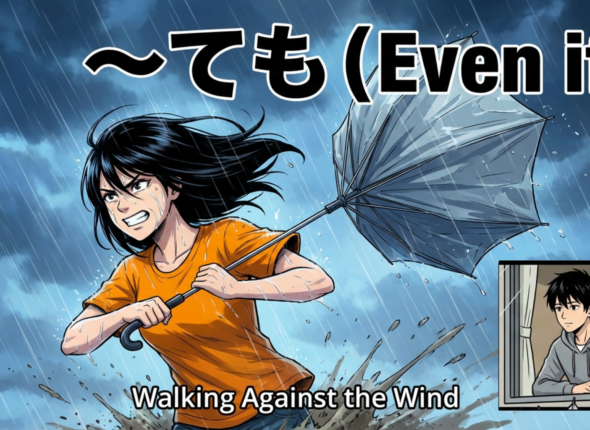
GrammarBook N5: ~ても (Even if)
N5-G-063 ~ても (Even if) Peripheral / Concession 👀 Layer A: Visual Guide (直感理解) 📝 Quick Summary (まとめ) 「たとえ~という状況でも、結果は変わらない」と言いたいときに使います。「雨でも行きます」や「安くても買いません」のような強い意志や逆説を表します。 Use “Temo” (or “Demo”) to express “Even if”. It implies that the result will...
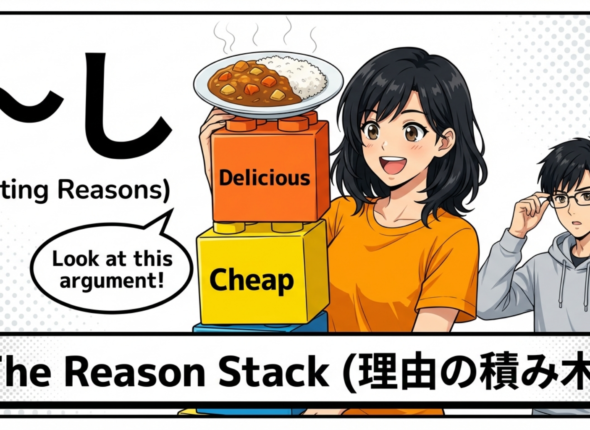
GrammarBook N5: ~し (Listing reasons)
N5-G-062 ~し (Listing reasons) Supporting / Reasoning 👀 Layer A: Visual Guide (直感理解) 📝 Quick Summary (まとめ) 理由や特徴をいくつか並(なら)べて言いたいときに使います。「Aだし、Bだし、だからCです」というように、結論に向かって理由を積み上げるイメージです。 Use “Shi” to list multiple reasons or features. It emphasizes that there is more...
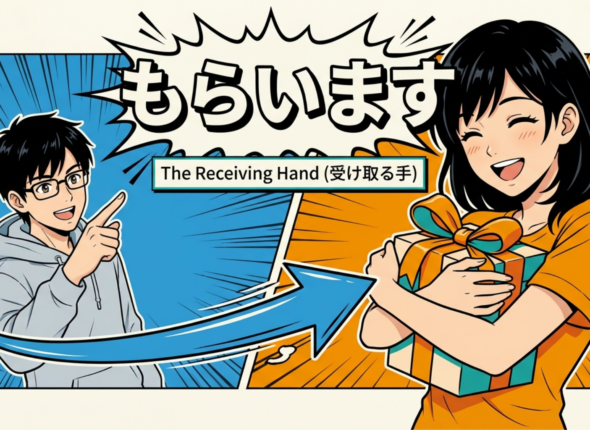
GrammarBook N5: もらいます (To receive)
N5-G-061 もらいます (To receive) Peripheral / Giving & Receiving 👀 Layer A: Visual Guide (直感理解) 📝 Quick Summary (まとめ) 「誰かから物をもらう(受け取る)」ときに使います。主語は「受け取る人(私)」です。 Use “Moraimasu” when you (or someone else) receive something from another person....
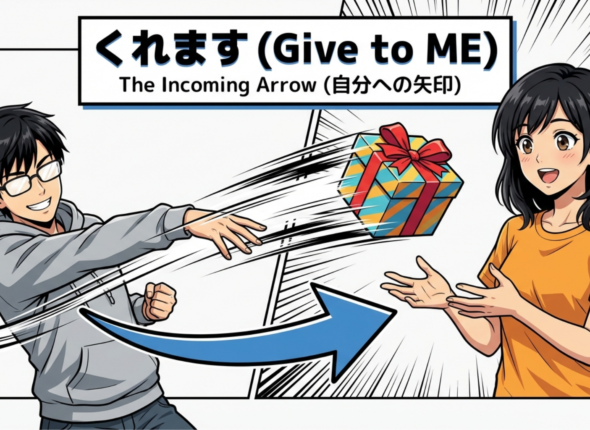
GrammarBook N5: くれます (To give to me)
N5-G-060 くれます (To give to me) Peripheral / Giving & Receiving 👀 Layer A: Visual Guide (直感理解) 📝 Quick Summary (まとめ) 「誰かが **私に** くれる」ときだけ使う特別な動詞です。受け取る人(Receiver)は必ず「私(または私の家族)」になります。 Use “Kuremasu” ONLY when someone gives something **to...
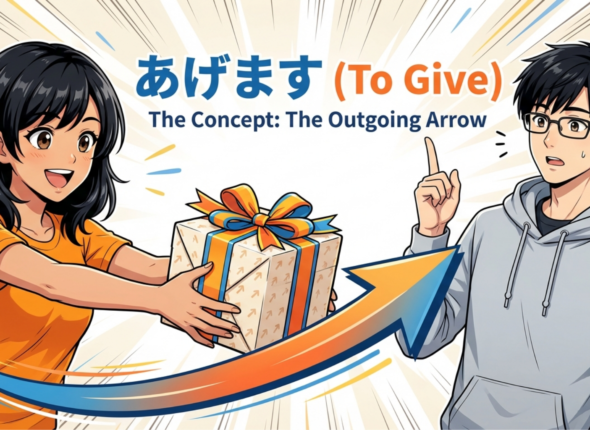
GrammarBook N5: あげます (To give)
N5-G-059 あげます (To give) Peripheral / Giving & Receiving 👀 Layer A: Visual Guide (直感理解) 📝 Quick Summary (まとめ) 「私から誰かへ」、または「誰かから別の人へ」物を渡すときに使います。プレゼントが自分の手元から離れていくイメージです。 Use “Agemasu” when YOU give something to others, or when someone gives...
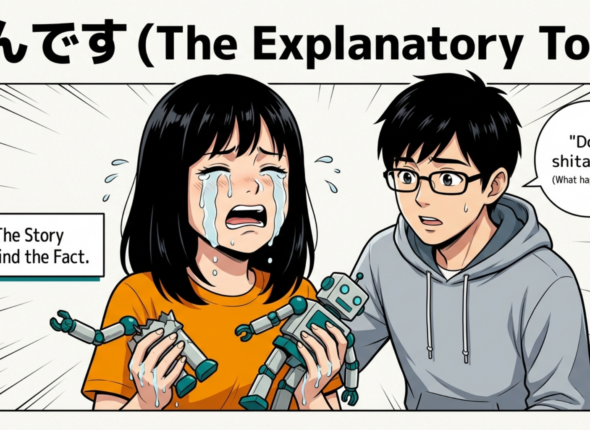
GrammarBook N5: ~んです (Explanatory Tone)
N5-G-058 ~んです (Explanatory Tone) Supporting / Reasoning 👀 Layer A: Visual Guide (直感理解) 📝 Quick Summary (まとめ) 単なる事実ではなく、「実は~なんです」と事情(じじょう)を説明したいときに使います。理由を言ったり、言い訳をしたりするときに便利です。 Use “N desu” to add an explanatory tone (“The thing is…”, “Actually…”). It conveys...
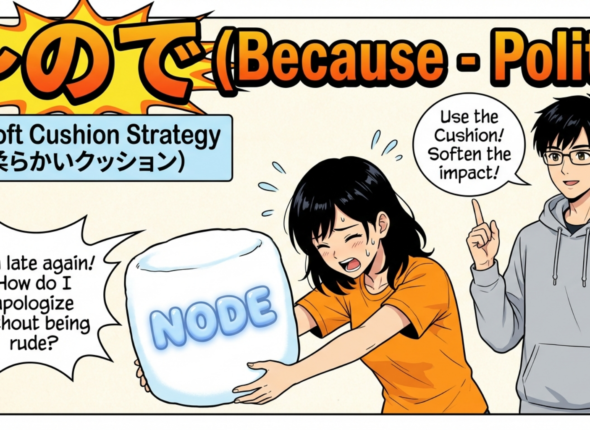
GrammarBook N5: ~ので (Because – Polite)
N5-G-057 ~ので (Because – Polite) Supporting / Reasoning 👀 Layer A: Visual Guide (直感理解) 📝 Quick Summary (まとめ) 「から (Kara)」よりも丁寧で柔らかい理由の言い方です。言い訳をするときや、目上の人に説明するときによく使います。 Use “Node” to state a reason politely. It is softer than “Kara”...
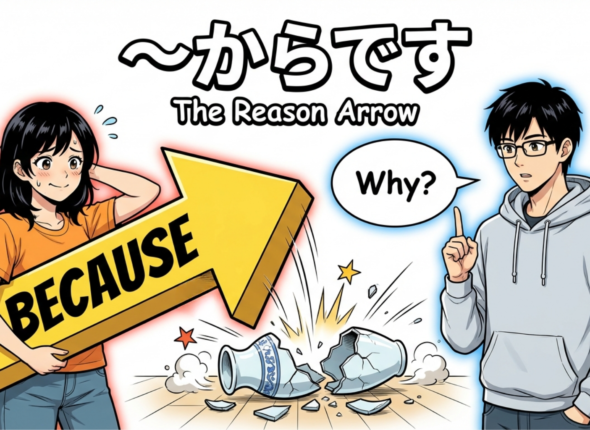
GrammarBook N5: ~からです (Because / Reason)
N5-G-056 ~からです (Because / Reason) Supporting / Reasoning 👀 Layer A: Visual Guide (直感理解) 📝 Quick Summary (まとめ) 「なぜ?」と聞かれたときに、理由(りゆう)を答える表現です。「~だからです」という意味です。 Use “Kara” to state the reason (“Because…”). It usually comes at the end...
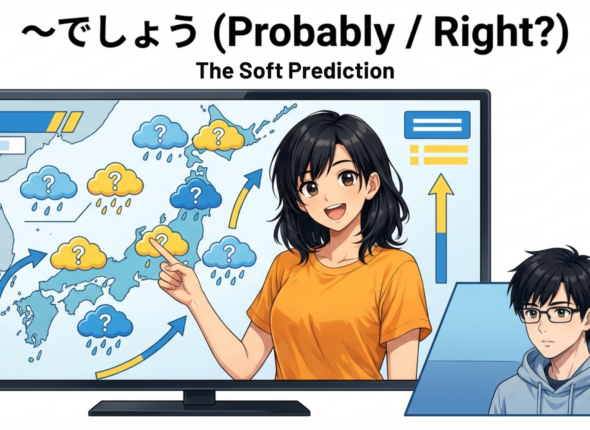
GrammarBook N5: でしょう
N5-G-055 でしょう (Probably / Right?) Supporting / Uncertainty 👀 Layer A: Visual Guide (直感理解) 📝 Quick Summary (まとめ) 「たぶん~だと思います(推量)」や「~ですよね?(同意・確認)」という意味で使います。「です」よりも柔らかく、断定を避ける表現です。 Use “Deshou” to express probability (“Probably…”) or to seek confirmation (“Right?”). It softens...
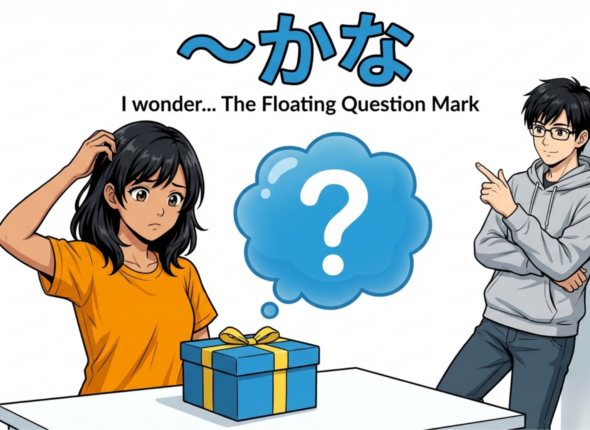
GrammarBook N5: かな (The Floating Question Mark)
N5-G-054 かな (I wonder) Supporting / Uncertainty 👀 Layer A: Visual Guide (直感理解) 📝 Quick Summary (まとめ) 「~かなあ」と独り言を言うときや、確信が持てないことについて「~だろうか?」と考えるときに使います。カジュアルな話し言葉です。 Use “Kana” at the end of a sentence to express “I wonder…” or uncertainty....
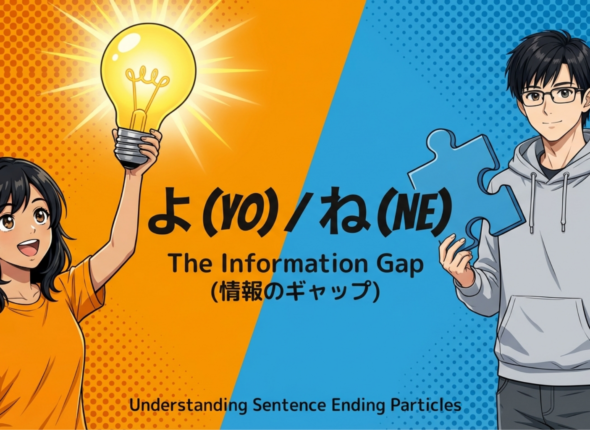
GrammarBook N5: よ / ね (Sentence ending particles)
N5-G-053 よ / ね (Sentence Ending Particles) Core / Conversation Flow 👀 Layer A: Visual Guide (直感理解) 📝 Quick Summary (まとめ) 文の最後に付けて、気持ちやニュアンスを伝える言葉です。 **よ (Yo):** 相手が知らないことを教えるとき、または自分の意見を主張するとき(!)。 **ね (Ne):** 相手に同意を求めるとき、または共感するとき(?/♪)。 “Yo” puts emphasis or...