

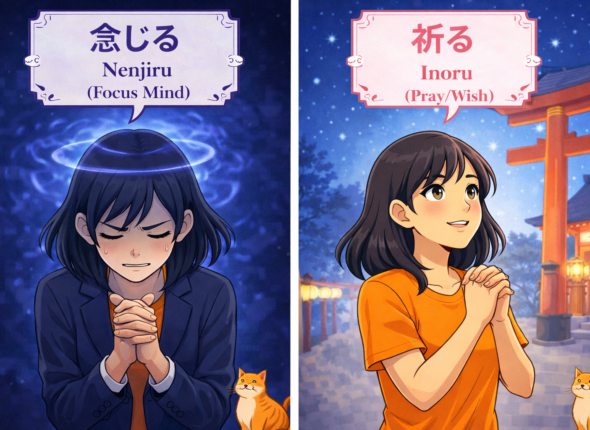
“Nenjiru” vs “Inoru” – What’s the Difference?
(Joy using mental power [Nenjiru] vs. Joy praying to God [Inoru]) “I pray for peace.” (Heiwa o inoru) “I pray/chant silently.” (Kokoro de nenjiru) While both involve prayer, 祈る (Inoru) is asking...
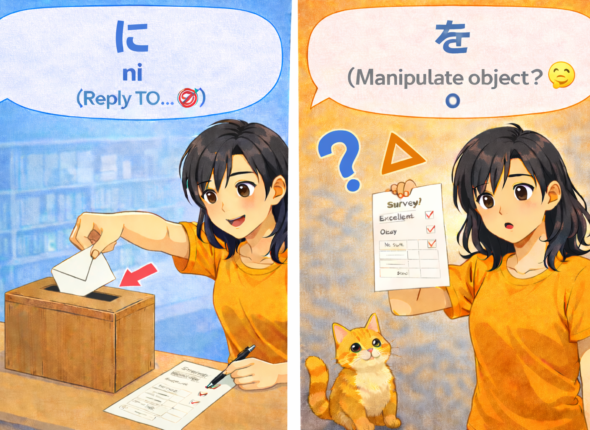
The Difference Between “アンケートに回答する” and “アンケートを回答する”(Ankēto ni kaitō suru vs. Ankēto o kaitō suru)
(アンケート「に」答えるJoy vs. アンケート「を」持つJoy) 「アンケートに回答する」(正しい) 「アンケートを回答する」(不自然) 英語では “Answer the survey” なので「を」を使いたくなりますが、日本語の「回答する(Kaitō suru)」は「返事をする」という意味です。つまり、「対象(Target)」を示す必要があります。JoyとKenと一緒に正しい助詞を覚えましょう! 🗣 会話シーン (Conversation Scene) Joyがお店でアンケート用紙をもらいました。 Joy ケンさん、このお店のアンケート を 回答しました! クーポンがもらえますよ。 (Ken, I “answered [object marker]” this shop’s survey! I can get...
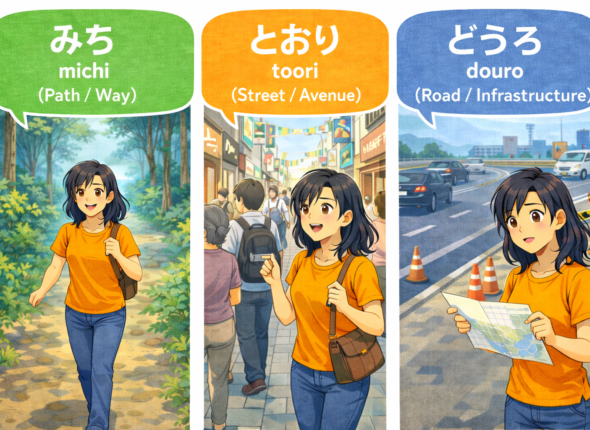
The Difference Between “道” (Michi), “通り” (Toori), and “道路” (Douro)
(Joy walking on a path [Michi], shopping on a street [Toori], and pointing at asphalt [Douro]) “Please tell me the way.” (Michi o oshiete) “This street is lively.” (Kono toori wa…?) “Construction...
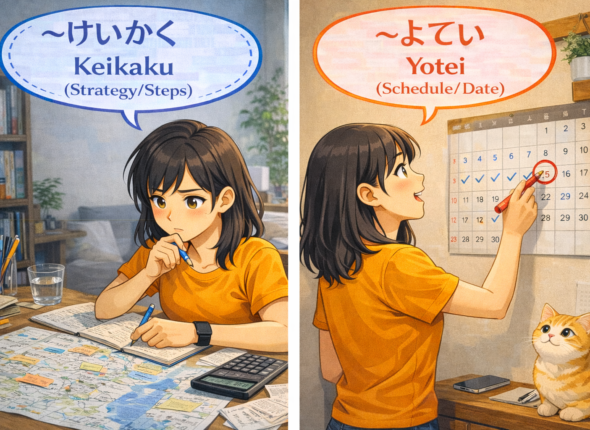
The Difference Between “計画する” (Keikaku Suru) and “予定する” (Yotei Suru)
(Joy making a detailed strategy [Keikaku] vs. Joy marking a calendar [Yotei]) “I plan to go to Japan.” Is it 計画 (Keikaku) or 予定 (Yotei)? In English, “Plan” covers both. But in...
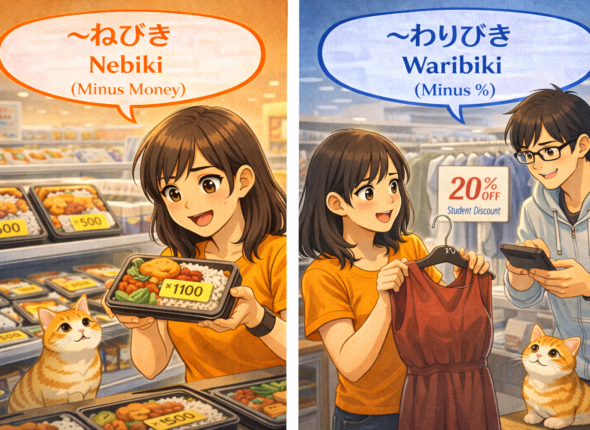
The Difference Between “値引き” (nebiki) and “割引” (waribiki)
(Joy finding a clearance item [Nebiki] vs. Joy calculating a percentage sale [Waribiki]) “100 yen off!” “20% off!” In Japanese, we use different words depending on how the price is reduced. 値引き...
Experience the Charm of Japanese Food! Enjoyable Dishes and Eating Tips for Beginners
Experience the Charm of Japanese Food! Enjoyable Dishes and Eating Tips for Beginners Ramen, sushi, tempura… Japanese cuisine is rich in variety! But that’s not all. In fact, Japan is home to...
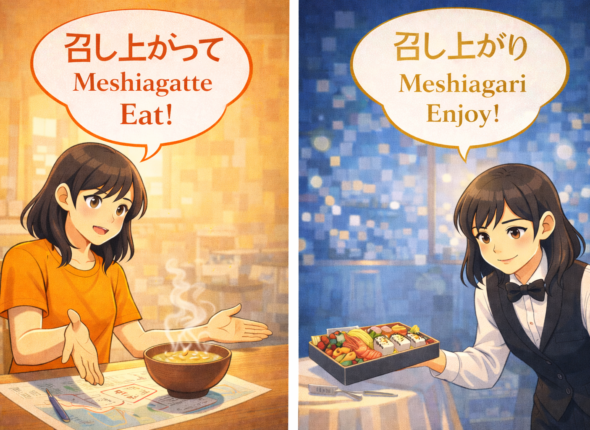
The Difference Between “召し上がりください (meshiagarikudasai)” and “召し上がってください (meshiagatte kudasai)”
(Joy urging to eat hot food [Meshiagatte] vs. Joy presenting a meal elegantly [Meshiagari]) “Please eat.” 召し上がって ください。 (Meshiagatte kudasai) (お) 召し上がり ください。 ((O) Meshiagari kudasai) Both are polite Honorifics (Sonkeigo). But...
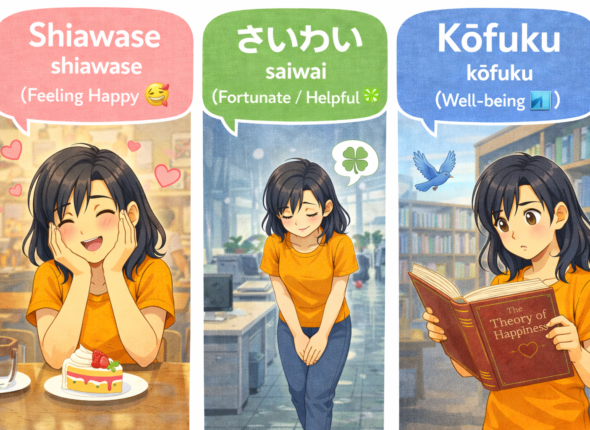
The Difference Between “幸せ” (Shiawase), “幸い” (Saiwai), and “幸福” (Kōfuku)
(Emotional Joy [Shiawase], Formal/Lucky Joy [Saiwai], Philosophical Joy [Kōfuku]) “I feel happy.” (Shiawase) “It would be appreciated.” (Saiwai) “The pursuit of happiness.” (Kōfuku) Japanese has multiple words for happiness. 幸せ (Shiawase) is...
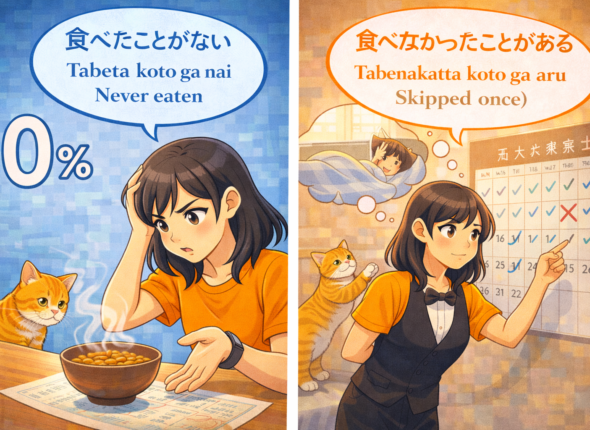
The Difference Between “食べたことがない” (Tabeta koto ga nai) and “食べなかったことがある” (Tabenakatta koto ga aru)
(Joy with zero experience [Tabeta koto nai] vs. Joy remembering one skipped meal [Tabenakatta koto aru]) “I have never eaten breakfast.” (Lifestyle) “There was a time I didn’t eat breakfast.” (Exception) These...
The Difference Between “食べてはいけません” (Tabete wa ikemasen) and “食べないでください” (Tabenai de kudasai)
(Joy breaking a rule [Ikemasen] vs. Joy taking Ken’s food [Naide kudasai]) “You must not eat here.” (Rule) “Please don’t eat this.” (Request) Both mean “Don’t eat,” but the vibe is completely...
Understanding the Meaning of “お伺いしておりますか” (Oukagai shiteimasu ka)
Understanding the Meaning of “お伺いしておりますか” (Oukagai shiteimasu ka) Have you ever heard the phrase “お伺いしておりますか” (Oukagai shiteimasu ka) and wondered what it really means? Maybe you’ve encountered it in business contexts but...
Explore Japan’s Long History! A Beginner’s Guide to History
Explore Japan’s Long History! A Beginner’s Guide to History “Japanese history seems difficult” or “Where should I start studying?” Have you ever thought about that? History is not just about memorizing past...
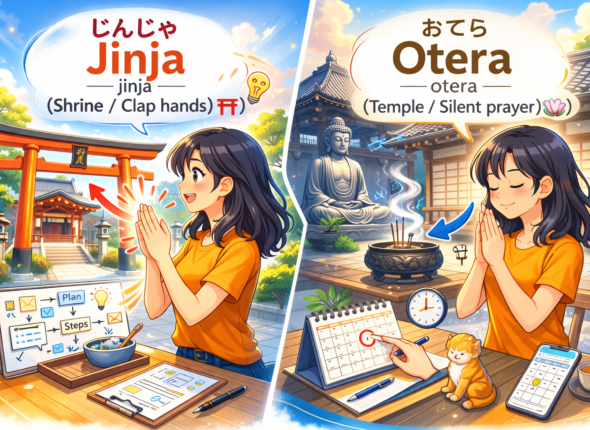
Let’s Learn the Difference Between Shrines and Temples in Japan!
In Japan, shrines (jinja) are primarily Shinto places of worship, characterized by rituals and offerings to kami, while temples (otera) are Buddhist sites focused on meditation and spiritual practice. Understanding these distinctions...

Learn Japanese Anytime for Only ₱999/Month!
Learn Japanese for only ₱999/Month! Konnichiwa, future Japanese speakers! Are you ready to learn more Japanese? We’ve prepared everything you need to kickstart your Japanese learning experience. Let’s explore what’s included in...
Kana Power-Up Beginner Showdown: Let’s Learn and Grow Together!
Kana Power-Up Beginner Showdown: Let’s Learn and Grow Together! 🌸 The Origin of Kana Power-Up Kana Power-Up was created as a monthly event designed for beginner students, born directly from the Zero...
![Copy of FEATURE IMAGE TEMPLATE [BLOGS] (1)](https://jplt-dialogplus.com/wp-content/uploads/2024/10/Copy-of-FEATURE-IMAGE-TEMPLATE-BLOGS-1.png)
Begin Your Japanese Journey: Zero Beginner Coaching Program
Begin Your Japanese Journey: Zero Beginner Coaching Program Are you a complete beginner looking to start your Japanese but don’t know where to start? We’ve got you covered! Our specially designed program:...
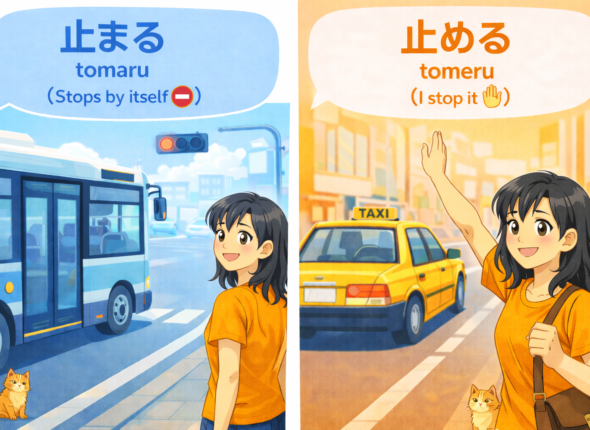
Clarifying “止まる” (Tomaru) vs. “止める” (Tomeru): Key Differences
(Bus stopping [Tomaru] vs. Joy stopping a taxi [Tomeru]) “The car stops.” (Kuruma ga tomaru) “I stop the car.” (Kuruma o tomeru) In Japanese, we distinguish between things happening naturally (Intransitive) and...

Explore the Student’s Portal: Your Japanese Learning Guide
Make the most of your Japanese Learning Experience with the JPLT Student Portal Here’s an update in JPLT! As part of our commitment to learning and development, we have created a Student’s...

日本食の魅力を味わおう!初心者でも楽しめる料理と食べ方 [日本語学習]
ラーメン、寿司、天ぷら…日本食はバラエティ豊か!でも、それだけじゃないんです。実は、日本には地域ごとの伝統的な料理がたくさんあるんですよ。今回は、JPLT Online Japanese Language SchoolのスタッフEriが、そんな日本食の魅力をたっぷりとお伝えします。
日本の長い歴史を探る!初心者向け歴史入門 [日本語学習]
「日本の歴史って難しそう」 「どこから勉強すればいいの?」と思ったことはありませんか?歴史は、単に過去の出来事を覚えるだけではなく、私たちの文化や社会を形作った大切なものです。このブログでは、初心者の方でも楽しく日本の歴史を学べるように、JPLT Online Japanese Language SchoolのスタッフEriが、基本的な知識や興味深いエピソードを分かりやすく解説していきます。