

Blog

GrammarBook N5: The Particle は (topic marker)
N5-G-007 は (Topic Marker) Core / Particle 👀 Layer A: Visual Guide (直感理解) 📝 Quick Summary (まとめ) 「は」は、文(ぶん)の主人公(しゅじんこう)にスポットライトを当(あ)てる役目(やくめ)をします。「〜について話(はな)しますよ!」という合図(あいず)です。 “WA” acts like a spotlight. It highlights the Topic of the sentence. It signals:...
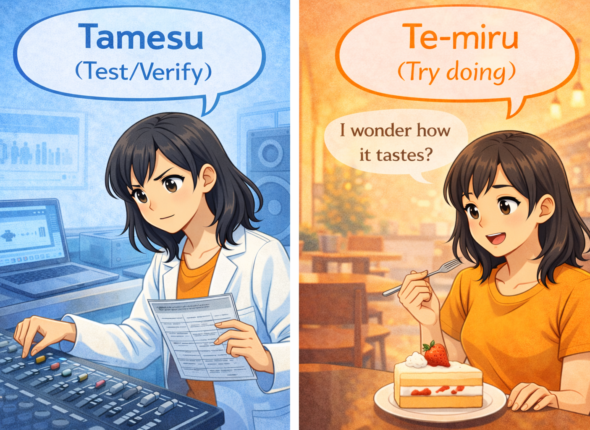
【使い分け】「〜てみる」と「〜ためす」の違い[日本語学習]
(機械を試すJoy [試す] vs. ケーキを食べてみるJoy [てみる]) 「機械(きかい)を試(ため)す」と「ケーキを食べてみる」。 どちらも英語では “Try” ですが、「試す (Tamesu)」は性能(せいのう)のチェック、「〜てみる (Te-miru)」は経験(けいけん)や挑戦(ちょうせん)です。JoyとKenと一緒に学びましょう! 🗣 会話シーン (Conversation Scene) Joyが学校のイベントの準備をしています。Kenがお菓子を持ってきました。 Joy ケンさん、マイクの調子(ちょうし)が悪(わる)いです。 新しいマイクを 試(ため)して みますね。 (Ken, the mic is acting up. I will “test/verify” the new...
The Difference Between 「〜てみる」と「〜ためす」|Japanese Grammar (N5–N3)
(Joy testing equipment [Tamesu] vs. Joy trying a cake [Te-miru]) “I will test the machine.” (Kikai o tamesu) “I will try eating this cake.” (Keeki o tabete miru) Both mean “to try,”...
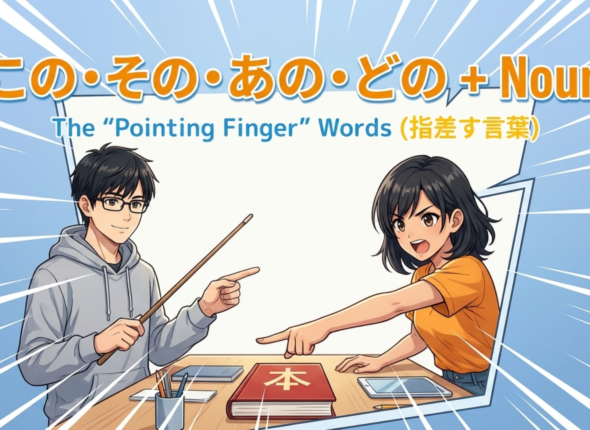
GrammarBook N5: この/その/あの/どの (Kono-Sono-Ano-Dono)
N5-G-006 この・その・あの・どの + Noun Core / Specifying 👀 Layer A: Visual Guide (直感理解) 📝 Quick Summary (まとめ) 「この・その・あの」は、必(かなら)ず名詞(めいし)とセットで使います。指(ゆび)で具体的(ぐたいてき)なモノを指(さ)すイメージです。 “Kono/Sono/Ano” must ALWAYS be followed by a Noun. They act like a pointing finger...
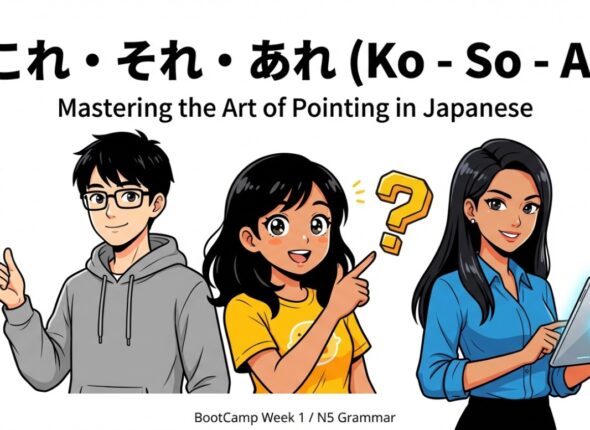
GrammarBook N5 : これ・それ・あれ (Ko-So-A-Do)
N5-G-005 これ・それ・あれ (Ko-So-A-Do) BootCamp Week 1 / Studio Month 1 👀 Layer A: Visual Guide (直感理解) PDFを表示できません。ダウンロード 📝 Quick Summary (まとめ) にほんごの「これ・それ・あれ」は、ものと あなた の きょり(Distance)で かわります。 Japanese demonstratives change depending on the...
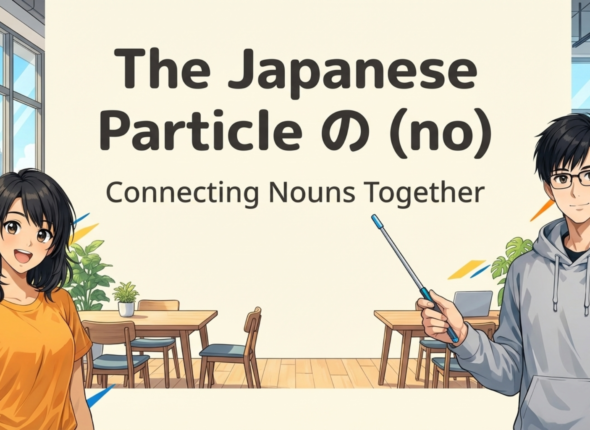
GrammarBook N5: NのN (The の Particle)
N5-G-004 NのN (Noun NO Noun) Core / Foundation 👀 Layer A: Visual Guide (直感理解) 📝 Quick Summary (まとめ) 「の」は、2つの 名詞(めいし)を つなぐ ノリのような 役割(やくわり)です。「私の本」のように、所有(しょゆう)や 所属(しょぞく)を 表(あらわ)します。 “NO” acts like glue connecting two nouns....
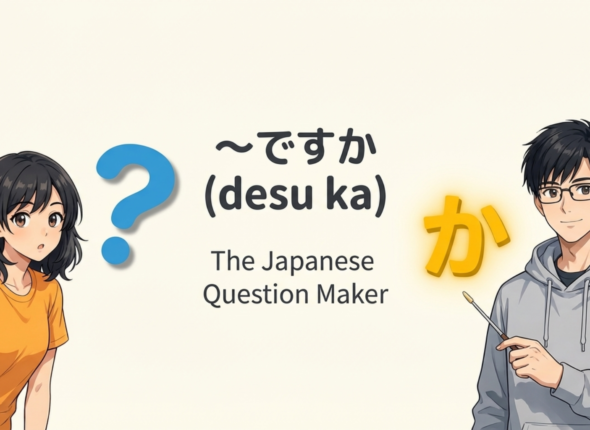
GrammarBook N5: ~ですか (The Question particle)
N5-G-003 ~ですか (Question Particle) Core / Foundation 👀 Layer A: Visual Guide (直感理解) 📝 Quick Summary (まとめ) 「か」は、文の最後にくっついて、文章を質問に変える魔法の言葉です。 “Ka” is a magic word attached to the end of a sentence to turn...
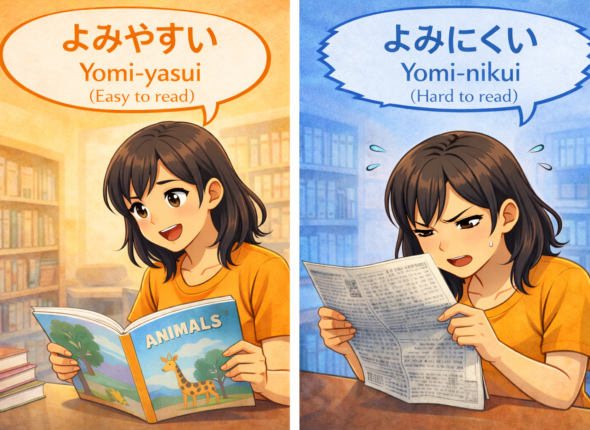
【使い分け】「〜やすい」と「〜にくい」の違い[日本語学習]
(簡単な本を読むJoy [〜やすい] vs. 難しい本を読むJoy [〜にくい]) 「このペンは書きやすい」。 「このお肉は食べにくい」。 日本語では、動詞に「〜やすい (Yasui)」や「〜にくい (Nikui)」をつけるだけで、「Easy / Hard」を表す形容詞に変えることができます。でも注意!「安い(Cheap)」と間違えやすいです。JoyとKenと一緒に学びましょう! 🗣 会話シーン (Conversation Scene) JoyとKenがステーキレストランにいます。 Joy う〜ん、このお肉(にく)、硬(かた)いですね…。 食(た)べにくい です。 (Hmm, this meat is tough… It is “hard to eat”.) Ken...
The Difference Between「〜やすい」と「〜にくい」の違い|Japanese Grammar (N5–N3)
(Joy reading an easy book [Yasui] vs. Joy struggling with a hard book [Nikui]) “This pen is easy to write with.” “This meat is hard to eat.” In Japanese, you can turn...
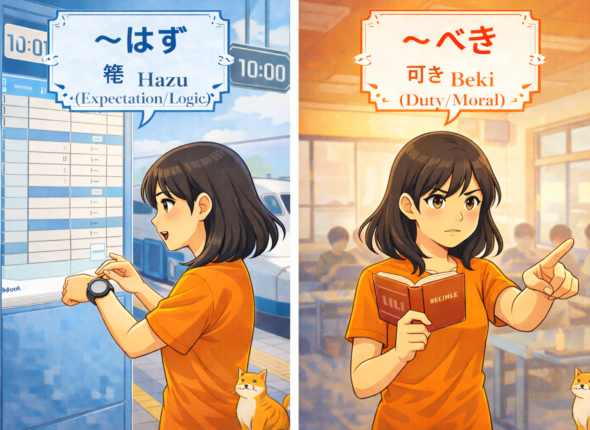
【使い分け】「〜はず」と「〜べき」の違い[日本語学習]
(時間を計算するJoy [はず] vs. ルールを守らせるJoy [べき]) 「彼は家にいるはずだ」(論理) 「人に優しくするべきだ」(道徳) どちらも英語では “Should” ですが、日本語では「〜はず (Hazu)」は予測・計算、「〜べき (Beki)」は義務・ルールです。間違えると、とても偉そう(Bossy)に聞こえてしまいます!JoyとKenと一緒に学びましょう。 🗣 会話シーン (Conversation Scene) JoyとKenは、遅刻している田中さんを待っています。 Joy 田中さん、遅いですね。 「すぐ行く」と言っていたので、もう 着(つ)く はず です。 (Tanaka-san is late. He said “I’m coming now,” so...
The Difference Between〜はず (hazu) vs 〜べき (beki)|Japanese Grammar (N5–N3)
(Joy calculating time [Hazu] vs. Joy enforcing rules [Beki]) “He should be at home now.” (Logic) “You should be kind to others.” (Morals) In English, “Should” covers both. In Japanese, 〜はず (Hazu)...
Grammar Book
Our Grammar Books are designed to help learners understand and use Japanese grammar clearly and effectively. Each book provides structured explanations and practical examples aligned with our curriculum, supporting both self-study and...
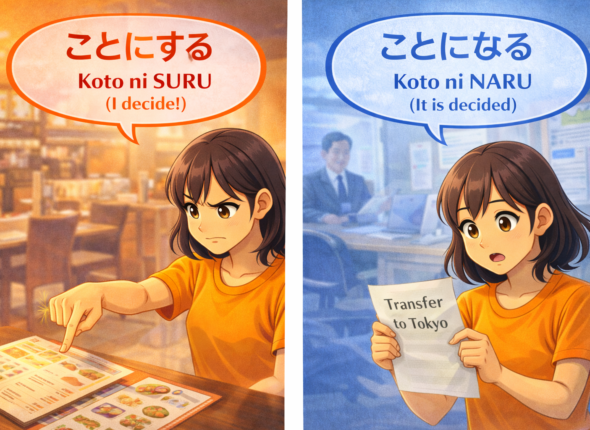
【使い分け】「〜ことにする」と「〜ことになる」の違い[日本語学習]
(自分で決めるJoy [ことにする] vs. 決定通知を受け取るJoy [ことになる]) 「行くことにしました」(自分の意志) 「行くことになりました」(決定・結果) どちらも「決定(Decision)」を表しますが、誰が決めたかが違います。「〜ことにする」は自分の選択、「〜ことになる」は周りの状況やルールによる決定です。JoyとKenと一緒に使い分けを学びましょう! 🗣 会話シーン (Conversation Scene) Joyはダイエットの話、Kenは仕事の話をしています。 Joy 私、今日からダイエットする ことにしました! 毎日走ります! (I have “decided to” go on a diet starting today! I will run every day!)...
The Difference Between〜ことにする (koto ni suru) vs 〜ことになる (koto ni naru)|Japanese Grammar (N5–N3)
(Joy making a choice [Suru] vs. Joy accepting a rule [Naru]) “I decided to go.” (Iku koto ni shita) “It has been decided that I go.” (Iku koto ni natta) Both express...
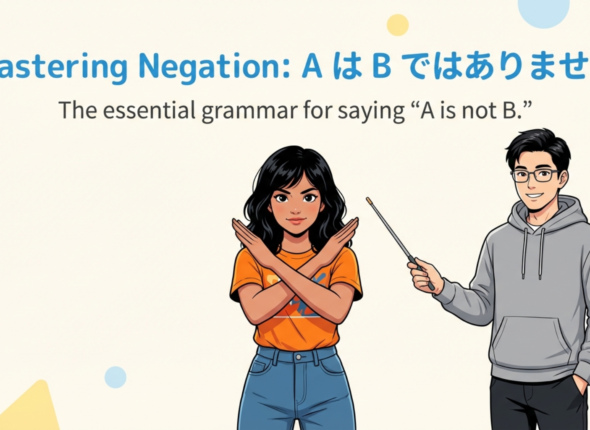
GrammarBook N5:~ではありません (A is not B – [Negative])
N5-G-002 ~ではありません (A is not B) Core / Foundation 👀 Layer A: Visual Guide (直感理解) 📝 Quick Summary (まとめ) 「~ではありません」は、物事の名前や正体を否定する最も基本的な形です。 The ‘A wa B dewa arimasen’ structure is the most basic way...
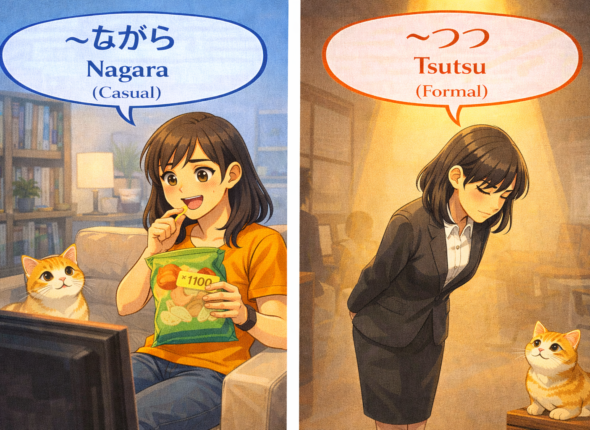
【使い分け】「〜ながら」と「〜つつ」の違い[日本語学習]
(テレビを見ながら食べるJoy [ながら] vs. 真剣に仕事をするJoy [つつ]) 「音楽を聞きながら勉強する。」 「問題を検討しつつ進めます。」 どちらも「同時に」という意味ですが、響き(Vibe)が全然違います。「〜ながら (Nagara)」はカジュアルな日常会話、「〜つつ (Tsutsu)」はフォーマルで硬い表現です。JoyとKenと一緒に、このN3/N2文法をマスターしましょう! 🗣 会話シーン (Conversation Scene) Joyがクライアントへのメールを書いていて、Kenに相談しています。 Joy ケンさん、このメールの日本語は合っていますか? 「相談(そうだん)し ながら、決めましょう。」 (Ken, is this Japanese correct? “Let’s decide ‘while’ consulting.”) Ken 間違いではありませんが、ビジネスメールなら つつ の方がかっこいいですよ。...
The Difference Between〜ながら (nagara) vs 〜つつ (tsutsu)|Japanese Grammar (N5–N3)
(Joy eating while watching TV [Nagara] vs. Joy working formally [Tsutsu]) “I study while listening to music.” “We are moving forward while considering the problem.” Both use “While,” but the Japanese vibe...
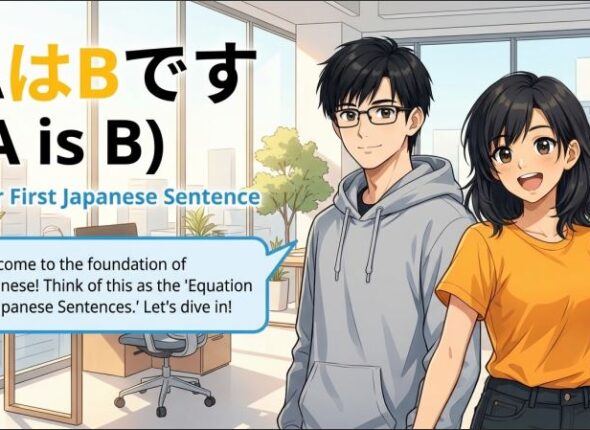
GrammarBook N5 : AはBです (A is B)
N5-G-001 GrammarBook N5 : AはBです (A is B) Core PDFを表示できません。ダウンロード 📝 Quick Summary (まとめ) AはBですは、物事の名前や正体を伝える最も基本的な形です。 The ‘A wa B desu’ structure is the most basic way to state names or identities...
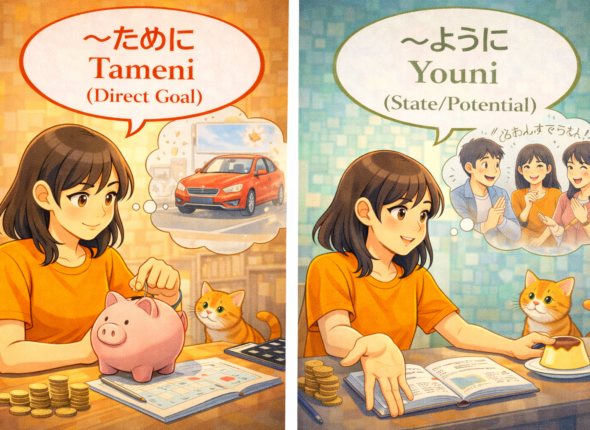
【使い分け】「〜ように」と「〜ために」の違い[日本語学習]
( 車を買うJoy [ために] vs. 話せるようになりたいJoy [ように]) 「合格するために勉強する」。 「話せるように勉強する」。 どちらも「目的(Purpose)」を表しますが、文法が違います。自分の意志でコントロールできるなら「〜ために (Tameni)」、状態の変化を願うなら「〜ように (Youni)」です。JoyとKenと一緒に学びましょう! 🗣 会話シーン (Conversation Scene) JoyとKenが夢について話しています。 Joy 私は、車(くるま)を買(か)う ために、貯金(ちょきん)しています。 ケンさんの夢(ゆめ)は何ですか? (I am saving money “in order to” buy a car. What is...
The Difference Between〜ように (yō ni) vs 〜ために (tame ni)|Japanese Grammar (N5–N3)
(Joy saving for a car [Tameni] vs. Joy studying to be able to speak [Youni]) “I study to pass the exam.” “I study so that I can speak Japanese.” In Japanese, both...