
Skip to content
JPLT Online Japanese Language Training SchoolJPLT Online Japanese Language Training School
  • Courses
  • Plans
  • Get Started
    • What is JPLT Metaverse Campus
    • How to Enroll
  • JPLT LEARNING GYM
    • What is JPLT LEARNING GYM?
    • BootCamp
    • Studio
    • Season
    • Grammar Book
    • Optional Classes and AOTD
  • Schedule
  • Blog
  • About Us
    • What Is Dialog+ JPLT
    • Teachers
    • Company Profile
    • Contact Us
    • FAQs
  • Login
  • For Business
JPLT Online Japanese Language Training SchoolJPLT Online Japanese Language Training School
  • Courses
  • Plans
  • Get Started
    • What is JPLT Metaverse Campus
    • How to Enroll
  • JPLT LEARNING GYM
    • What is JPLT LEARNING GYM?
    • BootCamp
    • Studio
    • Season
    • Grammar Book
    • Optional Classes and AOTD
  • Schedule
  • Blog
  • About Us
    • What Is Dialog+ JPLT
    • Teachers
    • Company Profile
    • Contact Us
    • FAQs
  • Login
  • For Business
JPLT Blog

Japanese You Keep Seeing:「よろしくお願いします」を自己紹介の最後に言うのはなぜ?|Japanese Grammar (N5–N3)

  • 05 Sep, 2026
  • Com 0
 
「よろしくお願いします」を自己紹介の最後に言うのはなぜ2 (Raya standing up and bowing at a traditional welcome dinner, saying “Yoroshiku onegaishimasu” to Director Tanaka. An orange cat plays with a lantern nearby.)

Welcome to “Japanese You Keep Seeing”!

In our previous lessons, we learned that a Japanese self-introduction is like a sandwich. It starts with “Hajimemashite”, has your name in the middle, and always ends with one very long, very important phrase: よろしくお願いします (Yoroshiku onegaishimasu). If you translate it literally, it sounds very strange in English. Let’s decode the magic behind this essential Japanese phrase!

🗣 Conversation Scene

Joy, Ken, and Director Tanaka are hosting an official welcome dinner for Raya at a traditional Japanese restaurant (Ryotei). Before the official toast (Kanpai), Raya stands up to give her self-introduction to the team.
Joy
Rayaさんはマレーシア市場の専門家です。みんなでサポートしましょう!(Raya-san is an expert on the Malaysian market. Let’s all support her!)
Raya
Line 1: よろしくお願いします! Line 2: Yoroshiku onegaishimasu! Line 3: (Please treat me well!)
一生懸命頑張ります。よろしくお願いします! (I will work very hard. Please treat me well!)
Tanaka
こちらこそ、歓迎しますよ。それでは、乾杯!(Likewise, we are glad to have you. Well then, Cheers!)

💡 Explanation: The Social Contract

There is no perfect English translation for “Yoroshiku onegaishimasu” because it represents a uniquely Japanese cultural concept: relying on others to maintain harmony.

1. What does it literally mean? 🔍

The phrase is made of two parts: よろしく (Yoroshiku) meaning “well” or “suitably,” and お願いします (Onegaishimasu) meaning “I make a request.” Literally, you are saying “Please do things well for me.” In English, this sounds bossy! But in Japanese, it is incredibly humble. You are saying, “I am trusting you to treat me kindly and guide me.”

2. Why say it at the end of an introduction? 🤝

When you finish your self-introduction with this phrase, it means: “I look forward to our future relationship, please take care of me.” It is the verbal equivalent of a handshake. It acknowledges that from this point forward, you are part of the same group and will rely on each other.

3. The Ultimate Multi-Tool Phrase 🛠️

“Yoroshiku onegaishimasu” isn’t just for meeting people! You will hear it constantly in these situations:
  • Before a meeting or project starts: “Let’s work hard together.”
  • At the end of an email: “Thank you in advance.” (It is the standard sign-off for almost all Japanese business emails).
  • When asking for a favor: “I leave it in your capable hands.”

💎 Pro Tip: “Kochira koso”

If someone says “Yoroshiku onegaishimasu” to you, how do you reply? You simply say it right back! To sound super fluent, add こちらこそ (Kochira koso) to the front. It means “The pleasure is mine” or “Likewise!”

🔥 Practice Quiz

Q1. What is the most accurate translation for “Yoroshiku onegaishimasu” when meeting someone for the first time? A. My name is… B. I look forward to our relationship / Please treat me well.
Answer: B It is a humble request for the other person to treat you kindly as your new relationship begins.
Q2. True or False: You should only use “Yoroshiku onegaishimasu” when meeting someone for the very first time. A. True B. False
Answer: B (False) Unlike “Hajimemashite” (which is only used once), “Yoroshiku onegaishimasu” is used constantly! You use it to sign off emails, start meetings, or ask for favors.
Q3. A new coworker introduces themselves and finishes with “Yoroshiku onegaishimasu.” What is the best way to reply? A. Kochira koso, yoroshiku onegaishimasu. B. Hajimemashite.
Answer: A “Kochira koso” means “Likewise” or “The pleasure is mine,” making it the perfect polite response.

Ready to master the Ko-So-A-Do system?

Want to dive deeper? Check out our official Beginner’s Grammar Book for more examples, detailed explanations, and practice exercises to perfect your Japanese pointing skills!

📖 Read more in the Grammar Book: これ/それ/あれ/どれ


    JPLT Online School

    Learn Japanese with JPLT Online School


    Want to study Japanese in a more guided and beginner-friendly way?
    Feel free to contact us and we’ll help you find the right course for your level and goal.


    We’re happy to help you start your Japanese learning journey with confidence.

    Related posts:

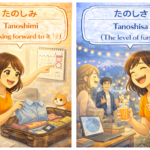
    Challenges of Learning Japanese: 10 Solutions & Key Points Understanding Gakusei ja nai~n desu and Gakusei ja nai desu Tanoshimi vs Tanoshisa: Understanding their Differences The Difference Between 沈黙の意味が違う?日本語と英語の会話文化の違い |Japanese Grammar (N5–N3)
    Share on:
    【よく目にする日本語】初対面で聞く「はじめまして」って本当は何を言っている? [日本語学習]
    【よく目にする日本語】「よろしくお願いします」を自己紹介の最後に言うのはなぜ?[日本語学習]
    JPLT Malaysia

    Japanese Learning Resources:

    Tips for Learning Japanese Learn Japanese with Mastery Tips Japanese Grammar Book Japanese Learning Hacks Japanese Learning FAQ (日本語) Japanese Learning FAQ (English)

    Connect with us!

    Inquire Now!
    Send us a message to know the latest class schedules. Lessons are conducted in English and Taglish (Tagalog-English).
    Please enable JavaScript in your browser to complete this form.
    Name *
    Loading

    Latest Post

    Thumb
    Japanese You Keep Seeing: 日本人が名前の後に「さん」をつけるのはなぜ?|Japanese Grammar (N5–N3)
    05 Sep, 2026
    Thumb
    【よく目にする日本語】日本人が名前の後に「さん」をつけるのはなぜ?[日本語学習]
    05 Sep, 2026
    Thumb
    【よく目にする日本語】「よろしくお願いします」を自己紹介の最後に言うのはなぜ?[日本語学習]
    05 Sep, 2026

    Categories

    • Courses (13)
    • Grammar Book (169)
    • JAPANESE LEARNING FAQ (23)
    • Japanese Learning Hacks (9)
    • Japanese Learning TIPS (217)
    • JPLT Blog (286)
    • JPLT NEWS (12)
    • List of media productions (5)
    • にほんごをまなぶTips (213)
    • 日本語学習ハック (9)
    JPLT_logo (2)

    JPLT (Japanese language training) online school by Dialogplus 

    Icon-facebook Icon-instagram Youtube

    株式会社ダイアログプラス(Dialog+ Co., Ltd.) 
    神奈川県横浜市都筑区南山田二丁目1番1-206号 
    Address: 2-1-1-206 Minamiyamada, Tsuzuki-ku, Yokohama Japan 
    Website: https://www.dialogplus.co.jp/ 

    Dialog+ Philippines
    Philippine Address: Unit 7 2/F, Seung Lee Building, Lot 1 Greenwoods Park Rizal Highway, CBD Area, Subic Bay Freeport Zone, Philippines
    Website: https://dialogplus.ph/
    Email: info@jplt-dialogplus.com

    • Specified Commercial Transaction Law
    • Privacy Policy
    • Terms & Condition
    • Refund Policy
    • JPLT Calendar
    • Admin
    JPLT Online Japanese Language Training SchoolJPLT Online Japanese Language Training School