

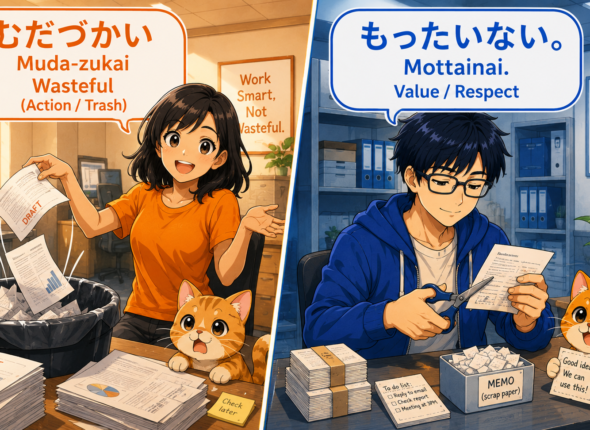
The Difference Between 「もったいない」と “Wasteful” の違い の違い |Japanese Grammar (N5–N3)
(Joy throwing away paper [Wasteful Action] vs. Ken making scrap memo pads out of misprints [Mottainai Respect]) “Throwing this away is bad.” -> Wasteful (Focus on the negative action) “This object still...

【使い分け】 「いただきます」と “Let’s eat” の本当の意味 の違い [日本語学習]
( 笑顔で「食べましょう!」と声をかけるJoy [社会的アクション] vs. 手を合わせて目を閉じ「いただきます」と言うKen [謙虚な感謝]) 「さあ、みんなで食べよう!」→ Let’s eat / 食べましょう(行動の合図) 「この食事に感謝します。」→ いただきます(謙虚な感謝) アニメや日本のドラマを見ていると、誰もが食べる前に「いただきます (Itadakimasu)」と言うのを知っているでしょう。英語の字幕では、ほとんどの場合「Let’s eat!」や「Thanks for the food.」と翻訳されます。しかし、この言葉の本当の意味は、単なる「食事の開始の合図」よりもずっと深いものです。田中ディレクターがJoyとKenを美味しいお寿司ランチに連れて行った時、何が起こるか見てみましょう。 🗣 会話シーン (Conversation Scene) 田中ディレクターは、プロジェクトの成功を祝ってチームを寿司屋に連れてきました。 田中 お疲れ様。さあ、新鮮なうちに食べましょう。 (Good work, everyone. Well then, let’s...
The Difference Between 「いただきます」と “Let’s eat” の本当の意味 の違い |Japanese Grammar (N5–N3)
(Joy cheerfully saying Let’s eat [Social Action] vs. Ken pressing his hands together saying Itadakimasu [Humble Gratitude]) “Okay everyone, time to eat!” -> Let’s eat / 食べましょう (Tabemashou) (Social Action) “Thank you...