
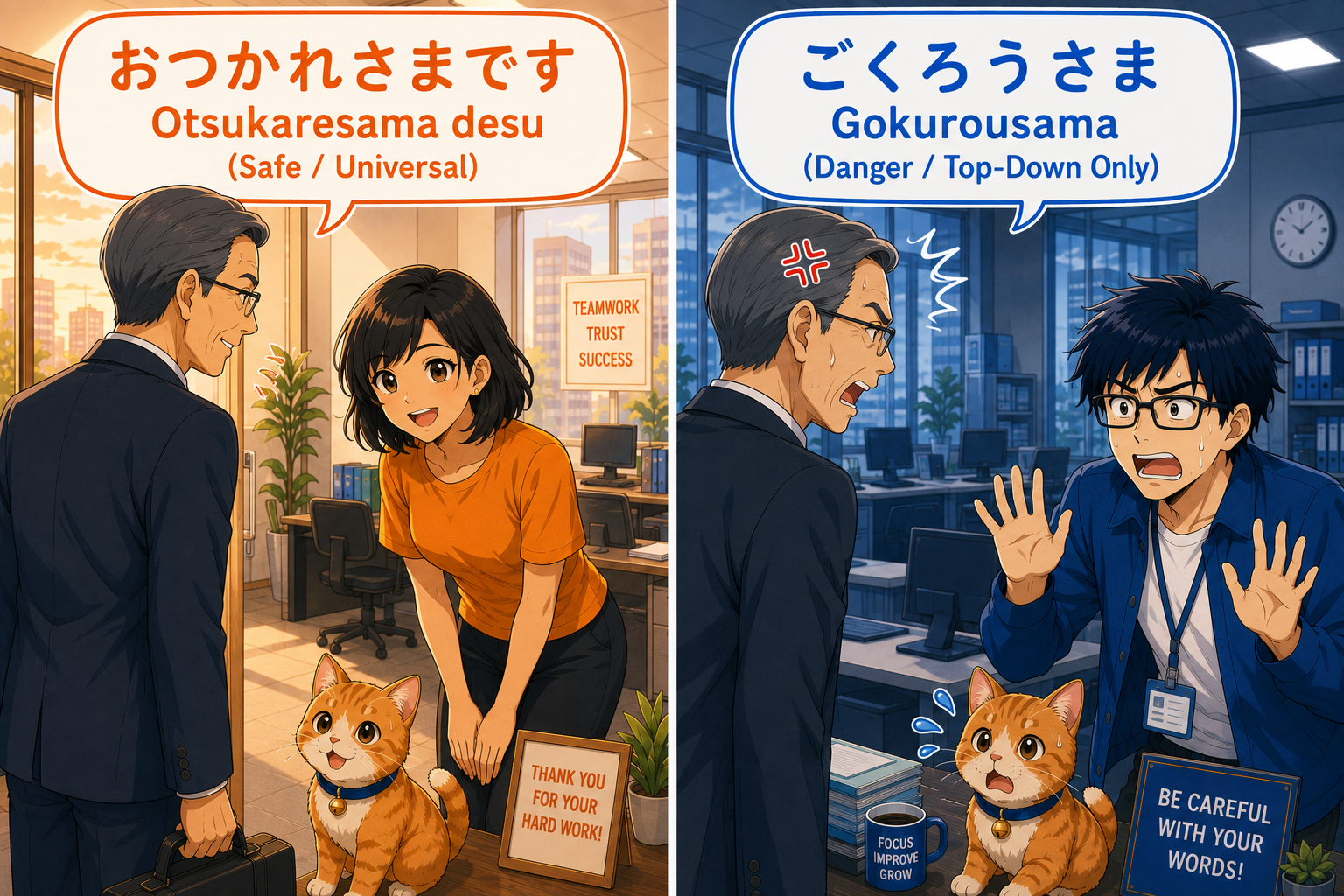
 ( Joy bowing safely with Otsukaresama [Universal] vs. Ken panicking because Gokurousama was used with a boss [Top-Down])
“Good work today.” (To a boss) -> お疲れ様です (Otsukaresama desu) ✅ (Safe) “Good work today.” (To a boss) -> ご苦労様です (Gokurousama desu) ❌ (Offensive) If you work in a Japanese company, you will hear these two phrases constantly. Dictionaries translate both as “Thank you for your hard work,” but their usage depends entirely on hierarchy (status). Mixing them up is one of the most dangerous mistakes a beginner can make. Let’s see what happens when Joy uses the wrong phrase at the end of the day.
🗣 Conversation Scene
It is 6:00 PM. Director Tanaka has finished his work and is leaving the office.Tanaka
皆さん、お先に失礼します。
(Everyone, excuse me for leaving before you.)
Joy
ディレクター、ご苦労様です!
(Director, “Gokurousama desu!” [Good job!])
[ Tanaka stops walking and looks shocked. Ken jumps up in a panic. ]
Ken
Joyさん!目上の人に「ご苦労様」は上から目線です!「お疲れ様です」と言わなければいけません!
(Joy! Saying “Gokurousama” to a superior is looking down on them! You have to say “Otsukaresama desu”!)
💡 Explanation
The Direction of Respect⚠️ The Golden Rule of Workplace Greetings:
お疲れ様 (Otsukaresama) goes in any direction (up, down, or sideways). ご苦労様 (Gokurousama) strictly goes DOWN (from boss to subordinate).
1. お疲れ様です (Otsukaresama desu) = Safe & Universal 🏢
Direction: Upwards, Sideways, or Downwards. This is the ultimate, universally safe business greeting. It means “You must be tired from working so hard.” It can be used when passing coworkers in the hall, ending an email, or saying goodbye. Because it expresses empathy, it is perfectly polite to use with anyone, including the CEO of the company.- [To the company president] お疲れ様です。 (Hello/Good work. *Highly respectful*)
- [To a coworker in the hall] お疲れ様です。 (Hey/Good work. *Standard greeting*)
2. ご苦労様です (Gokurousama desu) = Top-Down Only 👑
Direction: ONLY Downwards. “Gokurousama” carries the nuance of evaluating someone’s labor. It sounds like, “You did the labor I expected you to do. Good job.” Because it involves evaluation, it can only be used by someone in a higher position speaking to someone in a lower position. If you say this to a boss, it sounds like you are the king evaluating their work!- [Director to an entry-level worker] ご苦労様。 (Good job today. *Acceptable from a boss*)
- [You to the Director] ❌ ご苦労様です。 (Extremely rude and arrogant!)
📊 Comparison Table
🚧 The “Delivery Driver” Exception
There is one situation where normal people use “Gokurousama”: when speaking to delivery drivers or postmen. Because the customer is considered to be in a “higher” position than the service provider in traditional Japanese business, it is grammatically acceptable to say “Gokurousama desu” to the pizza delivery guy. However, many modern Japanese people prefer to just say “Arigatou gozaimasu” or “Otsukaresama desu” because it feels more polite and equal.🔥 Practice Quiz
Tap to check the answer!Keep practicing with JPLT!