
Blog
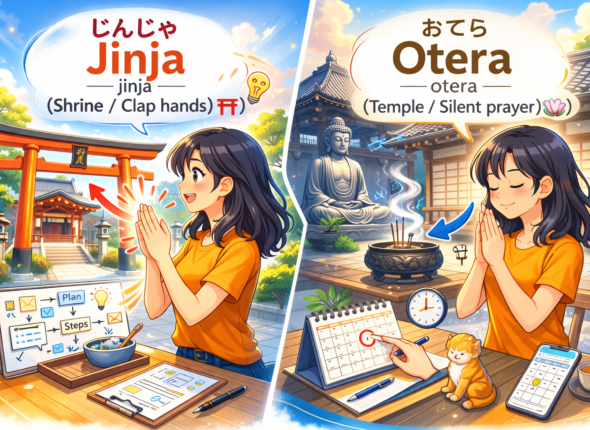
Let’s Learn the Difference Between Shrines and Temples in Japan!
In Japan, shrines (jinja) are primarily Shinto places of worship, characterized by rituals and offerings to kami, while temples (otera) are Buddhist sites focused on meditation and spiritual practice. Understanding these distinctions...
Level Up Your Japanese: The Perfect Package for Upper-Beginner to Pre-Intermediate Learners
Are you ready to take your Japanese skills to the next level? Whether you’ve mastered the basics or are seeking to refine your abilities, our exclusive package is designed to help you...

Pre-intermediate Japanese Conversation Course
Pre-intermediate Japanese Conversation Course (N4/A2-2) The Pre-intermediate Japanese Conversation Course (A2-2/N4) is designed to refine your Japanese and help you become more fluent and expressive. You’ll start discussing more advanced topics like past...
Access more lessons from Native Japanese Teachers in Our Unlimited Basic Plan!
Access more lessons from Native Japanese Teachers in Our Unlimited Basic Plan! Get More. Pay the Same. We know you’ve been looking for ways to supercharge your Japanese learning experience, and we’ve...

Learn Japanese Anytime for Only ₱999/Month!
Learn Japanese for only ₱999/Month! Konnichiwa, future Japanese speakers! Are you ready to learn more Japanese? We’ve prepared everything you need to kickstart your Japanese learning experience. Let’s explore what’s included in...
Kana Power-Up Beginner Showdown: Let’s Learn and Grow Together!
Kana Power-Up Beginner Showdown: Let’s Learn and Grow Together! 🌸 The Origin of Kana Power-Up Kana Power-Up was created as a monthly event designed for beginner students, born directly from the Zero...
![Copy of FEATURE IMAGE TEMPLATE [BLOGS] (1)](https://jplt-dialogplus.com/wp-content/uploads/2024/10/Copy-of-FEATURE-IMAGE-TEMPLATE-BLOGS-1.png)
Begin Your Japanese Journey: Zero Beginner Coaching Program
Begin Your Japanese Journey: Zero Beginner Coaching Program Are you a complete beginner looking to start your Japanese but don’t know where to start? We’ve got you covered! Our specially designed program:...
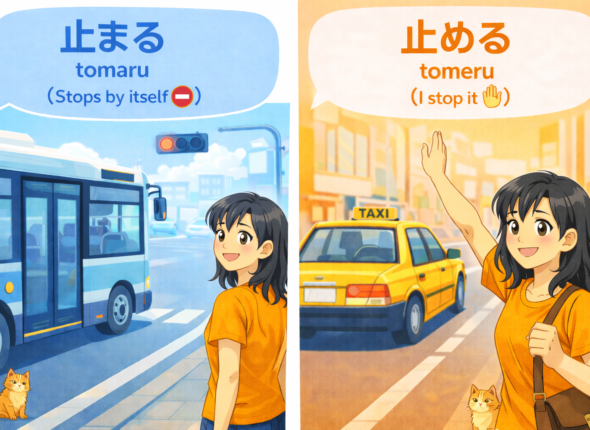
Clarifying “止まる” (Tomaru) vs. “止める” (Tomeru): Key Differences
(Bus stopping [Tomaru] vs. Joy stopping a taxi [Tomeru]) “The car stops.” (Kuruma ga tomaru) “I stop the car.” (Kuruma o tomeru) In Japanese, we distinguish between things happening naturally (Intransitive) and...

Explore the Student’s Portal: Your Japanese Learning Guide
Make the most of your Japanese Learning Experience with the JPLT Student Portal Here’s an update in JPLT! As part of our commitment to learning and development, we have created a Student’s...

日本食の魅力を味わおう!初心者でも楽しめる料理と食べ方 [日本語学習]
ラーメン、寿司、天ぷら…日本食はバラエティ豊か!でも、それだけじゃないんです。実は、日本には地域ごとの伝統的な料理がたくさんあるんですよ。今回は、JPLT Online Japanese Language SchoolのスタッフEriが、そんな日本食の魅力をたっぷりとお伝えします。
日本の長い歴史を探る!初心者向け歴史入門 [日本語学習]
「日本の歴史って難しそう」 「どこから勉強すればいいの?」と思ったことはありませんか?歴史は、単に過去の出来事を覚えるだけではなく、私たちの文化や社会を形作った大切なものです。このブログでは、初心者の方でも楽しく日本の歴史を学べるように、JPLT Online Japanese Language SchoolのスタッフEriが、基本的な知識や興味深いエピソードを分かりやすく解説していきます。
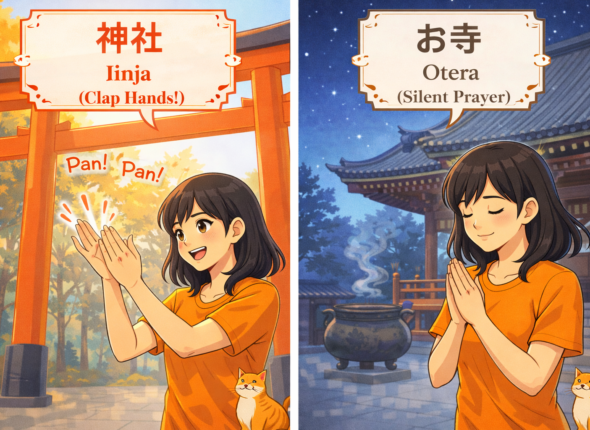
日本の神社とお寺の違いを知ろう! [日本語学習]
(神社で柏手を打つJoy [神社] vs. お寺で静かに祈るJoy [お寺]) 「日本のお寺に行きたい!」 ちょっと待って。あなたが言っているのは「神社 (Jinja)」ですか?それとも「お寺 (Otera)」ですか?この2つは似ていますが、神様もルールも全然違います。特に「手をたたく(Clap)」かどうかは大切です。JoyとKenと一緒に学びましょう! 🗣 会話シーン (Conversation Scene) JoyとKenが浅草(浅草寺)に観光に来ています。 Joy わあ、大きなお寺ですね! (お賽銭を入れて)…パン!パン!(手をたたく) (Wow, what a big temple! [Throws coin]… CLAP! CLAP! [Claps hands loudly]) Ken ストップ!Joyさん! お寺では...
日本の祭りを知ろう!伝統行事と文化 [日本語学習]
こんにちは!日本の祭り、行ったことがありますか?日本には、たくさんの楽しいお祭りがあります。今回は、JPLT Online Japanese Language SchoolのスタッフEriが、日本の祭りについて紹介します。お祭りを楽しみながら、日本語を学ぶヒントもお伝えします!
日本語を学びながら日本の四季を楽しもう![日本語学習]
こんにちは!日本語を勉強しているみなさん。日本の四季は、美しい自然と、それに合わせた独自の風習や文化が特徴です。今回は、日本語を学びながら、日本の四季をより深く楽しむために、JPLT Online Japanese Language SchoolのスタッフEriが、四季の言葉や文化について詳しく解説していきます。
グルメで学ぶ日本!美味しいものを食べながら日本語もマスターしよう! [日本語学習]
皆さん、こんにちは! 日本語を勉強しているみなさん、日本の食文化に興味はありますか?実は、日本食は、日本語を学ぶ上でとても役に立つツールなんです。美味しいものを食べながら、自然に日本語を学べるなんて一石二鳥ですよね!この記事では、日本食を楽しみながら日本語を学ぶ方法について、JPLT Online Japanese Language SchoolのスタッフEriが、具体的な例と共にご紹介します。
![「念じる」 と 「祈る」の違い [日本語学習]](https://jplt-dialogplus.com/wp-content/uploads/2026/02/「念じる」-と-「祈る」の違い-日本語学習-590x430.png)
「念じる」 と 「祈る」の違い [日本語学習]
( 念力を送るJoy [念じる] vs. 神様に祈るJoy [祈る]) 「平和を祈(いの)る」。 「心の中で念(ねん)じる」。 どちらも何かを願うことですが、「祈る (Inoru)」は神様や星にお願いすること、「念じる (Nenjiru)」は自分の精神(Mind)を集中させることです。JoyとKenと一緒にスピリチュアルな違いを学びましょう! 🗣 会話シーン (Conversation Scene) Joyは明日の試験の結果が心配です。 Joy 明日(あした)は試験(しけん)の結果発表(けっかはっぴょう)です。 合格(ごうかく)するように、必死(ひっし)に 念(ねん)じています! (Tomorrow is the exam result announcement. I am desperately “using my mind...
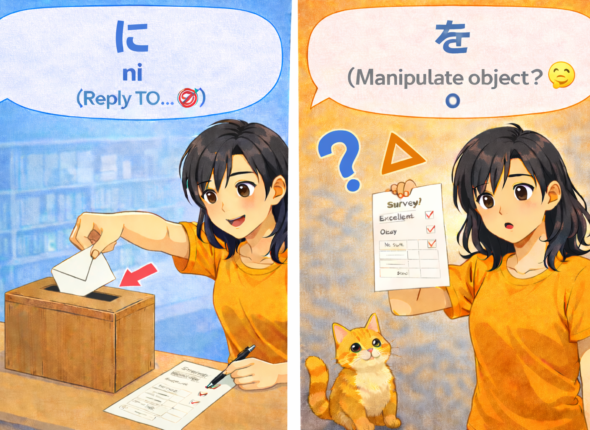
「アンケートに回答する」 と 「アンケートを回答する」の違い [日本語学習]
(アンケート「に」答えるJoy vs. アンケート「を」持つJoy) 「アンケートに回答する」(正しい) 「アンケートを回答する」(不自然) 英語では “Answer the survey” なので「を」を使いたくなりますが、日本語の「回答する(Kaitō suru)」は「返事をする」という意味です。つまり、「対象(Target)」を示す必要があります。JoyとKenと一緒に正しい助詞を覚えましょう! 🗣 会話シーン (Conversation Scene) Joyがお店でアンケート用紙をもらいました。 Joy ケンさん、このお店のアンケート を 回答しました! クーポンがもらえますよ。 (Ken, I “answered [object marker]” this shop’s survey! I can get...

Tips for Success: Join the 2-Week Hiragana and Katakana Challenge!
Ready for a Challenge? Join the “2-Week Hiragana and Katakana Challenge”! We know learning Hiragana and Katakana can feel like a big hurdle, but guess what? You’re not alone! Whether you’re...

Get Extra Support with JPLT Coaching Sessions!
Get Extra Support with JPLT Coaching Sessions! At JPLT Online School, we understand that learning a new language, especially Japanese, can sometimes be challenging. That’s why we’ve developed our Coaching Program—designed...
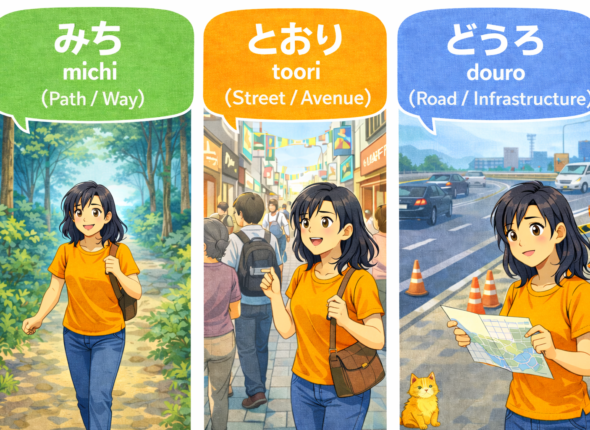
「道」 と 「通り」 と 「道路」 の違い [日本語学習]
(道を歩くJoy [道] vs. 通りで買い物するJoy [通り] vs. アスファルトを指すJoy [道路]) 「道(みち)を教えてください。」 「この通り(とおり)は賑やかです。」 「道路(どうろ)工事中。」 日本語には「Road」を表す言葉が3つあります。「道」は一般的なパス、「通り」は人や店があるストリート、「道路」は車が走るインフラです。JoyとKenと一緒に違いを学びましょう! 🗣 会話シーン (Conversation Scene) JoyとKenが渋谷で地図を見ています。 Joy ケンさん、駅までの 道(みち) がわかりません。 この大きい 道路(どうろ) を渡りますか? (Ken, I don’t know the “way/path” to the...