
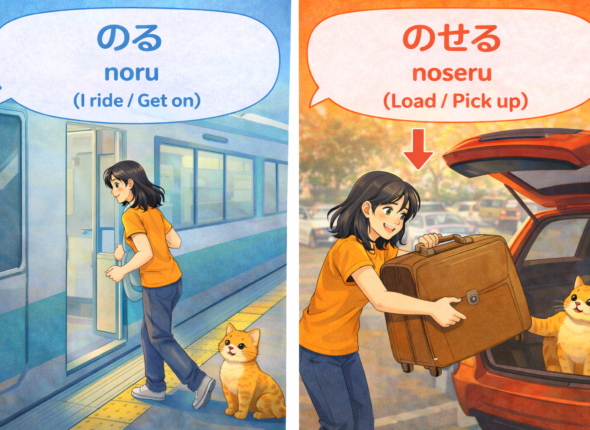
The Difference Between 乗る (noru) vs 乗せる (noseru)|Japanese Grammar (N5–N3)
(Alt Text: Joy getting on a train [Noru] vs. Joy loading luggage [Noseru]) “I ride the bus.” (Basu ni noru) “I load the luggage.” (Nimotsu o noseru) 乗る (Noru) is when YOU...
「見る」「観る」「見える」「見られる」の違い [日本語学習]
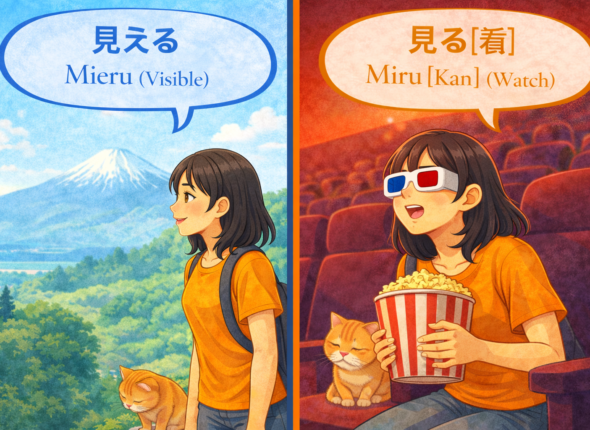
(富士山が見えるJoy [見える] vs. 映画を観るJoy [観る]) 「鳥が見える」と「映画を観る」。 「パンダが見られる」と「富士山が見える」。 日本語には「みる」の表現が4つもあります!間違えると意味が全然変わってしまいます。JoyとKenと一緒にマスターしましょう。 🗣 会話シーン (Conversation Scene) JoyとKenが山登り(やまのぼり)をしています。 Joy わあ! 富士山(ふじさん)が 見(み)えます! ケンさん、見(み)て ください! (Wow! Mt. Fuji is “visible”! Ken, please “look”!) Ken すごいですね。ここでは、珍(めずら)しい鳥(とり)も 見(み)られます よ。 後(あと)で、撮(と)ったビデオを...
The Difference Between 見る (miru) vs 観る (miru) vs 見える (mieru) vs 見られる (mirareru)|Japanese Grammar (N5–N3)
(Joy seeing Mt. Fuji [Mieru] vs. Joy watching a movie [Miru/Kan]) “I see a bird.” (Mieru) “I watch a movie.” (Miru) “I can see (have a chance to see) the panda.” (Mirareru)...
最短で成果を出す!【日本語学習ハック】で効率を最大化
「独学で挫折した」「勉強しているのに話せない」――そんな悩みを解決するのが、JPLTが提供する**【日本語学習ハック】**です。 このカテゴリーでは、教科書には載っていない**効率的なインプットとアウトプットの裏ワザ**をまとめています。膨大な時間とお金をかけることなく、ゼロから最短で「話せる」レベルに到達するための具体的な方法論を、当校の専門講師が徹底解説します。 📘 このコンテンツで解決できること 無料コンテンツ(YouTube、アニメなど)を「話し方」につなげる具体的な活用法 ひらがな・カタカナを**たった2週間**で忘れないレベルで定着させる暗記テクニック 忙しい社会人や学生が、学習時間を捻出し、**モチベーションを維持する**ための工夫 英語を母語とする学習者が陥りやすい文法理解の落とし穴と、それを避ける方法 学習の「質」と「速度」を劇的に改善したい方は、まずこのハック集から読み進めてください。あなたの日本語学習は今日から変わります!
Japanese Learning Hacks
Unlock Your Japanese Fluency Fast: Proven Learning Hacks by JPLT Experts Are you struggling with self-study? Feeling stuck despite putting in hours? The **Japanese Learning Hacks** category is your shortcut to mastering...
3つの「きく」の違いは?聞く・聴く・訊くの使い分け [日本語学習]
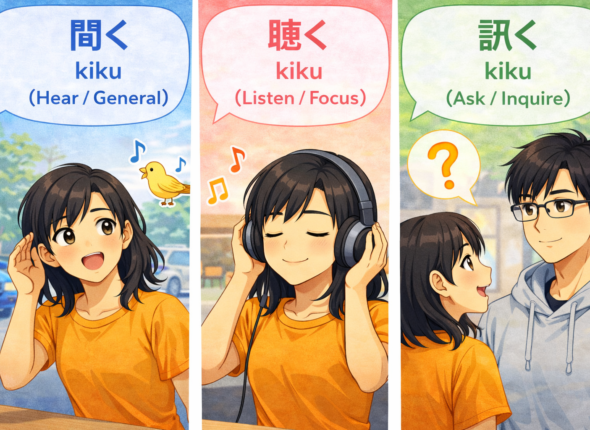
(音を聞くJoy [聞く] vs. 音楽を聴くJoy [聴く] vs. 質問するJoy [訊く]) 「音を聞く」(Hear) 「音楽を聴く」(Listen) 「名前を訊く」(Ask) 日本語では、これら全て「きく (Kiku)」と読みます!しかし、漢字によって「自然に聞こえる」のか、「集中している」のか、「質問している」のかが変わります。JoyとKenと一緒にマスターしましょう! 🗣 会話シーン (Conversation Scene) JoyとKenが街を歩いています。 Joy ケンさん、変な音が 聞こえました か? 誰かに道を 訊(き)きたい ですが…。 (Ken, did you “hear (naturally)” a strange...
Hear, Listen, or Ask? The Difference Between 聞く, 聴く, and 訊く (N3-N5)
(Joy hearing a sound [聞く], listening to music [聴く], and asking a question [訊く]) “Did you hear that?” “I listen to music.” “I ask a question.” In Japanese, all of these are...
「貸す」と「借りる」の違いは?簡単な覚え方と使い方 [日本語学習]
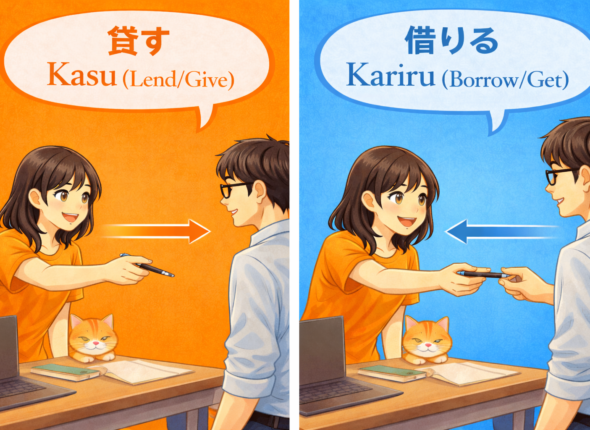
(ペンを貸すJoy [貸す] vs. ペンを借りるJoy [借りる]) 「ペンを借(か)りてください」(間違い!) 「ペンを貸(か)してください」(正解!) 日本語の「貸す (Kasu)」と「借りる (Kariru)」。逆に使っていませんか?JoyとKenと一緒に、簡単な覚え方をマスターしましょう! 🗣 会話シーン (Conversation Scene) 雨が降っていますが、Joyは傘(かさ)を忘れました。 Joy あ、雨(あめ)ですね。傘(かさ)がありません。 ケンさん、貸(か)して ください! (Ah, it’s raining. I don’t have an umbrella. Ken, please “lend” me one!)...
What’s the Difference? 貸す (kasu) vs. 借りる (kariru) – A Simple Guide to “Lend” and “Borrow”
(Joy lending a pen [Kasu] vs. Joy borrowing a pen [Kariru]) “Please borrow me a pen.” (Mistake!) “Please lend me a pen.” (Correct!) In Japanese, 貸す (Kasu) is to lend, and 借りる...
The Difference Between “ようだ” (you da) and “みたいだ” (mitai da)|Japanese Grammar (N5–N3)
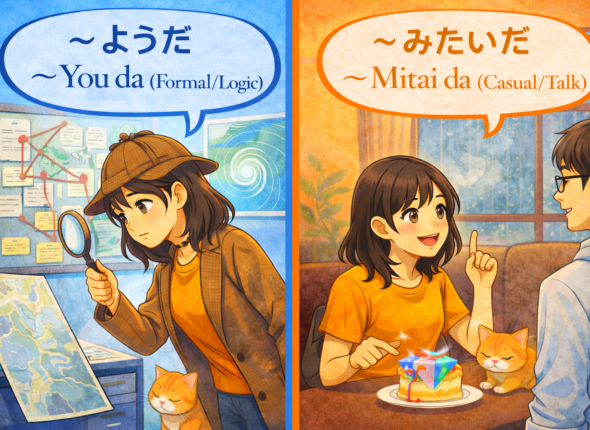
(Detective Joy analyzing [You da] vs. Chatting Joy [Mitai da]) “It seems like it will rain.” 雨(あめ)が 降(ふ)る ようだ。 雨(あめ)が 降(ふ)る みたいだ。 Both sentences mean the same thing. But one sounds like...
「〜ようだ」と「〜みたいだ」の違い [日本語学習]
(分析するJoy [ようだ] vs. おしゃべりするJoy [みたいだ]) 「雨が降るようだ」。 「雨が降るみたいだ」。 この2つの文の意味は同じです。でも、一つはニュースのようで、もう一つは友達とのおしゃべりのように聞こえます。「〜ようだ (You da)」と「〜みたいだ (Mitai da)」の使い分けを、JoyとKenと一緒にマスターしましょう! 🗣 会話シーン (Conversation Scene) JoyとKenが窓の外を見ています。 Joy あ、外(そと)が暗(くら)くなりましたね。 もうすぐ 雨が 降る ようです。 (Ah, it has become dark outside. It “seems” it...
【Zero to Conversation】30-Day Japanese Learning Hacks! -4: 💖 What About Filipino Instructors? Pros & Cons of Learning Japanese Grammar in English
Hello to everyone working hard on their Japanese studies! Have you ever had this question when choosing a course? “**Are classes taught by Filipino instructors really good?**” “Shouldn’t I only learn Japanese...
【ゼロから会話】30日間の日本語学習ハック!-4: 💖 フィリピン人講師の授業ってどうなの?英語で学ぶ日本語文法のメリット・デメリット
日本語学習を頑張る皆さん、こんにちは!コースを選ぶ際、こんな疑問を持ったことはありませんか?「**フィリピン人講師の授業って、本当に大丈夫なのかな?**」「やっぱり、日本語はネイティブの日本人講師から習うべき?」 お金をかけて学ぶのですから、講師の質や教え方について不安に思うのは当然です。特に、日本語文法を**英語で学ぶ**ことのメリット・デメリットは気になりますよね。 今回は、その不安に正面からお答えし、フィリピン人講師が教える授業が、**特にゼロビギナーの皆さんにとって「最強の選択肢」になり得る理由**を、実体験と専門的な知見を交えて解説します。 💡 Hack 1:英語で学ぶ日本語文法の「メリット」は想像以上に大きい 1. 概念の「最短ルート」での理解 **メリット:** 日本語の文法構造は、英語と比べて主語が省略されたり、助詞の役割が異なったりと、全く異なるロジックを持っています。**母国語に近い言語(英語)**で解説を受けると、抽象的な文法概念を**最短ルート**で理解できます。
【ゼロから会話】30日間の日本語学習ハック!-3:ゼロビギナー必見!「ひらがな・カタカナ」をたった2週間で覚える最強の暗記法
日本語学習を始めようと決意した皆さん、本当に素晴らしいです!しかし、アルファベットに慣れた私たちにとって、最初に立ちはだかる「ひらがな46文字+カタカナ46文字」は、まさに**最初の大きな壁、文字の迷宮**に見えるかもしれませんね。 「こんなに文字が多いなんて…2週間で覚えるなんて無理では?」と不安に思っているかもしれません。でも、大丈夫です!**コツと正しいメソッドを掴めば、2週間で「読める!」という自信を手に入れることは十分に可能**です。 今回は、その壁を楽しく、効率的に乗り越えるための具体的な方法と、あなたの努力を無駄にしないための賢い道筋をご紹介します。 🤣 Hack 1:共感と笑い!楽しく覚える「フィリピン式スピード暗記法」 文字学習は地道な作業ですが、「楽しさ」を取り入れることで、記憶の定着率は飛躍的に向上します。皆さんから寄せられた、共感を呼ぶ「文字学習あるある」と、効果的な学習法を見ていきましょう。
【Zero to Conversation】30-Day Japanese Learning Hacks! -3: 💖 Zero-Beginners MUST SEE! The Ultimate Memory Hack to Master Hiragana & Katakana in Just 2 Weeks
【Zero to Conversation】30-Day Japanese Learning Hacks! -3: 💖 Zero-Beginners MUST SEE! The Ultimate Memory Hack to Master Hiragana & Katakana in Just 2 Weeks Congratulations to everyone who decided to start learning...
How to Get the Best Out of Your Unlimited Access to Japanese Learning in JPLT Online School
How to Get the Best Out of Your Unlimited Access to Japanese Learning in JPLT Online School By JPLT DIALOG Plus | Published on October 23, 2025 Learn More, Speak More, and...
Student Roadmap: Beginner Level — Your First Step Toward Speaking Japanese Confidently
Student Roadmap: Beginner Level — Your First Step Toward Speaking Japanese Confidently By JPLT DIALOG Plus | Published on October 23, 2025 Discover the Joy of Learning Japanese Close your eyes for...

JPLT Online School Launches JLPT Support Program for Filipino Learners
Your Journey to JLPT Success Starts Here! Join JPLT’s December JLPT Support Program Are you preparing for the December 2025 JLPT? Whether it’s your first attempt or your next level, we know...

What You Will Get With Your 999 Per Month!
Learning Japanese has never been this affordable and complete. With your subscription, you’ll enjoy access to courses, coaching, activities, and exclusive resources that will keep you motivated and confident in your Japanese...
![[2026] Geomine Sensei](https://jplt-dialogplus.com/wp-content/uploads/2025/10/2026-Geomine-Sensei-590x430.png)
Shigoto no Nihongo Course with Teacher Geomine
Learn Real Workplace Japanese Based on NHK’s Shigoto no Nihongo Mastering Japanese for the workplace opens the door to new opportunities, and it all begins with learning to communicate with confidence and...