

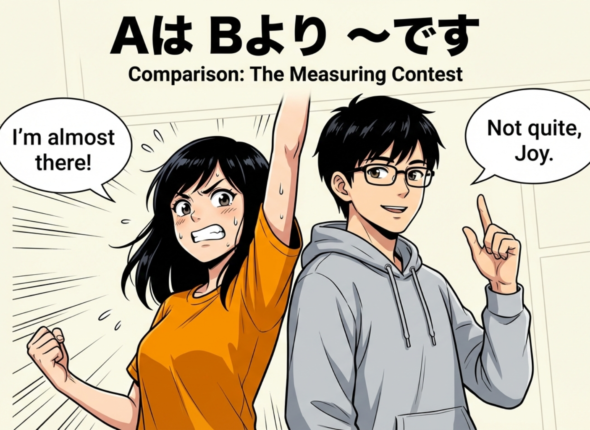
GrammarBook N5: Aは Bより ~です (Comparison)
N5-G-034 Aは Bより ~です (Comparison) Supporting / Adjectives 👀 Layer A: Visual Guide (直感理解) 📝 Quick Summary (まとめ) 2つのものを比(くら)べる表現です。「Aは Bよりもっと~だ」と言いたいときに使います。「より」は比較の基準(きじゅん)を表します。 Use this pattern to compare two items. “A is more [Adjective] than...
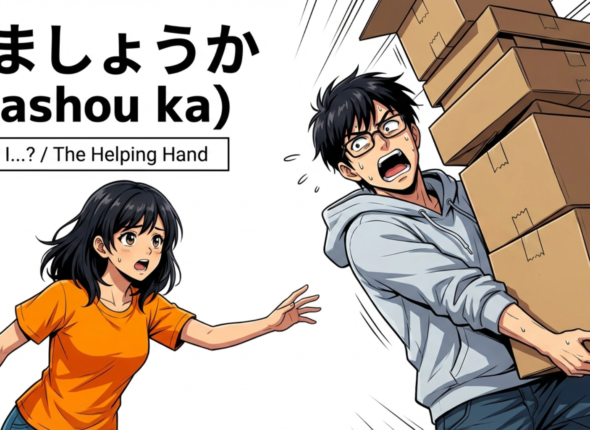
GrammarBook N5: ~ましょうか (Shall I…?)
N5-G-033 ~ましょうか (Shall I…?) Supporting / Offer 👀 Layer A: Visual Guide (直感理解) 📝 Quick Summary (まとめ) 「何か手伝いましょうか?(申し出)」または「どうしましょうか?(相談)」という2つの意味があります。 Use this pattern to offer help (“Shall I…?”) or to consult with someone (“Shall...
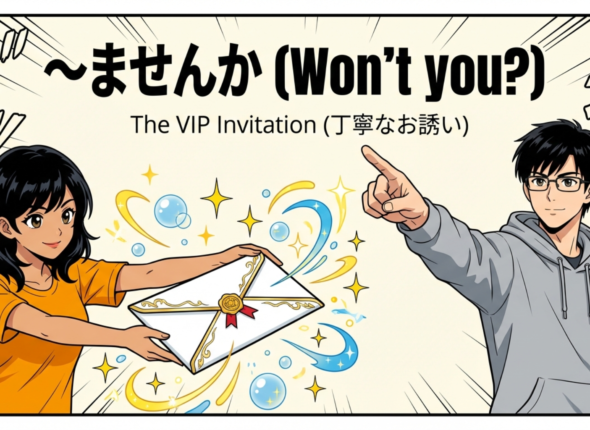
GrammarBook N5: ~ませんか
N5-G-032 ~ませんか (Won’t you?) Core / Invitation 👀 Layer A: Visual Guide (直感理解) 📝 Quick Summary (まとめ) 相手(あいて)を丁寧(ていねい)に誘(さそ)う表現です。「~ましょう」よりも相手の都合(つごう)を配慮(はいりょ)した、「もしよかったら~しませんか?」というニュアンスです。 This is a polite way to invite someone (“Won’t you…?”). It is more polite...
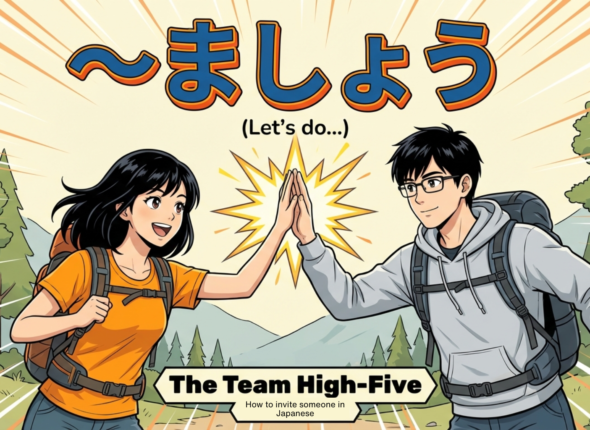
GrammarBook N5: ~ましょう
N5-G-031 ~ましょう (Let’s do) Core / Suggestion 👀 Layer A: Visual Guide (直感理解) 📝 Quick Summary (まとめ) 「一緒に~しよう」と誘(さそ)ったり、提案(ていあん)したりするときに使います。英語の “Let’s” に近いです。 Use this pattern to make a suggestion or invitation (“Let’s do…”). It...
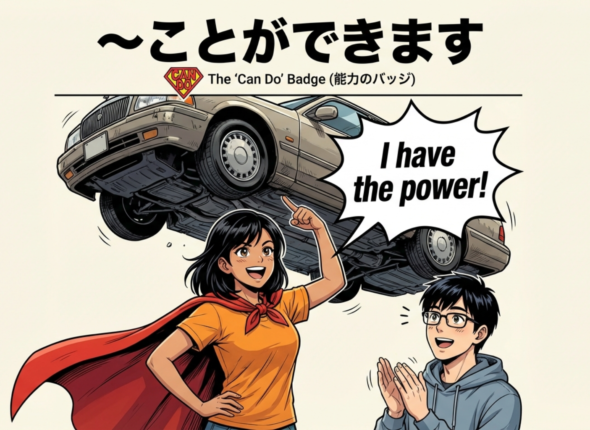
GrammarBook N5: ~ことができます (The ‘Can Do’ Badge)
N5-G-030 ~ことができます (Potential / Can do) Supporting / Potential 👀 Layer A: Visual Guide (直感理解) 📝 Quick Summary (まとめ) 「能力(のうりょく)」や「可能性(かのうせい)」を表す表現です。「~する能力がある」「~することが可能だ」と言いたいときに使います。 Use this pattern to express ability or possibility (“I can do…”). You...
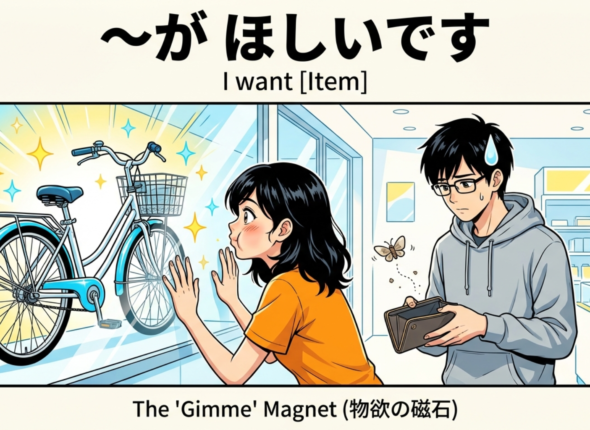
GrammarBook N5: Nがほしいです
N5-G-029 Nが ほしいです (I want [Thing]) Supporting / Adjectives 👀 Layer A: Visual Guide (直感理解) 📝 Quick Summary (まとめ) 「物(もの)が欲しい」ときに使います。「~たい」は動作(アクション)に使い、「ほしい」は物(アイテム)に使います。 Use “Hoshii” when you want a tangible OBJECT or thing. (Use “Tai”...

GrammarBook N5: ~たいです
N5-G-028 ~たいです (I want to…) Supporting / Adjectives 👀 Layer A: Visual Guide (直感理解) 📝 Quick Summary (まとめ) 「何かをしたい(願望)」という気持ちを伝える表現です。 作り方は簡単。「ます形」の「ます」を取って、「たい」を付けます。 Use this pattern to express what you WANT to do. Remove “masu”...
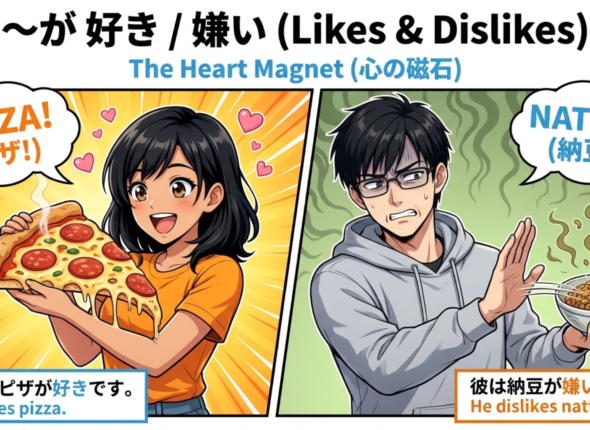
GrammarBook N5: Nがすき / きらい (Like / Dislike)
N5-G-027 Nが 好き / 嫌い (Likes & Dislikes) Supporting / Adjectives 👀 Layer A: Visual Guide (直感理解) 📝 Quick Summary (まとめ) 自分の好(この)みを伝える表現です。「好き」と「嫌い」は形容詞(けいようし)なので、対象(たいしょう)には「が」を使います。 Use this pattern to express likes and dislikes. Since “Suki”...
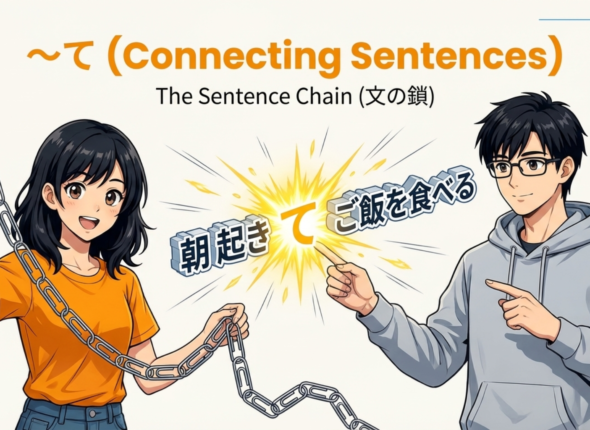
GrammarBook N5: ~て (Connecting Sentences)
N5-G-026 ~て (Sequence of Actions) Supporting / Te-form 👀 Layer A: Visual Guide (直感理解) 📝 Quick Summary (まとめ) 複数の動作(どうさ)を順番(じゅんばん)に言うときに使います。「~して、~して、~します」のように文をつなぐ「接着剤(せっちゃくざい)」の役割をします。 The “Te-form” acts as a conjunction (like “and”) to connect multiple actions in...
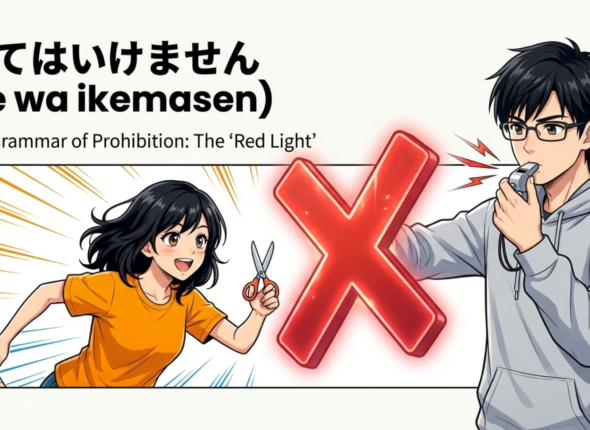
GrammarBook N5: ~てはいけません
N5-G-025 ~てはいけません (Prohibition) Supporting / Te-form 👀 Layer A: Visual Guide (直感理解) 📝 Quick Summary (まとめ) 「禁止(きんし)」を表す強い表現です。「~してはいけない」「~してはだめだ」とルールを伝えるときに使います。 Use this pattern to express a prohibition or a rule (“You must not…”). It is...
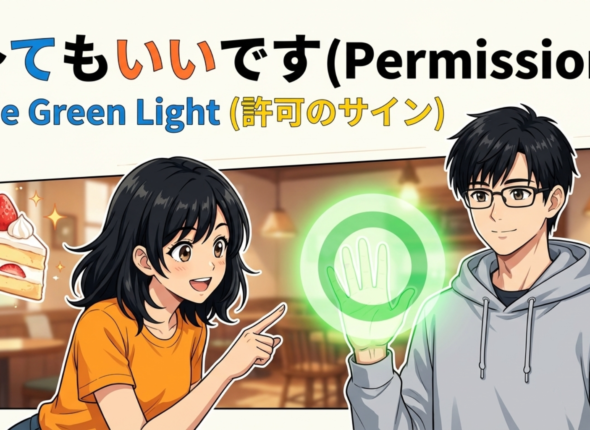
GrammarBook N5: ~てもいいです
N5-G-024 ~てもいいです (Permission) Supporting / Te-form 👀 Layer A: Visual Guide (直感理解) 📝 Quick Summary (まとめ) 「許可(きょか)」を求めたり、与(あた)えたりする表現です。「~しても大丈夫(だいじょうぶ)ですか?」と聞くときに使います。 Use this pattern to ask for permission (“May I…?”) or to give permission (“You may…”)....

GrammarBook N5: ~ています (Progressive State / Action)
N5-G-023 ~ています (Continuous Action / State) Supporting / Te-form 👀 Layer A: Visual Guide (直感理解) 📝 Quick Summary (まとめ) 「今(いま)、~している(進行中)」を表す形です。また、「結婚(けっこん)している」や「知(し)っている」のような「状態(じょうたい)の継続(けいぞく)」も表します。 This form expresses two things: 1) Actions happening RIGHT NOW (Present Continuous),...
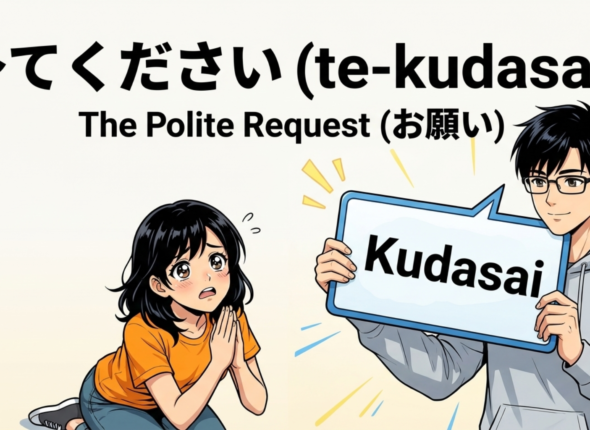
GrammarBook N5: ~てください (The Polite Request)
N5-G-022 ~てください (Please do) Core / Requests 👀 Layer A: Visual Guide (直感理解) 📝 Quick Summary (まとめ) 相手(あいて)に何かをお願(ねが)いするときに使います。「~してください」は丁寧(ていねい)な指示(しじ)や依頼(いらい)です。 Use this pattern to make polite requests or give instructions. You must conjugate the...
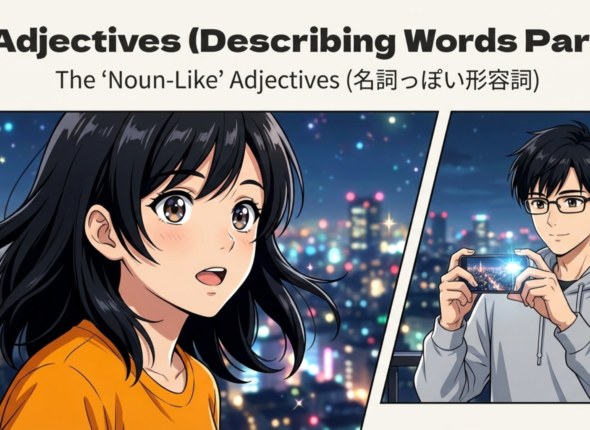
GrammarBook N5: な-adjectives
N5-G-021 な-Adjectives (Present & Negative) Supporting / Adjectives 👀 Layer A: Visual Guide (直感理解) 📝 Quick Summary (まとめ) 「な形容詞」は、文法的には「名詞(めいし)」と同じグループです。 否定形(ひていけい)は、名詞と同じように「~じゃありません」を使います。 Na-Adjectives behave almost exactly like Nouns. To make them negative, add “ja...
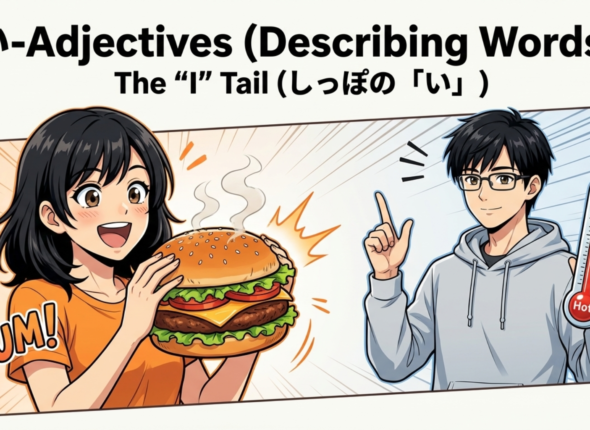
GrammarBook N5: い-adjectives
N5-G-020 い-Adjectives (Present & Negative) Supporting / Adjectives 👀 Layer A: Visual Guide (直感理解) 📝 Quick Summary (まとめ) 「い」で終わる形容詞(けいようし)です。物(もの)の状態(じょうたい)や性質(せいしつ)を説明します。 否定形(ひていけい)を作るときは、最後の「い」を取って、「くない」をつけます。 i-Adjectives always end in the Hiragana “i”. To make them negative, you...
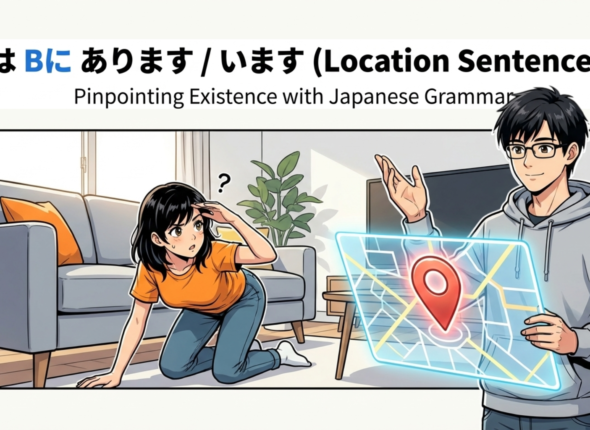
GrammarBook N5: Aは Bに あります / います (Location Sentence)
N5-G-019 Aは Bに あります / います (Location) Core / Sentence Pattern 👀 Layer A: Visual Guide (直感理解) 📝 Quick Summary (まとめ) 人や物が「どこにあるか」を説明する文です。「は」でトピックを決めて、「に」で場所を指定します。 Use this pattern to describe the specific location of an...
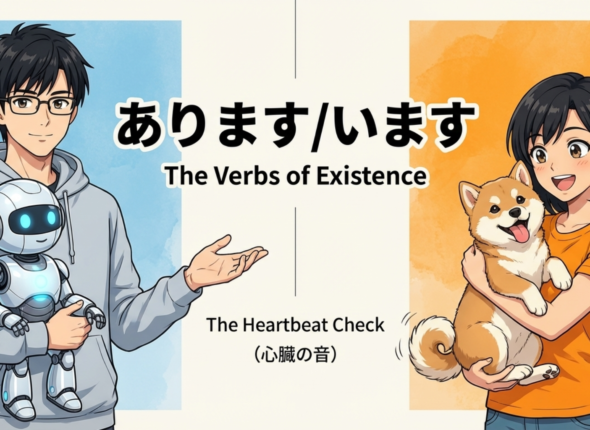
GrammarBook N5: あります / います
N5-G-018 があります / います (Existence) Core / Verbs 👀 Layer A: Visual Guide (直感理解) 📝 Quick Summary (まとめ) 1. 目的(もくてき): 「あります/います」は、人や物が「そこに存在する (There is…)」こと、または「持っている (I have…)」ことを表します。 2. 使い分け: 生きているかどうかで動詞が変わります。 1. Purpose: To state...
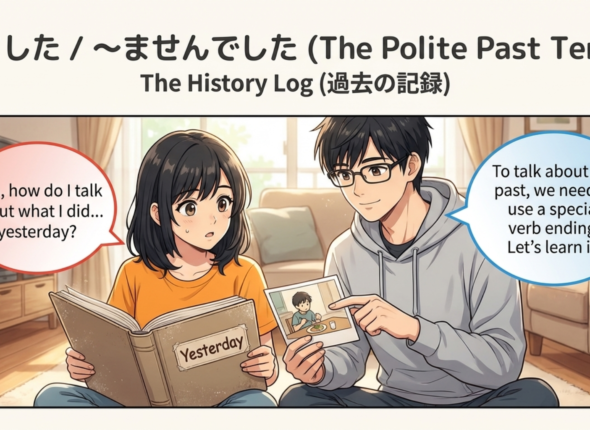
GrammarBook N5: ~ました / ~ませんでした
N5-G-017 ~ました / ~ませんでした (Polite Past) Supporting / Verb Conjugation 👀 Layer A: Visual Guide (直感理解) 📝 Quick Summary (まとめ) 動詞(どうし)の「過去形(かこけい)」です。終わったこと、済(す)んだことを話すときに使います。 This is the polite PAST tense. Use it for actions that...
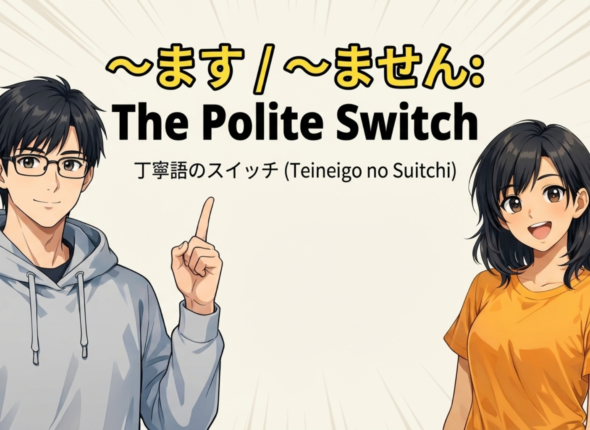
GrammarBook N5: ~ます / ~ません
N5-G-016 ~ます / ~ません (Polite Present) Core / Verb Conjugation 👀 Layer A: Visual Guide (直感理解) 📝 Quick Summary (まとめ) 動詞(どうし)の丁寧(ていねい)な形です。「ます」はスイッチON(します)。「ません」はスイッチOFF(しません)。 This is the polite form of verbs. “Masu” is positive (I...
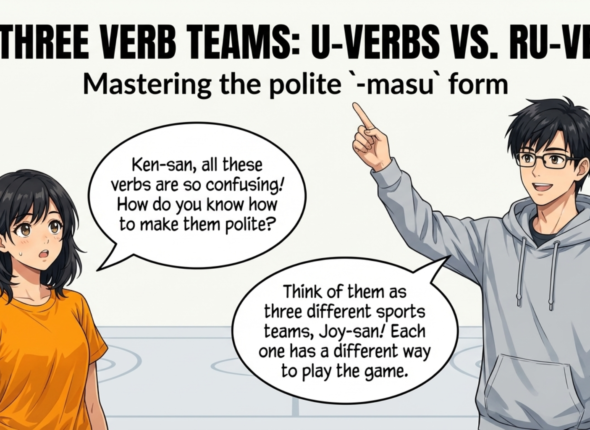
GrammarBook N5: Japanese Verb groups (u/ru/irregular)
N5-G-015 Verb Groups (U / Ru / Irregular) Core / Verbs 👀 Layer A: Visual Guide (直感理解) 📝 Quick Summary (まとめ) 日本語の動詞(どうし)は3つのチームに分かれます。これを知らないと、「ます形(けい)」が作れません! Japanese verbs are divided into 3 Groups. This determines how...