

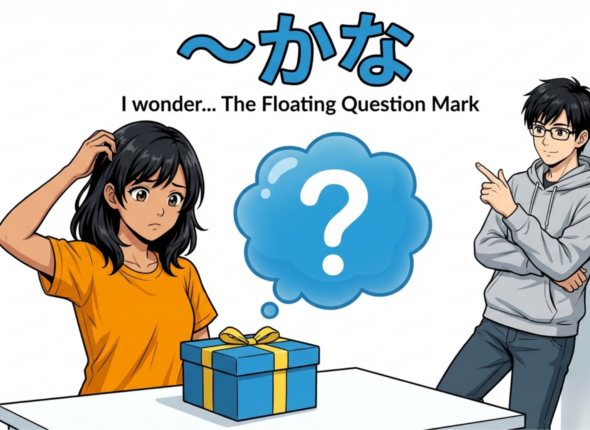
GrammarBook N5: かな (The Floating Question Mark)
N5-G-054 かな (I wonder) Supporting / Uncertainty 👀 Layer A: Visual Guide (直感理解) 📝 Quick Summary (まとめ) 「~かなあ」と独り言を言うときや、確信が持てないことについて「~だろうか?」と考えるときに使います。カジュアルな話し言葉です。 Use “Kana” at the end of a sentence to express “I wonder…” or uncertainty....
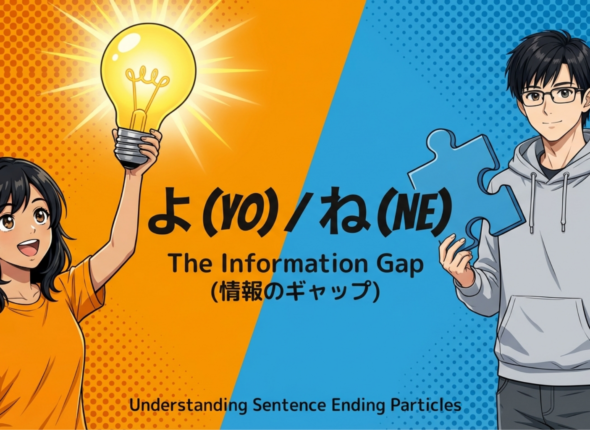
GrammarBook N5: よ / ね (Sentence ending particles)
N5-G-053 よ / ね (Sentence Ending Particles) Core / Conversation Flow 👀 Layer A: Visual Guide (直感理解) 📝 Quick Summary (まとめ) 文の最後に付けて、気持ちやニュアンスを伝える言葉です。 **よ (Yo):** 相手が知らないことを教えるとき、または自分の意見を主張するとき(!)。 **ね (Ne):** 相手に同意を求めるとき、または共感するとき(?/♪)。 “Yo” puts emphasis or...
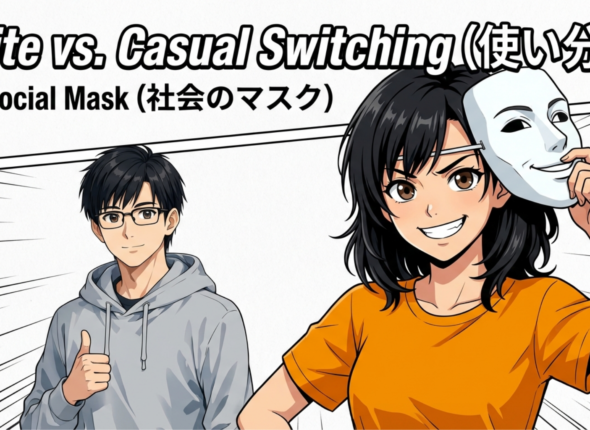
GrammarBook N5: Polite vs. Casual Switching in Japanese
N5-G-052 Polite/Casual Switching (使い分け) Supporting / Social Dynamics 👀 Layer A: Visual Guide (直感理解) 📝 Quick Summary (まとめ) 相手との関係によって話し方を変えるルールです。「丁寧体(です・ます)」は社会的な距離がある人へ、「普通体(タメ口)」は親しい人へ使います。 This is the social rule of switching between Polite (Desu/Masu) and Casual (Plain)...
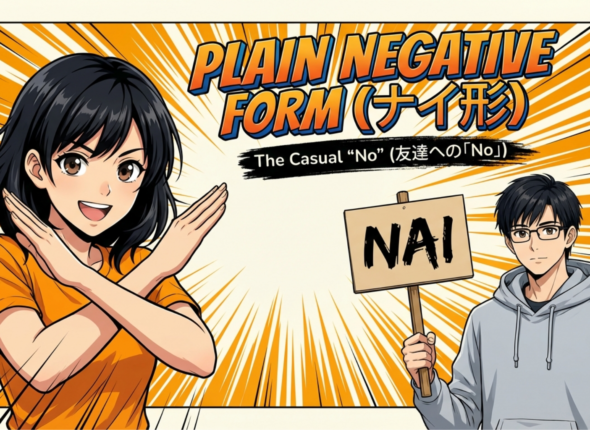
GrammarBook N5: Plain Negative Form in Japanese
N5-G-051 Plain Negative Form (Casual Negative) Supporting / Casual Speech 👀 Layer A: Visual Guide (直感理解) 📝 Quick Summary (まとめ) 友達との会話で使う「否定形(~ない)」です。「ナイ形(Nai-form)」とも呼ばれます。「~ないでください」などの文法を作るときにも使います。 This is the casual negative form used with friends (“I don’t…”)....
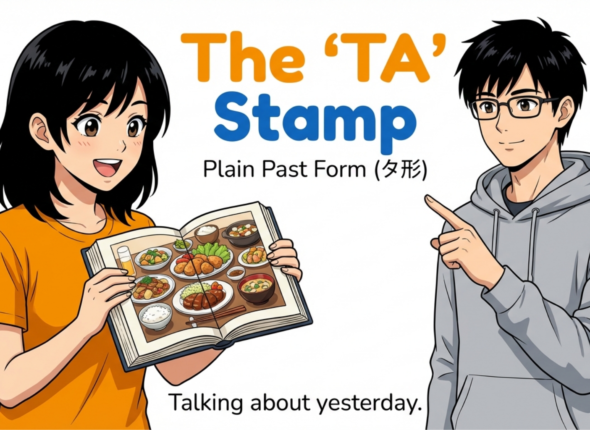
GrammarBook N5: Plain Past Form in Japanese
N5-G-050 Plain Past Form (Casual Past) Supporting / Casual Speech 👀 Layer A: Visual Guide (直感理解) 📝 Quick Summary (まとめ) 友達との会話で使う「過去形(~た)」です。「タ形(Ta-form)」とも呼ばれます。作り方は「テ形(Te-form)」と同じです。 This is the casual past form used with friends. It is...
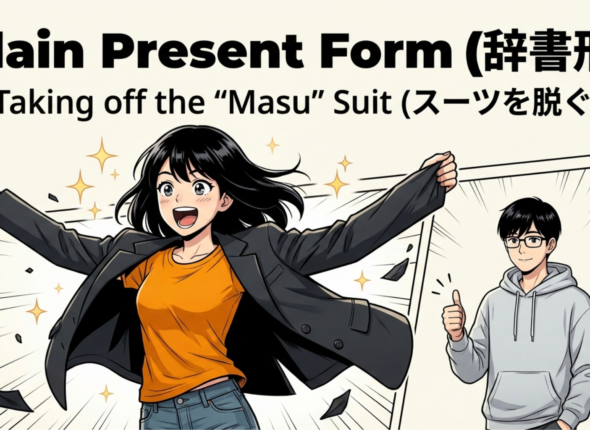
GrammarBook N5: Plain Present Form in Japanese
N5-G-049 Plain Present Form (Casual Speech) Supporting / Casual Speech 👀 Layer A: Visual Guide (直感理解) 📝 Quick Summary (まとめ) 友達や家族と話すときの「タメ口(カジュアル)」の形です。「ます形」ではなく「辞書形(Dictionary Form)」を使います。 This is the casual form used with friends and family....
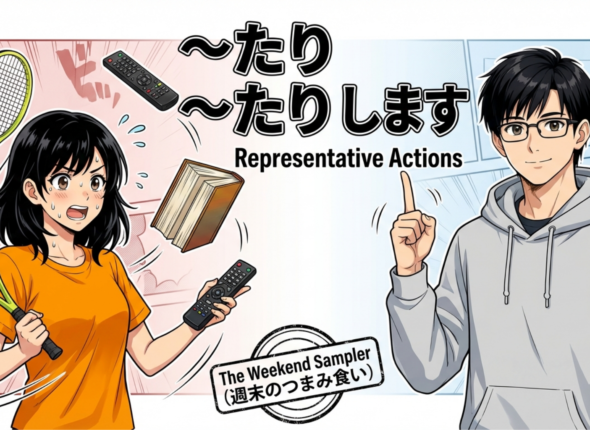
GrammarBook N5: ~たり~たりします
N5-G-048 ~たり~たりします (Varied actions) Supporting / Listing 👀 Layer A: Visual Guide (直感理解) 📝 Quick Summary (まとめ) いくつかの動作の中から、代表的なものを2〜3個ピックアップして伝える表現です。「Aをしたり、Bをしたりします(他にもあるけど)」というニュアンスです。 Use this pattern to list representative actions (“I do things like A and B…”)....

GrammarBook N5: ~てから (The strict sequence)
N5-G-047 ~てから (After / Since) Supporting / Sequence 👀 Layer A: Visual Guide (直感理解) 📝 Quick Summary (まとめ) 「Aをして、それからBをする」という行動の順番(じゅんばん)をはっきり言うときに使います。また、「日本に来てから(ずっと)~」のように、「~してから今まで」という意味でも使います。 Use this pattern to emphasize the sequence “After doing A, I do B”....
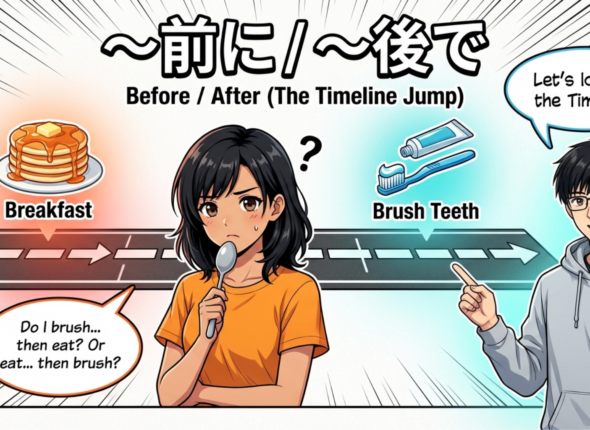
GrammarBook N5: ~前に / ~後で (Before/After)
N5-G-046 ~前に / ~後で (Before / After) Supporting / Sequence 👀 Layer A: Visual Guide (直感理解) 📝 Quick Summary (まとめ) 行動の順番(じゅんばん)を説明する表現です。「Aをする前にBをする」「Aをした後でBをする」と言いたいときに使います。動詞の形に注意が必要です。 Use these patterns to describe the order of actions (“Before doing...
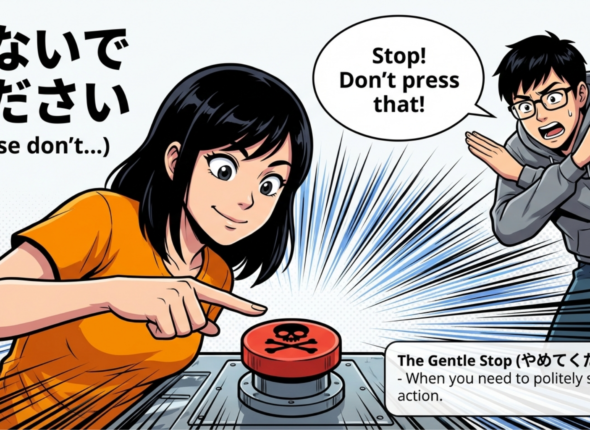
GrammarBook N5: ~ないでください
N5-G-045 ~ないでください (Please don’t) Supporting / Request 👀 Layer A: Visual Guide (直感理解) 📝 Quick Summary (まとめ) 相手に「~しないでほしい」と丁寧に頼むときに使います。動詞の「ナイ形(Nai-form)」を使います。 Use this pattern to politely ask someone NOT to do something (“Please don’t…”). It...
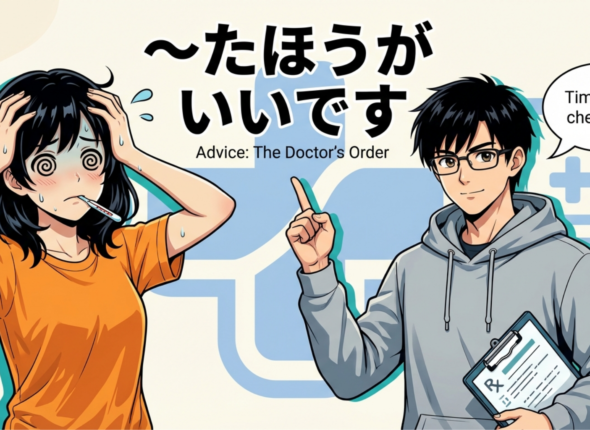
GrammarBook N5: ~たほうがいいです
N5-G-044 ~たほうがいいです (Advice) Peripheral / Advice 👀 Layer A: Visual Guide (直感理解) 📝 Quick Summary (まとめ) 相手に「~したほうがいいよ」とアドバイスするときに使います。これからすることですが、動詞は「タ形(過去形)」を使うのがポイントです。 Use this pattern to give specific advice (“You’d better…”, “It’s better to…”). Even though it...
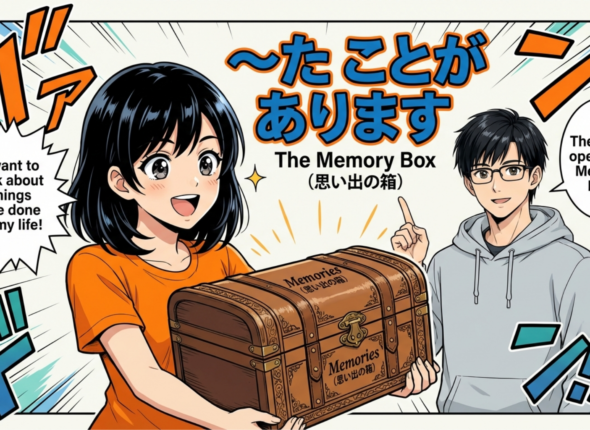
GrammarBook N5: ~たことがあります
N5-G-043 ~たことがあります (Experience) Peripheral / Past Tense 👀 Layer A: Visual Guide (直感理解) 📝 Quick Summary (まとめ) 「過去にそれをした経験(けいけん)があるか」を話すときに使います。「昨日~した」のような単なる過去の出来事ではなく、「人生で一度でもしたことがあるか」というニュアンスです。 Use this pattern to talk about past experiences (“I have done…”). It refers to...
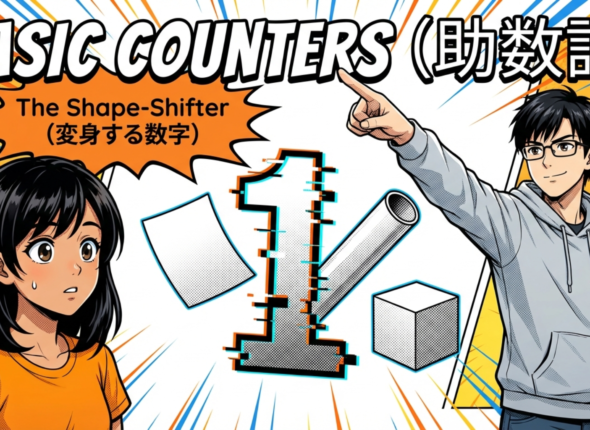
GrammarBook N5: Basic Counters in Japanese
N5-G-042 Basic Counters (助数詞) Supporting / Numbers 👀 Layer A: Visual Guide (直感理解) 📝 Quick Summary (まとめ) 日本語では、数えるものによって数字の後ろにつく言葉(助数詞)が変わります。「形」に注目するのがポイントです。 In Japanese, counting words change depending on the shape or nature of the object....
GrammarBook N5: Duration Expressions
N5-G-041 Duration Expressions (時間の長さ) Supporting / Numbers 👀 Layer A: Visual Guide (直感理解) 📝 Quick Summary (まとめ) 「どのくらい長く(期間)」を表す言葉です。「~時(Point)」と「~時間(Length)」を区別しましょう。 These expressions measure the length of time (Duration). Learn to distinguish between a point...
GrammarBook N5: ~に~回 (frequency and rates)
N5-G-040 ~に~回 (Frequency expressions) Supporting / Numbers 👀 Layer A: Visual Guide (直感理解) 📝 Quick Summary (まとめ) 「1週間に1回」や「1年に2回」など、どのくらいの頻度(ひんど)で何かをするかを説明する表現です。「~につき (Per)」という意味で「に」を使います。 Use this pattern to express frequency or rate (“Once a week”, “Twice a...
GrammarBook N5: で (Transportation)
N5-G-039 [乗り物] で 行きます (Transportation) Supporting / Particles 👀 Layer A: Visual Guide (直感理解) 📝 Quick Summary (まとめ) 「どうやって(手段)」行くかを説明するときに使います。乗り物の名詞のあとに「で」をつけます。「~を使って」というニュアンスです。 Use “DE” to mark the means of transportation (“By train”, “By car”). It...
GrammarBook N5: Verb Stem + に行く(Go to do)
N5-G-038 Verb Stem + に行く (Go to do) Supporting / Purpose 👀 Layer A: Visual Guide (直感理解) 📝 Quick Summary (まとめ) 「何かをしに行く」という移動の目的を詳しく言いたいときに使います。「ます形」から「ます」を取った形(Stem)に「に」をつけます。 Use this pattern to say you are going somewhere TO...
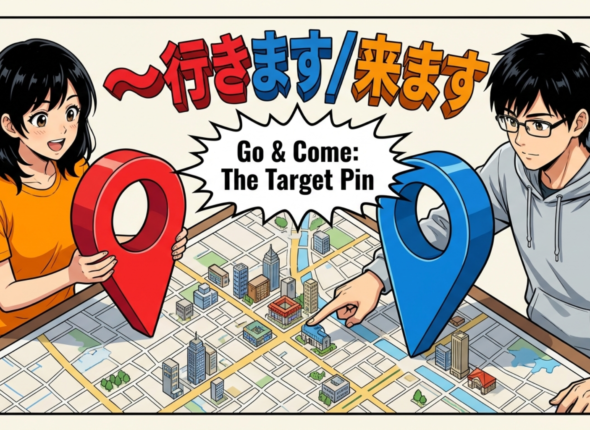
GrammarBook N5: ~に行きます / 来ます (Go to do…)
N5-G-037 ~に行きます / 来ます (Go to do…) Core / Purpose 👀 Layer A: Visual Guide (直感理解) 📝 Quick Summary (まとめ) 「何のために行く(来る)のか」という移動(いどう)の目的(もくてき)を表す表現です。「~しに行く」と言いたいときに使います。 Use this pattern to express the PURPOSE of going or coming...
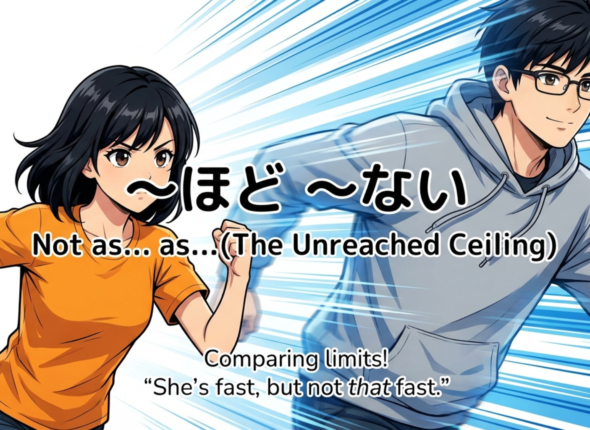
GrammarBook N5: ~ほど~ない (Not as… as…)
N5-G-036 ~ほど~ない (Not as… as…) Peripheral / Comparison 👀 Layer A: Visual Guide (直感理解) 📝 Quick Summary (まとめ) 「AはBより~だ」の逆(ぎゃく)のパターンです。「AはBのレベルまでは届(とど)かない」という意味で、「AはBほど~ない」と言います。 Use this pattern to say “A is not as [Adjective] as B”. It...
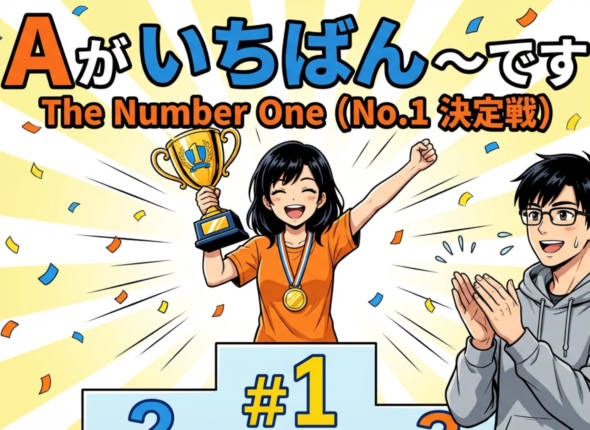
GrammarBook N5: Aが いちばん ~です (The most / The best)
N5-G-035 Aが いちばん ~です (The most / The best) Supporting / Adjectives 👀 Layer A: Visual Guide (直感理解) 📝 Quick Summary (まとめ) グループの中で「No.1」を決める表現(最上級)です。「~の中で、Aが一番(最も)~だ」と言いたいときに使います。 Use this pattern to express the superlative (“The most…”,...