
Blog
「計画する」 と 「予定する」 の違い [日本語学習]
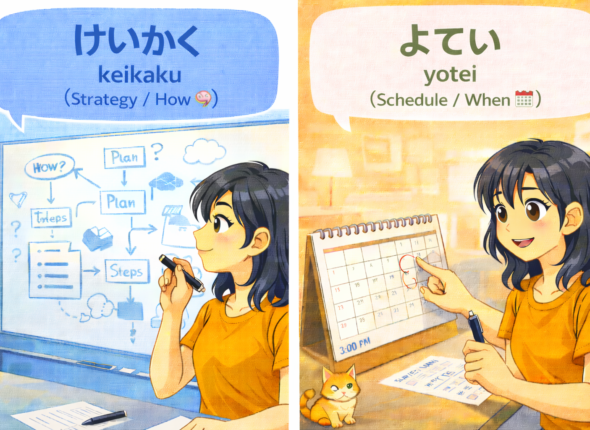
(ホワイトボードで手順を考えるJoy [計画] vs. カレンダーを見るJoy [予定]) 「新しいプロジェクトを計画する。」(戦略・手順) 「電車は3時に到着する予定だ。」(スケジュール) 英語ではどちらも「Plan」と言うことが多いですが、日本語では明確に違います。「計画 (Keikaku)」は方法やプロセスを考えること、「予定 (Yotei)」は日時やスケジュールを決めることです。JoyとKenと一緒に使い分けを学びましょう! 🗣 会話シーン (Conversation Scene) JoyとKenがJPLTの生徒向けイベントの準備をしています。 Joy ケンさん、来月のイベントの 予定(よてい) は決まりました! 次は、どうやって宣伝(せんでん)するか 予定(よてい) しましょう。 (Ken, the “schedule” for next month’s event is decided! Next,...
「値引き」 と 「割引」 の違い [日本語学習]
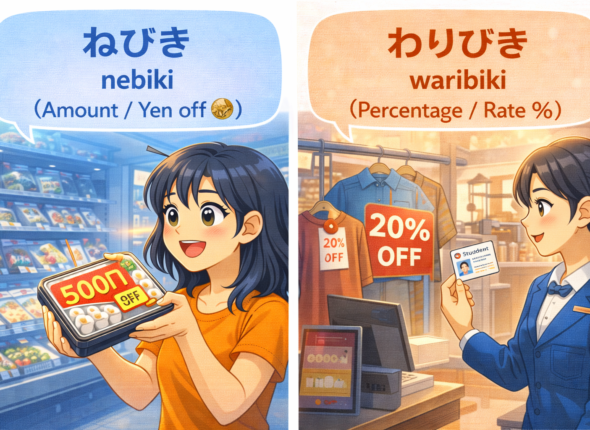
(スーパーで500円引のお弁当を持つJoy [値引き] vs. 20%OFFのシャツを見るJoy [割引]) 「このテレビ、5,000円値引きだって!」(金額) 「このシャツ、20%割引だって!」(割合) どちらも「安くなる(Discount)」ことですが、「値引き (Nebiki)」は「具体的な金額(円)」を引くこと、「割引 (Waribiki)」は「割合(パーセント)」で計算して引くことです。JoyとKenと一緒に、買い物の言葉をマスターしましょう! 🗣 会話シーン (Conversation Scene) JoyとKenがショッピングモールで買い物をしています。 Joy ケンさん、見て!このコート、セールで「30% 値引(ねび)き」ですよ! 買いたいです! (Ken, look! This coat is “30% Nebiki (Amount off)” on sale! I want...
「召し上がりください」 と 「召し上がってください」 の違い [日本語学習]
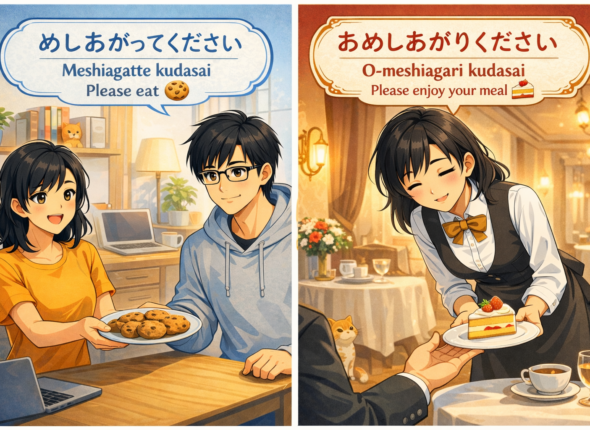
(先輩にお菓子をすすめるJoy [召し上がってください] vs. カフェでケーキを提供するJoy [お召し上がりください]) 「食べてください」の尊敬語(Keigo)は「召し上がる」です。 しかし、お願いする時に「召し上がってください」と言うべきか、「お召し上がりください」と言うべきか迷うことはありませんか?日常の丁寧さと、接客などのフォーマルな場面でニュアンスが異なります。JoyとKenと一緒に正しい敬語をマスターしましょう! 🗣 会話シーン (Conversation Scene) JoyがオフィスでKenにお土産のお菓子をすすめています。 Joy ケンさん、これ、お土産(みやげ)のお菓子(かし)です。 どうぞ 召(め)し上(が)りください! (Ken, this is a souvenir snack. Please “meshiagari kudasai”!) Ken ありがとうございます! でもJoyさん、文法(ぶんぽう)が少し違いますよ。 「召し上がってください」か、「お召し上がりください」が正解です! (Thank you! But...
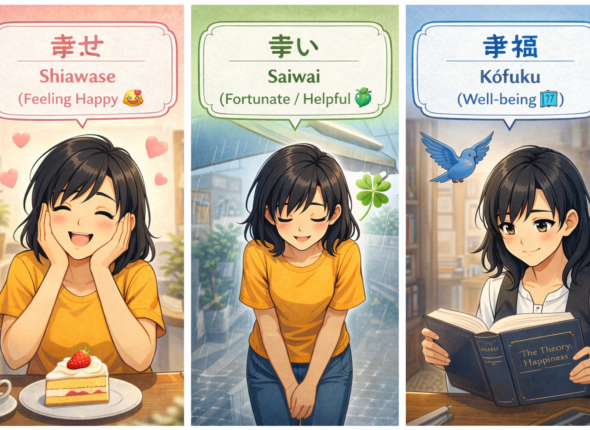
「幸せ(しあわせ)」 と 「幸い(さいわい)」 と 「幸福(こうふく)」 の違い [日本語学習]
(感情的なJoy [幸せ] vs. フォーマルなJoy [幸い] vs. 哲学的なJoy [幸福]) 「私は幸せです。」(気持ち) 「お返事いただければ幸いです。」(ビジネス) 「国民の幸福。」(概念) 日本語には「Happy」を表す言葉がたくさんあります。「幸せ」は感情、「幸い」は運やお願い、「幸福」は客観的な状態です。JoyとKenと一緒に使い分けを学びましょう! 🗣 会話シーン (Conversation Scene) Joyがお菓子を食べながら、ビジネスメールを書いています。 Joy (クッキーを食べながら)ん〜!おいしい!幸福(こうふく) です! あ、メールも書かなきゃ。「お返事(へんじ)をいただければ 幸せ です」…っと。 (Eating a cookie: Mmm! Delicious! I am “Kōfuku”! Oh,...
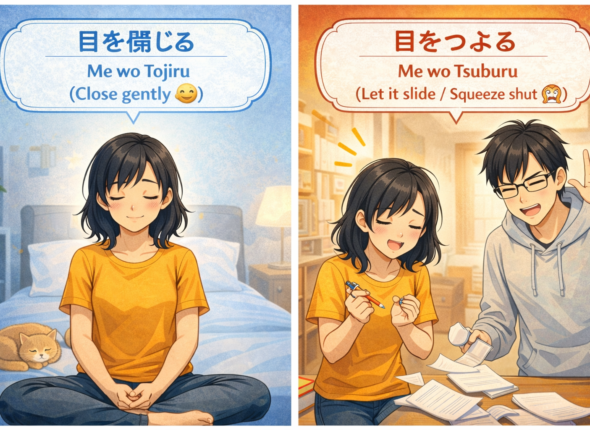
Eyes Closed: Me wo Tsuburu vs Me wo Tojiru Differences
(Joy closing her eyes peacefully [Tojiru] vs. Ken squeezing his eyes shut to ignore a mistake [Tsuburu]) “I closed my eyes to sleep.” (Me wo tojiru) “I turned a blind eye to...
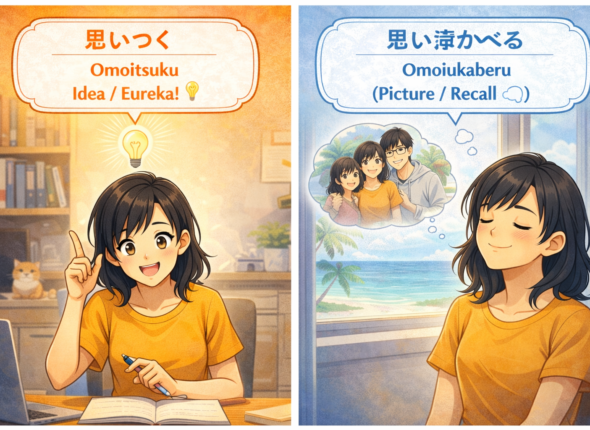
Clarifying ‘思いつく’ (Omoitsuku) and ‘思い浮かべる’ (Omoikaberu): What’s the Difference?
(Joy having a lightbulb moment [Omoitsuku] vs. Joy picturing a memory in a thought bubble [Omoiukaberu]) “I came up with a plan.” (Omoitsuku) “I pictured her face.” (Omoiukaberu) In Japanese, the verbs...
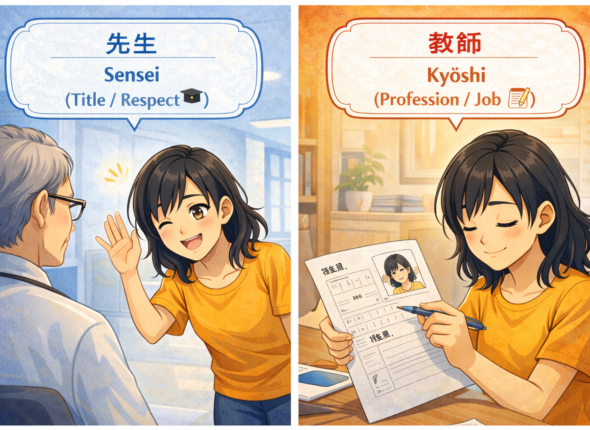
教師 (Kyoshi) vs. 先生 (Sensei): A Deep Dive Into What Sets Them Apart
(Joy bowing to a doctor [Sensei] vs. Joy writing her occupation on a resume [Kyoushi]) “Good morning, Tanaka-sensei!” “My occupation is Kyoushi.” If you look up “Teacher” in a dictionary, you will...
Unpacking “通りすがり” (Toorisugari): What Does “Sugari” Mean?
Exploring the Meaning of “通りすがり” (Toorisugari): What Does “Sugari” Mean? When you first encounter the term “通りすがり” (toorisugari), you might wonder about the meaning of “すがり” (sugari). This term seems unique and...
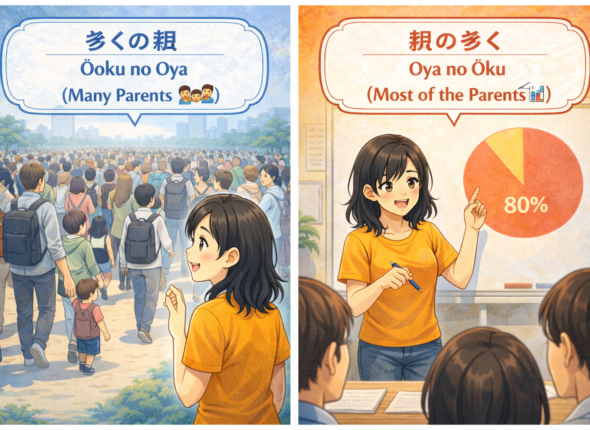
Ooku no Oya vs Oya no Ooku: Understanding Their Nuances
(Joy looking at a crowd [Ooku no Oya] vs. Joy pointing to a pie chart [Oya no Ooku]) “Many parents read books.” (Ooku no oya) “Most of the parents read books.” (Oya...
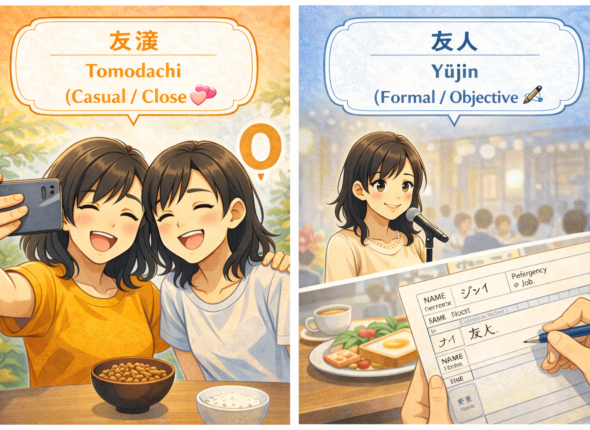
Tomodachi vs. Yuujin: Choosing the Right Word for ‘Friend’
(Joy taking a selfie with a friend [Tomodachi] vs. Joy giving a formal speech [Yuujin]) “I’m hanging out with my friend.” (Tomodachi) “As a representative of her friends…” (Yuujin) In English, a...
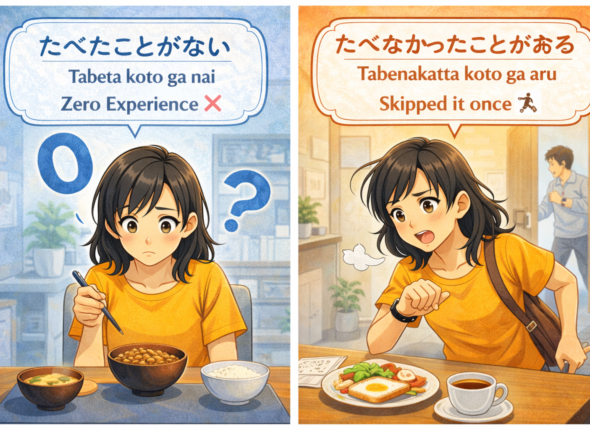
「食べたことがない」 と 「食べなかったことがある」 の違い [日本語学習]
(見たことない納豆を見るJoy [ゼロの経験] vs. 朝ごはんを食べずに走るJoy [食べない日があった]) 「食べたこと が ない。」(Never eaten) 「食べなかったこと が ある。」(Didn’t eat once) どちらも「こと(経験・出来事)」を使った文法ですが、「ない(Nai)」を置く場所で意味が全く変わります!「人生でゼロ回」の話をしているのか、それとも「いつもの習慣をサボった」話をしているのか。JoyとKenと一緒に整理しましょう! 🗣 会話シーン (Conversation Scene) Joyが日本の食べ物についてKenと話しています。 Joy ケンさん、私、日本に来てから色々なものを食べました! でも、納豆(なっとう)はまだ 食べなかったこと が あります。 (Ken, I’ve eaten many things since...
![「食べてはいけません」 と 「食べないでください」 の違い [日本語学習]](https://jplt-dialogplus.com/wp-content/uploads/2026/02/「食べてはいけません」-と-「食べないでください」-の違い-日本語学習-590x430.png)
「食べてはいけません」 と 「食べないでください」 の違い [日本語学習]
(プリンを食べないでとお願いするJoy [ないでください] vs. 飲食禁止のバツ印を出すKen [てはいけません]) 「私のケーキを食べないでください。」(お願い) 「図書館で食べてはいけません。」(ルール) 英語ではどちらも「Don’t eat」になることがありますが、日本語では「個人的なお願い(Favor)」なのか、「厳格なルール(Rule)」なのかで文法を変えなければなりません。間違えると、とても偉そう(Bossy)に聞こえてしまいます! 🗣 会話シーン (Conversation Scene) Joyがおいしいプリンを買って、オフィスの冷蔵庫に入れました。 Joy ケンさん、冷蔵庫(れいぞうこ)のプリンにメモを貼(は)りました。 「私のプリンです。食べてはいけません!」…これで大丈夫ですか? (Ken, I put a memo on the pudding in the fridge. “This is my...
![「お伺いしておりますか」 の意味 [日本語学習] (1)](https://jplt-dialogplus.com/wp-content/uploads/2026/02/「お伺いしておりますか」-の意味-日本語学習-1-1-590x430.png)
「お伺いしておりますか」 の意味 [日本語学習]
(受付で丁寧に挨拶するJoy [フレーズ] vs. 予約表をチェックするJoy [本当の意味]) 日本の美容室やクリニック、会社の受付に行くと、必ずこう聞かれます。 「お伺(うかが)いしておりますでしょうか?」 「伺う=私が聞く」なので、「あなたが何か音を聞きましたか?」と勘違いしてしまう外国人がたくさんいます。実はこれ、日本特有の「気配り(Consideration)」から生まれた接客用語なのです。本当の意味をJoyとKenと一緒に解読しましょう! 🗣 会話シーン (Conversation Scene) JoyがJPLTのオフラインイベントに向けて、受付スタッフの練習をしています。 Joy ケンさん、受付(うけつけ)の練習(れんしゅう)をしましょう! 「いらっしゃいませ!ご予約(よやく)はありますか?」 …これでいいですか? (Ken, let’s practice for the reception desk! “Welcome! Do you have a reservation?” …Is this...
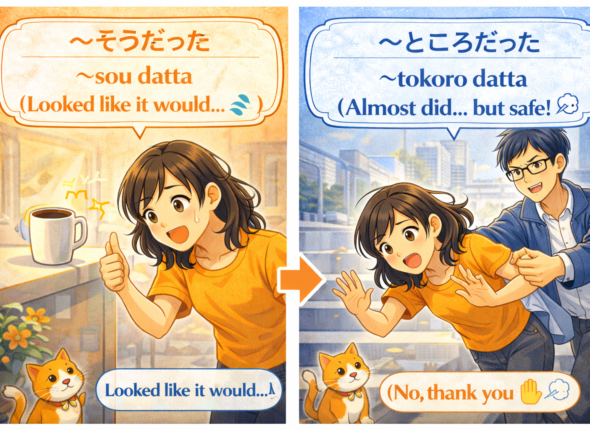
「落ちそうだった」 と 「落ちるところだった」 の違い [日本語学習]
(グラグラするコップを見るJoy [〜そうだった] vs. 転ぶJoyを助けるKen [〜るところだった]) 「コップが落ちそうだった。」(見た目の予感) 「(自分が)落ちるところだった!」(間一髪のセーフ) 英語ではどちらも「Almost fell」と表現されることが多いですが、日本語では「見ていてそう感じた」のか、「ギリギリで回避できた(助かった)」のかで文法を使い分けます。N4・N3の会話でとてもよく使う表現を、JoyとKenと一緒にマスターしましょう! 🗣 会話シーン (Conversation Scene) Joyがホッとした表情で、スマホを握りしめながらオフィスに入ってきました。 Joy ケンさん、聞いてください!駅の階段(かいだん)で、スマホを落(お)としそうになりました…! でも、間一髪(かんいっぱつ)でキャッチしましたよ! (Ken, listen! On the station stairs, I “looked like I was going to drop” my...
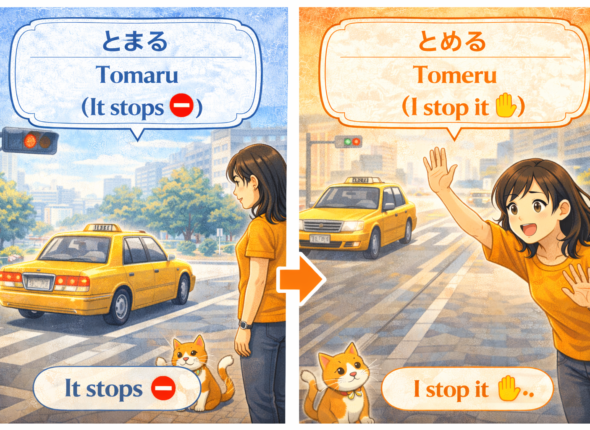
「止まる」 と 「止める」 の違い [日本語学習]
(赤信号で止まるタクシーを見るJoy [止まる] vs. 手を挙げてタクシーを止めるJoy [止める]) 「車が 止まる。」(自然にストップする) 「車を 止める。」(私がストップさせる) 英語ではどちらも「Stop」ですが、日本語には「自動詞(Intransitive)」と「他動詞(Transitive)」の2種類があります。これを間違えると、「私が止まります!」と叫んで自分がフリーズしてしまうことになります(笑)。JoyとKenと一緒に、助詞のルールをマスターしましょう! 🗣 会話シーン (Conversation Scene) JoyとKenが急いでいて、道でタクシーを拾おうとしています。 Joy ケンさん、急(いそ)ぎましょう! あ!空車(くうしゃ)のタクシーが来ましたよ!私がタクシーを 止(と)まります! (Ken, let’s hurry! Ah! An empty taxi is coming! I will “Tomarimasu [stop...
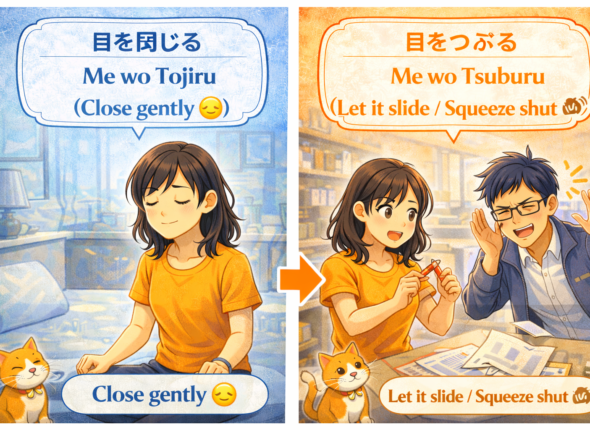
「目をつぶる」 と 「目を閉じる」 の違い [日本語学習]
= (リラックスして目を閉じるJoy [目を閉じる] vs. ミスを見なかったことにするKen [目をつぶる]) 「寝るために、目を閉じた。」 「彼のミスに、目をつぶった。」 英語ではどちらも “Close eyes” ですが、日本語ではニュアンスが違います。静かに休む時は「閉じる(Tojiru)」、ぎゅっと力を入れたり、見なかったことにしたりする時は「つぶる(Tsuburu)」を使います。JoyとKenと一緒に便利なイディオムを学びましょう! 🗣 会話シーン (Conversation Scene) JoyがJPLTのポスターの漢字を間違えてしまいました。 Joy ケンさん、すみません!ポスターの漢字(かんじ)を間違(まちが)えました。 やり直(なお)します…。 (Ken, I’m sorry! I made a mistake on the Kanji for the...
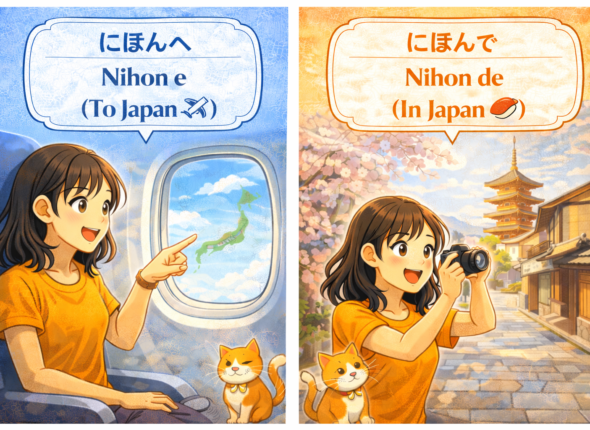
“Nihon de” vs. “Nihon e”: Travel Contexts in Japanese Explained
(Joy flying in an airplane [Nihon e] vs. Joy eating sushi in Kyoto [Nihon de]) “I want to go to Japan.” (Nihon e) “I want to eat sushi in Japan.” (Nihon de)...
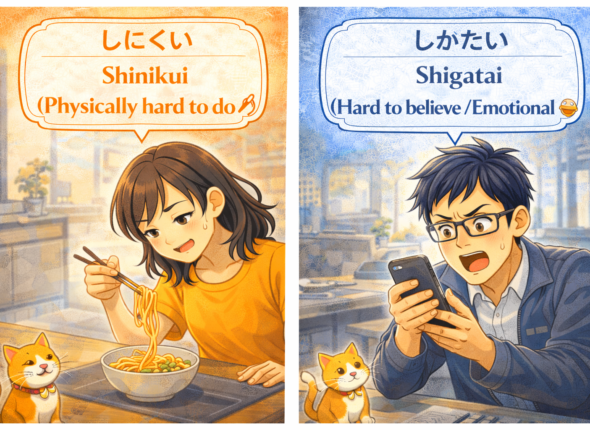
Shinikui vs Shigatai: Understanding Their Subtle Differences
(Joy struggling to use chopsticks [~nikui] vs. Ken looking shocked at unbelievable news [~gatai]) “These chopsticks are hard to use.” (Tsukai-nikui) “His excuse is hard to believe.” (Shinji-gatai) In English, we just...
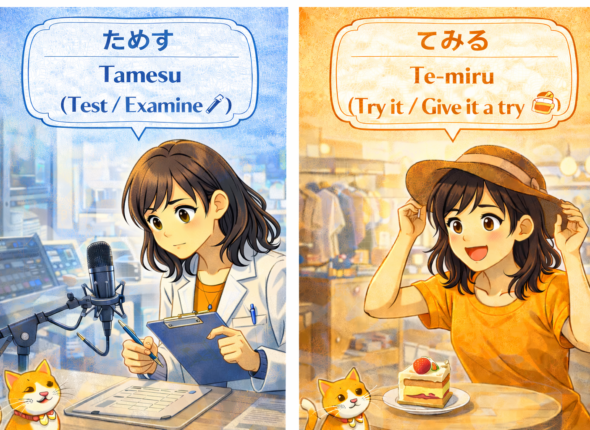
Ichido vs. Ikkai: Nuances of “Once” in Japanese Explained
(Joy testing a machine [Tamesu] vs. Joy trying a cake [Te-miru]) “I want to try this cake!” “I want to test this microphone.” In Japanese, both are translated as “try,” but we...
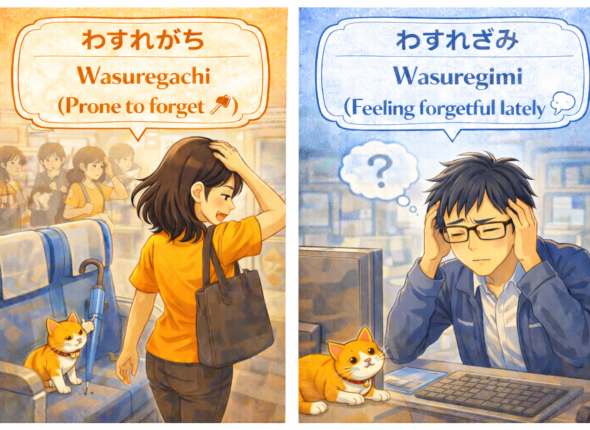
“Wasuregachi” vs. “Wasuregimi”: Understanding Japanese Forgetfulness Nuances
(Joy frequently leaving her umbrella [Wasuregachi] vs. Ken rubbing his temples feeling forgetful [Wasuregimi]) “I tend to forget kanji.” (Wasure-gachi) “I’m feeling a bit forgetful lately.” (Wasure-gimi) When adding a suffix to...