

The Difference Between “ようだ” (you da) and “みたいだ” (mitai da)|Japanese Grammar (N5–N3)
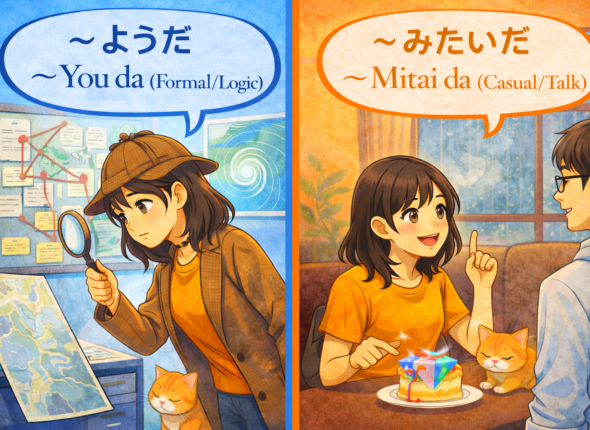
(Detective Joy analyzing [You da] vs. Chatting Joy [Mitai da]) “It seems like it will rain.” 雨(あめ)が 降(ふ)る ようだ。 雨(あめ)が 降(ふ)る みたいだ。 Both sentences mean the same thing. But one sounds like...
「〜ようだ」と「〜みたいだ」の違い [日本語学習]
(分析するJoy [ようだ] vs. おしゃべりするJoy [みたいだ]) 「雨が降るようだ」。 「雨が降るみたいだ」。 この2つの文の意味は同じです。でも、一つはニュースのようで、もう一つは友達とのおしゃべりのように聞こえます。「〜ようだ (You da)」と「〜みたいだ (Mitai da)」の使い分けを、JoyとKenと一緒にマスターしましょう! 🗣 会話シーン (Conversation Scene) JoyとKenが窓の外を見ています。 Joy あ、外(そと)が暗(くら)くなりましたね。 もうすぐ 雨が 降る ようです。 (Ah, it has become dark outside. It “seems” it...
How to Get the Best Out of Your Unlimited Access to Japanese Learning in JPLT Online School
How to Get the Best Out of Your Unlimited Access to Japanese Learning in JPLT Online School By JPLT DIALOG Plus | Published on October 23, 2025 Learn More, Speak More, and...

Student Roadmap: Beginner Level — Your First Step Toward Speaking Japanese Confidently
Student Roadmap: Beginner Level — Your First Step Toward Speaking Japanese Confidently By JPLT DIALOG Plus | Published on October 23, 2025 Discover the Joy of Learning Japanese Close your eyes for...
Let’s Learn About Japanese Festivals! Traditional Events and Culture
Let’s Learn About Japanese Festivals! Traditional Events and Culture Hello! Have you ever experienced a Japanese festival? Japan has many fun and exciting festivals to enjoy. This time, Eri-san, a staff member...
Enjoy Japan’s Four Seasons While Learning Japanese!
Enjoy Japan’s Four Seasons While Learning Japanese! Hello, everyone studying Japanese! Japan’s four seasons are characterized by beautiful nature, unique customs, and culture tailored to each season. In this post, Eri-san from...
What is the difference between “落ちそうだった” (ochisou datta) and “落ちるところだった” (ochiru tokoro datta)?
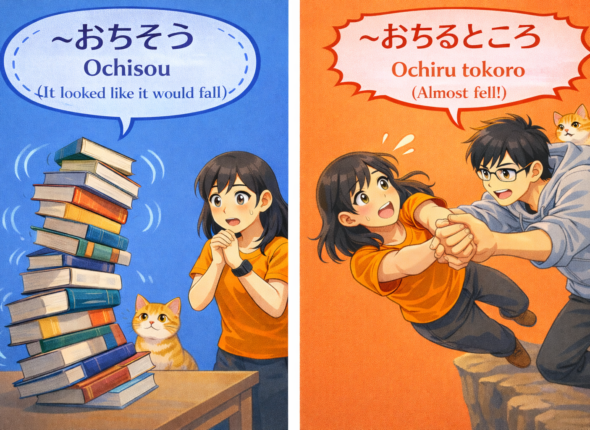
(Joy watching wobbling books [Ochisou] vs. Joy being saved from falling [Ochiru tokoro]) “The cup looked like it would fall.” (Ochisou datta) “I almost fell (but you saved me).” (Ochiru tokoro datta)...
Learn Japanese Through Gourmet! Master Japanese While Enjoying Delicious Food!
Learn Japanese Through Gourmet! Master Japanese While Enjoying Delicious Food! Hello everyone! Are you studying Japanese and interested in Japanese food culture? In fact, Japanese food is a very useful tool for...
“Nenjiru” vs “Inoru” – What’s the Difference?
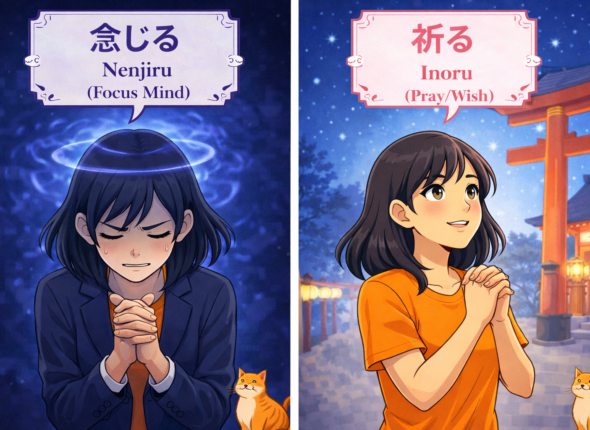
(Joy using mental power [Nenjiru] vs. Joy praying to God [Inoru]) “I pray for peace.” (Heiwa o inoru) “I pray/chant silently.” (Kokoro de nenjiru) While both involve prayer, 祈る (Inoru) is asking...
The Difference Between “アンケートに回答する” and “アンケートを回答する”(Ankēto ni kaitō suru vs. Ankēto o kaitō suru)
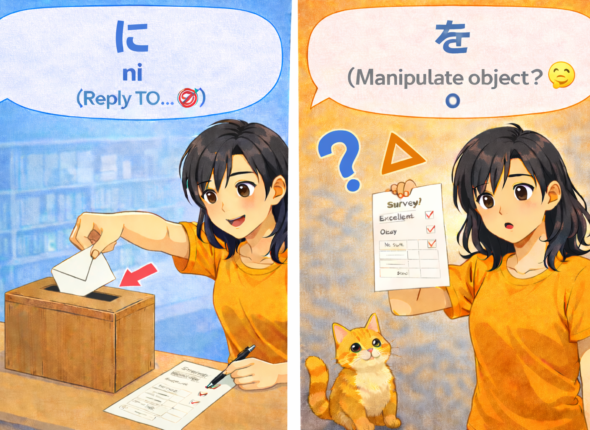
(アンケート「に」答えるJoy vs. アンケート「を」持つJoy) 「アンケートに回答する」(正しい) 「アンケートを回答する」(不自然) 英語では “Answer the survey” なので「を」を使いたくなりますが、日本語の「回答する(Kaitō suru)」は「返事をする」という意味です。つまり、「対象(Target)」を示す必要があります。JoyとKenと一緒に正しい助詞を覚えましょう! 🗣 会話シーン (Conversation Scene) Joyがお店でアンケート用紙をもらいました。 Joy ケンさん、このお店のアンケート を 回答しました! クーポンがもらえますよ。 (Ken, I “answered [object marker]” this shop’s survey! I can get...
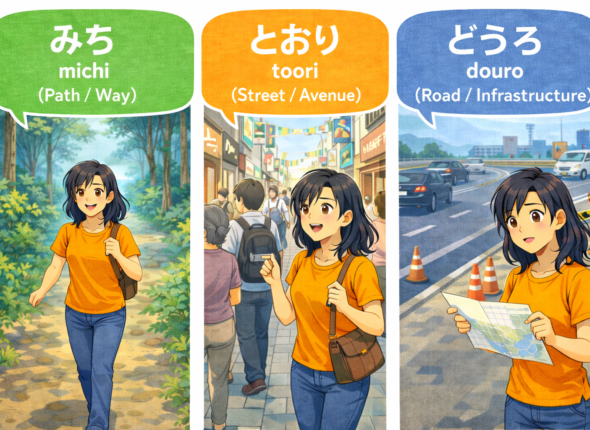
The Difference Between “道” (Michi), “通り” (Toori), and “道路” (Douro)
(Joy walking on a path [Michi], shopping on a street [Toori], and pointing at asphalt [Douro]) “Please tell me the way.” (Michi o oshiete) “This street is lively.” (Kono toori wa…?) “Construction...
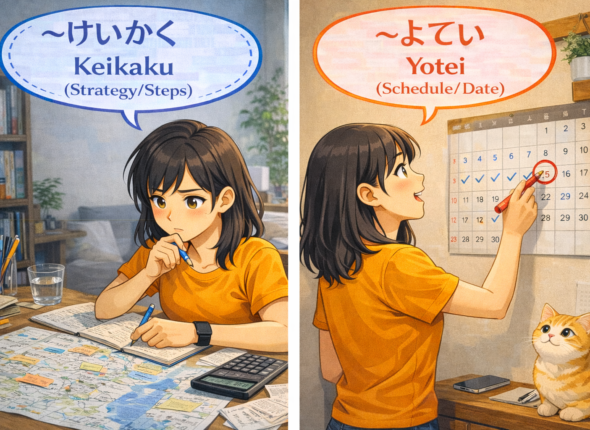
The Difference Between “計画する” (Keikaku Suru) and “予定する” (Yotei Suru)
(Joy making a detailed strategy [Keikaku] vs. Joy marking a calendar [Yotei]) “I plan to go to Japan.” Is it 計画 (Keikaku) or 予定 (Yotei)? In English, “Plan” covers both. But in...
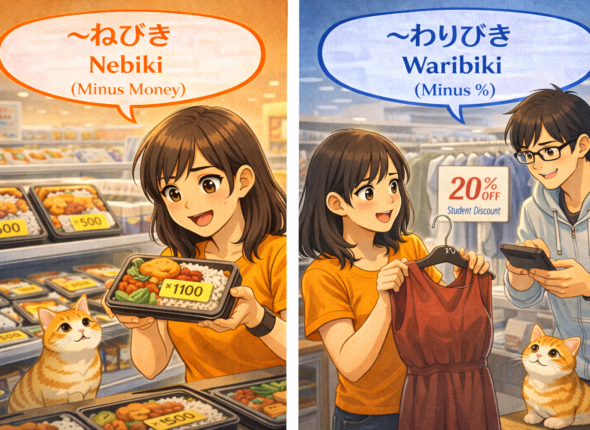
The Difference Between “値引き” (nebiki) and “割引” (waribiki)
(Joy finding a clearance item [Nebiki] vs. Joy calculating a percentage sale [Waribiki]) “100 yen off!” “20% off!” In Japanese, we use different words depending on how the price is reduced. 値引き...
Experience the Charm of Japanese Food! Enjoyable Dishes and Eating Tips for Beginners
Experience the Charm of Japanese Food! Enjoyable Dishes and Eating Tips for Beginners Ramen, sushi, tempura… Japanese cuisine is rich in variety! But that’s not all. In fact, Japan is home to...
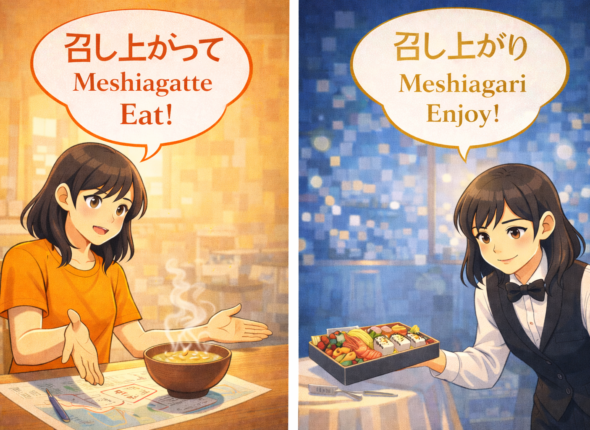
The Difference Between “召し上がりください (meshiagarikudasai)” and “召し上がってください (meshiagatte kudasai)”
(Joy urging to eat hot food [Meshiagatte] vs. Joy presenting a meal elegantly [Meshiagari]) “Please eat.” 召し上がって ください。 (Meshiagatte kudasai) (お) 召し上がり ください。 ((O) Meshiagari kudasai) Both are polite Honorifics (Sonkeigo). But...
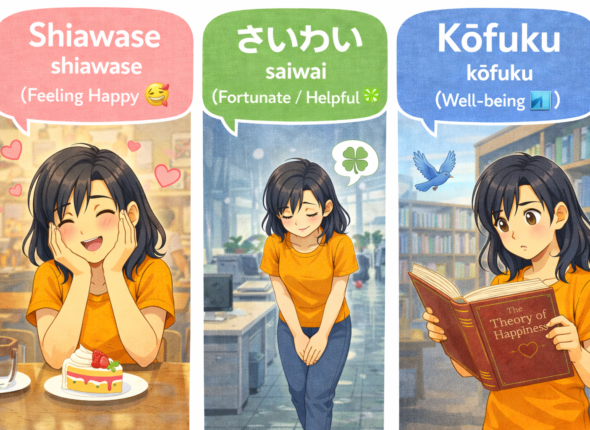
The Difference Between “幸せ” (Shiawase), “幸い” (Saiwai), and “幸福” (Kōfuku)
(Emotional Joy [Shiawase], Formal/Lucky Joy [Saiwai], Philosophical Joy [Kōfuku]) “I feel happy.” (Shiawase) “It would be appreciated.” (Saiwai) “The pursuit of happiness.” (Kōfuku) Japanese has multiple words for happiness. 幸せ (Shiawase) is...
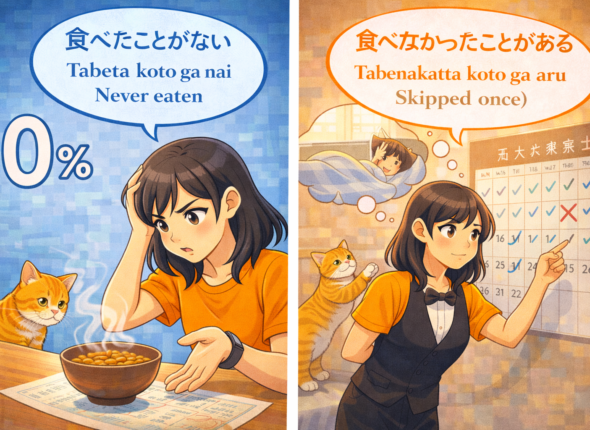
The Difference Between “食べたことがない” (Tabeta koto ga nai) and “食べなかったことがある” (Tabenakatta koto ga aru)
(Joy with zero experience [Tabeta koto nai] vs. Joy remembering one skipped meal [Tabenakatta koto aru]) “I have never eaten breakfast.” (Lifestyle) “There was a time I didn’t eat breakfast.” (Exception) These...
The Difference Between “食べてはいけません” (Tabete wa ikemasen) and “食べないでください” (Tabenai de kudasai)
(Joy breaking a rule [Ikemasen] vs. Joy taking Ken’s food [Naide kudasai]) “You must not eat here.” (Rule) “Please don’t eat this.” (Request) Both mean “Don’t eat,” but the vibe is completely...
Understanding the Meaning of “お伺いしておりますか” (Oukagai shiteimasu ka)
Understanding the Meaning of “お伺いしておりますか” (Oukagai shiteimasu ka) Have you ever heard the phrase “お伺いしておりますか” (Oukagai shiteimasu ka) and wondered what it really means? Maybe you’ve encountered it in business contexts but...
Explore Japan’s Long History! A Beginner’s Guide to History
Explore Japan’s Long History! A Beginner’s Guide to History “Japanese history seems difficult” or “Where should I start studying?” Have you ever thought about that? History is not just about memorizing past...