

Blog
【よく目にする日本語】「お会計お願いします」はいつ言えばいい? [日本語学習]
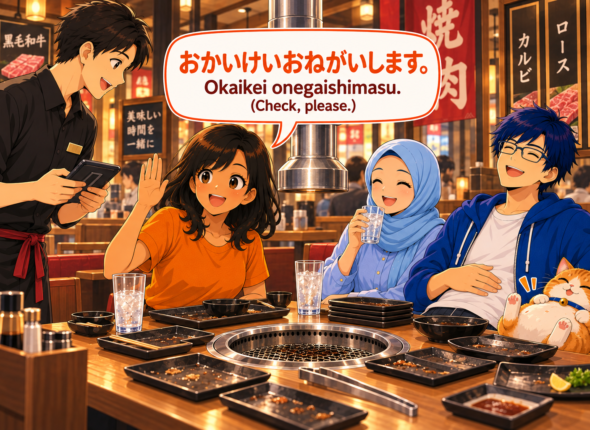
(焼肉屋で手を挙げて「お会計お願いします」と店員を呼ぶJoy、満腹で満足そうなKenとRaya、丸くなったお腹をポンポンと叩くオレンジ色の猫) 新シリーズ「Japanese You Keep Seeing」へようこそ! 食事が美味しく終わり、正式に「ごちそうさま」を言いました。さあ、最後のハードルである「お支払い」の時間です!欧米の多くの国では、席に座ったままサーバーが伝票(チェック)を持ってくるのを待ちますが、日本では入ったレストランの種類によって支払いシステムが異なります。一体いつ、「お会計お願いします (Okaikei onegaishimasu)」と言えばいいのでしょうか?日本のレジのルールを解明しましょう! 🗣 会話シーン (Conversation Scene) Joy、Ken、Rayaの3人は、地元の焼肉屋(Yakiniku)で大満足の食事を終えたところです。テーブルの網の火は消され、ホテルに戻る準備が整っています。 Joy Line 1: お会計お願いします。 Line 2: Okaikei onegaishimasu. Line 3: (Check, please.) すみません、お会計お願いします。 店員 はーい!ただいまこちらのテーブルで伝票をまとめますね。 Ken 焼肉屋や回転寿司などでは、最終的な伝票を渡す前に、店員さんがテーブルでデジタル端末を確認したりお皿を数えたりする必要があるんですよ! 💡 解説:レジ払いか、テーブルでの声かけか...
Japanese You Keep Seeing:「お会計お願いします」はいつ言えばいい?|Japanese Grammar (N5–N3)
(Joy raising her hand to ask the waiter “Okaikei onegaishimasu” at a Yakiniku restaurant, with Ken and Raya looking full, and an orange cat patting its round belly) Welcome to “Japanese You...

【よく目にする日本語】店員さんの「以上でよろしいですか?」は何を確認している? [日本語学習]
(ファストフード店のレジで「以上でよろしいですか?」と注文を確認する店員、笑顔でうなずくJoy、後ろで待つKenとRaya、レシートにじゃれつくオレンジ色の猫) 新シリーズ「Japanese You Keep Seeing」へようこそ! メニューを読み、欲しい商品を指差し、店員さんに無事オーダーを伝え終えました。さあお金を払おう、と思ったその時、店員さんが最後の質問を投げかけてきます:「以上でよろしいですか? (Ijou de yoroshii desu ka?)」。これは、日本のあらゆる飲食店における注文プロセスの「最終チェックポイント」です!彼らが正確に何を尋ねているのか、そしてどのように返答すべきかを解読しましょう。 🗣 会話シーン (Conversation Scene) Joy、Ken、Rayaの3人は、人気のハンバーガーショップで手早くランチをとることにしました。Joyは自信満々にチーズバーガーセット(ポテトとアイスティー付き)を注文します。 店員 Line 1: 以上でよろしいですか? Line 2: Ijō de yoroshii desu ka? Line 3: (Is that all...
Japanese You Keep Seeing: 店員さんの「以上でよろしいですか?」は何を確認している?|Japanese Grammar (N5–N3)
(A fast-food cashier asking Joy “Ijō de yoroshii desu ka?” to confirm her order, while Ken and Raya wait, and an orange cat plays with a receipt) Welcome to “Japanese You...

【よく目にする日本語】「お冷」って何?レストランで突然出てくる日本語 [日本語学習]
(定食屋で氷水の入ったグラスを指差して「お冷?」と尋ねるJoy、自分のグラスを見せるKen、おしぼりで手を拭くRaya、グラスの結露を前足で触る可愛いオレンジ色の猫) 新シリーズ「Japanese You Keep Seeing」へようこそ! 日本のレストランに入り、席に座ると、まだメニューさえ見ていないのに、店員さんが氷がたっぷり入ったグラスを目の前に置きます。そして「お冷です (Ohiya desu)」と言います。ちょっと待って、日本語でウォーターは「水 (Mizu)」じゃないの?なぜレストランでは全く違う言葉を使うのでしょうか?今日は、日本のおもてなし(Hospitality)の究極のシンボル、「お冷 (Ohiya)」の秘密を解き明かしましょう! 🗣 会話シーン (Conversation Scene) Joy、Ken、Rayaの3人は、レトロな日本の定食屋(Shokudou)でランチの席に着いたところです。暑い夏の日、店員さんがすぐに彼らを涼ませるためのものを持ってきてくれました。 店員 いらっしゃいませ。お冷になります。 Joy Line 1: お冷? Line 2: Ohiya? Line 3: (Cold water?) オヒヤ?「水」じゃないんですか? Ken そうです、「水」はWaterの意味です。でも日本のレストランでは、お客さんに出す冷たい飲み水のことを特別に「お冷」って呼ぶんです!...
Japanese You Keep Seeing: 「お冷」って何?レストランで突然出てくる日本語|Japanese Grammar (N5–N3)
(Joy pointing at a glass of ice water asking “Ohiya?” in a Japanese diner, with Ken holding a glass, Raya using a wet towel, and an orange cat tapping the condensation)...

Japanese You Keep Seeing: 「お持ち帰りですか?」はTakeoutのこと?|Japanese Grammar (N5–N3)
( A Takoyaki stall clerk asking Joy “Omochikaeri desu ka?”, with Ken and Raya smiling, and an orange cat hiding in a takeout bag) Welcome to “Japanese You Keep Seeing”! In...
【よく目にする日本語】「お持ち帰りですか?」はTakeoutのこと? [日本語学習]
(たこ焼き屋の屋台で「お持ち帰りですか?」と尋ねる店員、両手を上げて喜ぶJoy、微笑むKenとRaya、カウンターのビニール袋の中に隠れる可愛いオレンジ色の猫) 新シリーズ「Japanese You Keep Seeing」へようこそ! 前回のレッスンで、「店内ですか? (Tennai desu ka? – イートインですか?)」という言葉を学びました。では、食べ物をホテルに持って帰りたい時はどうすればいいのでしょうか?英語の「Takeout」という言葉を使いたくなるかもしれません(そして、それでも日本人は理解してくれます!)。しかし、日本の店員さんが標準的に使う丁寧なフレーズは「お持ち帰り (O-mochikaeri)」です。この言葉が正確に何を意味するのか、そしてどのように使うのかを分解してみましょう! 🗣 会話シーン (Conversation Scene) Joy、Ken、Rayaの3人は、活気ある食べ歩きエリアを散策しています。Joyは美味しそうなたこ焼きの匂いにつられ、後でホテルで食べるためにアツアツのたこ焼きを買うことにしました。 店員 Line 1: お持ち帰りですか? Line 2: Omochikaeri desu ka? Line 3: (Is it for...

【よく目にする日本語】「店内ですか?」と聞かれたら何を答える? [日本語学習]
(カフェのレジでトレイと紙袋を持ちながら「店内ですか?」と聞く店員、笑顔でテーブルを指差すJoy、おしゃべりするKenとRaya、紙袋の中に隠れて遊ぶオレンジ色の猫) 新シリーズ「Japanese You Keep Seeing」へようこそ! メニューを解読し、無事に食べ物を注文して、あとは財布を出して払うだけ。これで安心…と思いきや、レジの店員さんが最後に矢継ぎ早に質問を投げかけてきます。「店内ですか? (Tennai desu ka?)」。日本のカフェ、ファストフード店、パン屋に行けば、この質問は絶対に避けられません。この答えによって、トレイで渡されるか紙袋で渡されるかが決まり、なんと支払う税金の額まで変わってしまうのです!「For here or to go」の返答をマスターしましょう。 🗣 会話シーン (Conversation Scene) Joy、Ken、Rayaの3人は、人気のカフェで簡単なランチをとることにしました。Joyはサンドイッチとアイスコーヒーを注文します。店員さんは、彼女の注文をどのように準備すべきか確認する必要があります。 店員 Line 1: 店内ですか? Line 2: Tennai desu ka? Line 3: (Is it...
Japanese You Keep Seeing: 「店内ですか?」と聞かれたら何を答える?|Japanese Grammar (N5–N3)
(A cafe clerk holding a tray and a paper bag asking Joy “Tennai desu ka?”, as Joy points to a table, Ken and Raya chat, and an orange cat hides in...

【よく目にする日本語】「一名様ですか?」レストランで最初に聞かれる日本語[日本語学習]
(レストランの入り口で店員に「一名様ですか?」と聞かれ、3本指を立てるJoy、後から入ってくるKenとRaya、一緒に指を立てようとするオレンジ色の猫) 新シリーズ「Japanese You Keep Seeing」へようこそ! 日本のレストランのドアを開けると、スタッフが「いらっしゃいませ!」と大きな声で出迎えてくれます。あなたは笑顔で頷きます。しかし、席に案内される前に、店員さんは必ずあなたに質問を投げかけます:「一名様ですか? (Ichi-mei-sama desu ka?)」。もしあなたがグループで旅行している時にこの質問に「はい」と答えてしまうと、友達は外の寒空の下で待たされることになります!レストランでの「人数確認」のルールを解読しましょう。 🗣 会話シーン (Conversation Scene) Joy、Ken、Rayaの3人は、高評価のとんかつレストランを訪れました。Joyはワクワクしながら最初にドアを開けて中に入りましたが、KenとRayaはまだ外で少しおしゃべりをしています。 店員 Line 1: 一名様ですか? Line 2: Ichi-mei-sama desu ka? Line 3: (A party of one?) いらっしゃいませ!一名様ですか? Joy...
Japanese You Keep Seeing: 「一名様ですか?」レストランで最初に聞かれる日本語|Japanese Grammar (N5–N3)
( A restaurant host asking Joy “Ichi-mei-sama desu ka?”, as Joy holds up three fingers, Ken and Raya walk in, and an orange cat tries to help count) Welcome to “Japanese You...

【よく目にする日本語】「人気No.1」は日本のメニューでなぜよく見る?[日本語学習]
(ファミレスのメニューの「人気No.1」の王冠を指差して驚くJoy、頷くKen、メニューを読むRaya、ハンバーグの写真をじっと見つめるお腹を空かせたオレンジ色の猫) 新シリーズ「Japanese You Keep Seeing」へようこそ! 以前のレッスンで、「人気(Ninki)」という言葉の意味を学びました。しかし、日本での外食に関して言えば、「人気No.1 (Ninki Number One)」というフレーズは全く別の次元の力を持っています。ラーメン屋、居酒屋、ファミリーレストランなど、どこに行っても、「No.1」の商品を注文するよう促す巨大な「金色の王冠マーク」を目にするでしょう。なぜレストランはこれほどまでにこのマークを押し出し、日本の顧客はそれを愛するのでしょうか?メニューの心理学を解読しましょう! 🗣 会話シーン (Conversation Scene) Joy、Ken、Rayaの3人は、日本の「ファミレス(ファミリーレストラン)」で夕食をとっています。メニューは何百種類もの料理が載った分厚い雑誌のようで、Joyは圧倒されて迷ってしまっています。 Joy Line 1: 人気ナンバーワン? Line 2: Ninki nanbā wan? Line 3: (Number one popular?) メニューが多すぎて迷いますね。あ、このハンバーグに王冠のマークで「人気No.1」って書いてあります! Ken 迷った時は「人気No.1」を選ぶのが一番安心ですよ。絶対に外れませんから!...
Japanese You Keep Seeing:「人気No.1」は日本のメニューでなぜよく見る?Japanese Grammar (N5–N3)
(Joy pointing at a “No.1” crown on a family restaurant menu asking “Ninki nanba wan?”, with Ken nodding, Raya reading, and a hungry orange cat staring at the menu) Welcome to “Japanese...

【よく目にする日本語】メニューの「おすすめ」は何をおすすめしている? [日本語学習]
( 居酒屋で手書きのメニューを指差して「本日のおすすめ」について尋ねるJoy、自信満々に説明するKen、お茶を注ぐRaya、ねじり鉢巻をして刺身を見つめる可愛いオレンジ色の猫) 新シリーズ「Japanese You Keep Seeing」へようこそ! 以前のレッスンで、店員さんに「おすすめ(Recommendation)」を聞くことが、素晴らしい買い物をするコツだと学びました。では、レストランや居酒屋のテーブルに座った時、メニュー自体に大きく「おすすめ (Osusume)」と書かれていたらどうでしょうか?それは単にお店で一番高い料理なのでしょうか?それともシェフの個人的な好みなんでしょうか?今回は、日本のレストランメニューに隠された「美味しい秘密」を解読しましょう! 🗣 会話シーン (Conversation Scene) Joy、Ken、Rayaの3人は、活気ある居酒屋で夕食を楽しんでいます。テーブルには分厚い定番のメニューブックがありますが、Joyはそれとは別に、今日書かれたばかりのような「手書きの紙」が置かれていることに気がつきました。 Joy Line 1: 本日のおすすめ Line 2: Honjitsu no osusume Line 3: (Today’s recommendation) Kenさん、この手書きのメニューは何ですか?「本日のおすすめ」って書いてあります。 Ken それは今日市場で仕入れた、一番新鮮な食材のメニューですよ!絶対に美味しいです。 Raya それなら絶対にその手書きメニューから注文しましょう!季節のお刺身が食べたいです。...
Japanese You Keep Seeing: メニューの「おすすめ」は何をおすすめしている? |Japanese Grammar (N5–N3)
(Joy pointing at a handwritten Izakaya menu asking about “Honjitsu no Osusume”, with Ken gesturing excitedly, Raya pouring tea, and an orange cat in a headband looking at sashimi) Welcome to...

【よく目にする日本語】食べた後の「ごちそうさま」にはどんな意味がある? [日本語学習]
(ラーメン屋で手を合わせて「ごちそうさま!」とシェフに感謝するJoy、お会計を持つKen、お腹をさするRaya、満腹で前足を舐めるオレンジ色の猫) 新シリーズ「Japanese You Keep Seeing」へようこそ! 前回のレッスンで、「いただきます」が日本の食事を始める際の美しいフレーズであることを学びました。では、お皿が空になり、お腹がいっぱいになった時はどうなるのでしょうか?日本では、「ごちそうさま (Gochisousama)」と言うまでは、食事は本当の意味で終わっていません。「Thank you for the meal」と翻訳されますが、その漢字に隠された歴史は、人々の努力と感謝の美しい物語を明らかにしています。さあ、味わってみましょう! 🗣 会話シーン (Conversation Scene) Joy、Ken、Rayaの3人は、地元の人気店で大盛りの豚骨ラーメンを食べ終えたところです。彼らが帰る準備をしていると、Joyがシェフ(大将)に向かって元気にお礼を言いました。 Joy Line 1: ごちそうさま! Line 2: Gochisōsama! Line 3: (Thank you for the meal!) あー、美味しかった!大将、ごちそうさま!...
Japanese You Keep Seeing: 食べた後の「ごちそうさま」にはどんな意味がある? |Japanese Grammar (N5–N3)
(Joy pressing her hands together saying “Gochisousama!” after finishing ramen, with Ken, Raya, and a full-bellied orange cat cleaning its paw) Welcome to “Japanese You Keep Seeing”! In our last lesson,...

【よく目にする日本語】食事の前に言う「いただきます」って本当は何? [日本語学習]
( 伝統的な旅館の夕食で、Kenに習って手を合わせ「いただきます!」と笑顔を見せるJoy、微笑むRaya、隣で前足を合わせてお祈りポーズをする可愛いオレンジ色の猫) 新シリーズ「Japanese You Keep Seeing」へようこそ! 日本では、食べ物を一口食べる前に、必ず全員が胸の前で手を合わせて「いただきます (Itadakimasu)」と言います。英語ではよく「Let’s eat」や「Bon appétit」と翻訳されますが、それらの翻訳は、このフレーズの根底にある「深遠な文化的な重み」を完全に見落としています!これは単なる食事開始の合図ではなく、深い感謝の表現なのです。この美しい日常の儀式の本当の意味を探ってみましょう。 🗣 会話シーン (Conversation Scene) Joy、Ken、Rayaの3人は、週末の休暇を利用して伝統的な日本の旅館(Ryokan)に宿泊しています。畳の部屋の低いテーブルに、色鮮やかで豪華な会席料理が並べられました。 Ken みんな揃いましたね。それじゃあ、手を合わせて… Joy Line 1: いただきます! Line 2: Itadakimasu! Line 3: (I humbly receive!) いただきます! すごいご馳走ですね!...
Japanese You Keep Seeing: 食事の前に言う「いただきます」って本当は何? |Japanese Grammar (N5–N3)
(Joy, Ken, and Raya pressing their hands together saying “Itadakimasu!” before a traditional Ryokan dinner, while an orange cat puts its paws together) Welcome to “Japanese You Keep Seeing”! Before a...